Testing
As the sport of Formula One racing grew ever more technically demanding, so the practice of testing grew in importance. The old principle of tinkering with an instinctively designed car has long since been superseded by systematic testing of every major component and structure - both before and after the car is fully built and ready to race.
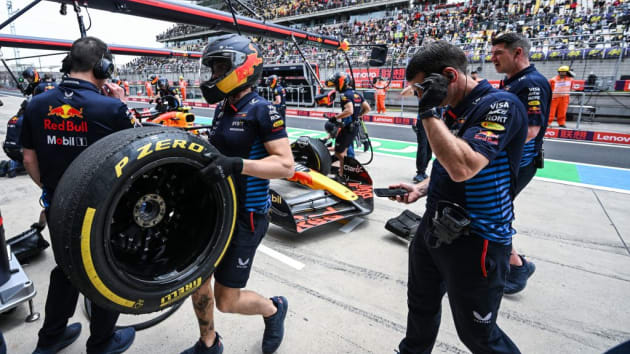
Much of this testing work happens unseen, deep within the constructors' factories and wind tunnel facilities. Once cars are assembled the more conspicuous type of testing begins, out on race tracks with real drivers at the wheel. This is where a car's fundamental abilities can be properly assessed for the first time - in the past, many cars that look great 'on paper' turned out to perform poorly on the track. But track testing - much of it now done during Friday practice at Grands Prix - is also where the steady evolution that happens to all Formula One cars during the course of their life begins, a constant improvement of tiny details and set-up.
By midway through the first decade of the 21st century, a typical Formula One testing programme had become a major exercise in both manpower and logistics, with many teams using multiple test drivers to take a share of the burden away from the race drivers. Conscious of the spiraling costs, which invariably resulted in development invisible and meaningless to fans, Formula One racings governing body began to impose increasingly stringent testing restrictions.
In 2008 the regulations were amended to limit each constructor to 30,000km of testing per season, the majority done during multi-team tests (normally three days in duration) at FIA-approved racetracks around Europe, where any team could elect to pay a portion of the costs and to bring its cars. In addition, teams also operated closed sessions where they could trial top-secret future machinery or innovations.
The testing allowance was slashed to 15,000km in 2009, with in-season testing banned, effectively limiting teams to just a handful of pre-season tests in February and March. This has turned the three hours of practice on Grand Prix Fridays into highly valuable track time, as it is now teams only real opportunity to track test in-season developments.