




Kimi Raikkonen
As a sports-hungry 11 year-old, Kimi Raikkonens youthful enthusiasm for karting quickly developed into his chosen career. The young Finn swiftly stamped his authority on the local opposition before making his mark in international events. Surprisingly, he never won a karting title, but his early racing days singled him out as a future star.
In 2000 - ten years after he had first got behind the wheel of a kart - Raikkonen made the switch to single-seaters. Choosing the UK Formula Renault series as his springboard, the previously title-less driver took the championship with seven wins, 316 points and six pole positions. Indeed, the Finn was so dominant that year, several Formula One teams, convinced of his raw talent, began to court him.
Sauber were the first to make a concrete offer and after a successful three-day test, Raikkonen landed a race drive with the Swiss squad for 2001. Given that he had only 23 single-seater race starts to his name, many questioned Peter Saubers confidence, but from the outset Raikkonens pace and consistency blew such criticisms out of the water. He ended his first Formula One season with nine championship points - and the admiration of much of the paddock, including, most notably, Ron Dennis.
The McLaren boss was on the look out for a driver capable of filling the shoes of his retirement-bound double champion, Mika Hakkinen. Recognising Raikkonens rising star, Dennis swiftly signed him on a lengthy five-year contract to replace his original flying Finn. Now the question on everybodys lips was whether Raikkonen could handle a top-flight team so early in his career.
But as before at Sauber, he quickly silenced the sceptics and his first season with McLaren was widely regarded as a success. Although, unlike team mate David Coulthard, he did not win a race, Raikkonen scored four podium finishes and 24 championship points, an impressive tally considering his 10 retirements. True, Coulthard scored almost twice as many points, but the McLaren veteran of six years found himself outclassed by his new colleague in qualifying.
The following year in Malaysia Raikkonen enjoyed his first taste of victory, and a further ten podiums saw him come within two points of upsetting Michael Schumachers run of drivers titles. But then, just as it seemed Raikkonen was indeed the new Hakkinen, reliability problems hit McLaren and at the start of 2004 he retired from all three opening races. Only a pole at Silverstone later in the year and a dominant victory in the Belgium reaffirmed the Finns reputation and put the fading Coulthard still further in the shade.
Coulthards exit in 2005 marked the arrival of Juan Pablo Montoya at McLaren, but like his Scottish predecessor, the Colombian would generally fail to match Raikkonen. After the teams bleak start to the season, again marred by poor reliability, they gradually gained momentum and Raikkonen ultimately enjoyed five poles, five podiums and seven wins. But Renault and Fernando Alonso retained the edge in the title chase, leaving Raikkonen to finish runner-up for a second time in three years. It was a bitter blow for a driver widely regarded as the fastest on the grid - over a single lap at least - and it was no coincidence that rumours soon began to surface of a possible move away from McLaren.
Despite the speculation, Raikkonens driving remained as determined and consistent as ever in 2006. Oblivious to the distractions of Montoyas unscheduled exit for NASCAR, he scored in every race he finished. However, he also retired six times and finished a downhearted fifth in the drivers championship. By then, though, the worst-kept secret in the paddock had already been confirmed - Raikkonens move to Ferrari for 2007, to replace Michael Schumacher. A hard act to follow perhaps, but few expected Raikkonen to notice the pressure - he is known as the iceman after all - and so it proved.
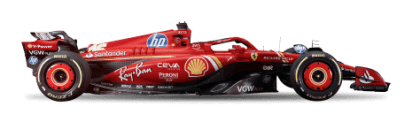
After winning on his Ferrari debut in Australia, Raikkonen kept a watching brief throughout the 07 season, waiting until the very last round to regain the championship lead and hence steal the drivers title from under the nose of previous employers McLaren. It was a trick he was unable to repeat in 2008, however, as his winning form - and critically his qualifying pace - all too often deserted him, ultimately leaving him in a supporting role to team mate Felipe Massa.
He seemed to initially fare little better at the start of the 2009 season and his lacklustre early form prompted some critics to suggest he'd lost interest in the sport. But he returned himself to the podium with a third place in Monaco and a second place in Hungary, before claiming Ferraris only 2009 win at the Belgium round.
As the team stopped pushing the development of the F60, however, he dropped off the pace once again. Raikkonen subsequently agreed to leave Ferrari at the end of the 2009 season despite having a year of his contract still to run, in order to make way for Fernando Alonso.
Raikkonen then spent two years out of Formula One racing, driving in the World Rally Championship and making one-off appearances in NASCARs Trucks and Nationwide Series, before announcing his comeback to the F1 paddock in late 2011 with the Lotus team.
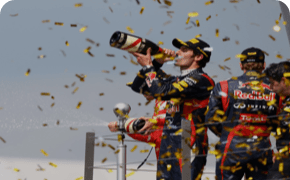
From the moment he stepped back into a Formula One car, Raikkonen proved that his two-year sabbatical had done nothing to blunt his speed. 2012 started with points-scoring finishes in Australia and Malaysia before he nearly pipped Vettel to victory in Bahrain, pushing the world champion hard before settling for second.
In Raikkonens hands the Lotus E20 proved to be a consistently quick car, the Finn claiming seven podiums and completing every racing lap of the year bar one. A well-deserved victory in Abu Dhabi rounded off a near-perfect comeback season in which he finished third in the championship.


