




Nico Rosberg
From an early age Nico Rosberg was determined to follow in the footsteps of his father, 1982 Formula One world champion, Keke. Stepping into a kart at the age of six, Rosberg quickly found his feet around the tracks surrounding his parents Monaco base. However, it wasnt this only love - after several years juggling his time spent behind the wheel with a growing passion for tennis, Rosberg eventually plumped for a racing career.
Regional, French, and international championships swiftly fell to the young German and after five years spent at the top of karting, Rosberg entered the single-seater formulae. In his first year, aged just 17, he made mincemeat of the Formula BMW opposition, taking nine victories from 20 starts to win the championship.
As a reward for his triumph, Rosberg was granted the chance to test for the BMW Williams team in 2002, making him the youngest person to drive a Formula One car. His performance in Barcelona earned him two further runs with the team, first in Jerez in December 2003 and again in January 2004 in Barcelona.
For 2003, Rosberg graduated into the Formula 3 Euroseries, driving for his fathers team. Although his two seasons proved successful enough with several wins, a second championship title remained elusive. Nevertheless, Rosberg felt himself ready for another move upwards and for 2005 joined the ART squad to compete in the new GP2 series. Aged 20, the German driver took five wins in the series and beat Renault protege Heikki Kovalainen to clinch the inaugural GP2 crown.
With yet another string to his bow, Rosberg was offered a Formula One race seat by Williams for the 2006 season, partnering Mark Webber. Frank Williams faith was swiftly repaid by Rosbergs seventh-place finish in his debut Grand Prix in Bahrain, where he also recorded the fastest lap of the race (the only one of the season not set by Ferrari, Renault or McLaren).
As the season progressed, however, Rosbergs natural speed was not enough to overcome the fallibility of the FW28 - or indeed his own inexperience at motorsports very highest level. Although Rosberg Junior had recorded more race starts at the age of 20 than his father made in his entire career, he had his fair share of accidents, most notably at the final round in Brazil, where he managed to take out his team mate.
The good thing about mistakes, though, is that you learn from them and Rosberg proved to be a far more rounded package in 2007. He scored the bulk of Williams' points, outpaced veteran team mate Alex Wurz, and took a career-best fourth place at the final round in Brazil. In 2008 he went even higher, with a third in Australia and a second in Singapore, despite a generally uncompetitive Williams FW30.
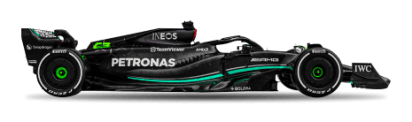
The podium sadly eluded him in 2009, even though he scored all 34.5 of Williams' points. He made Q3 at all but two of 17 Grands Prix, finished in the top eight 11 times and retired just once (a mechanical failure). Confident he could do more in the right machinery, he announced in October that '09 would be his last season with Williams and subsequently signed with Mercedes (formerly Brawn GP) for 2010. With his new employers having just completed the championship double, the timing looked good.
Unfortunately for Rosberg, however, their domination disappeared almost overnight with a ban on double diffusers and the best results from his first season in silver were third places in Malaysia, China and Great Britain. On the plus side, he ran roughshod over his new team mate, returning seven-time world champion Michael Schumacher, a pattern that continued, albeit to a lesser degree, in 2011, when Mercedes were unable to provide a car that could seriously challenge for top-three placings.


