




Sebastian Vettel
By the time he reached his twenties, Sebastian Vettel had already been racing for 12 years. After kick starting his career in 1995 at a local kart track in his native Germany, it wasnt long before Vettel had notched up several regional championships. Soon tiring of the local competition, however, he began to race on a European level.
Before long hed won the regions junior kart title and even clinched victories at prestigious annual events in Monaco and Paris-Bercy. As the German began to make a name for himself, he attracted the attentions of Red Bull, who swiftly signed him up to their young driver programme in 1998.
With Red Bulls backing, Vettel continued to perform well and in 2000 was invited to join the Austrian drinks companys junior team. Two seasons of karting later, Vettel - then aged just 15 - was ready to make the switch to single-seater racing. Making his debut in the hugely-competitive Formula BMW series in 2003, Vettel faced a tough challenge, but he didnt disappoint, scoring five wins and ending the season second in the championship.
During his second season, however, he went one better, winning 18 victories from 20 events. In fact he was so dominant he took the title with a massive 124-point advantage. Once champion, he wanted a fresh challenge and decided to move to the Formula Three Euro Series. Despite the switch, his strong links with BMW remained and in September 2005 he was invited to test a BMW Williams Formula One car.
Though he failed to take the title during two seasons in F3, Vettel continued to make an impact and, in August 2006, was BMW Saubers first choice to replace third driver Robert Kubica, who had been promoted to a race seat following Jacques Villeneuves sudden departure.
Though many in the Formula One paddock hadnt heard of him, Vettel was keen to make an immediate impression. He succeeded. After finishing his first practice session on top of the timesheets, Vettel didnt look back and notched up a series of successful Friday outings for the German-Swiss team. When the season finished, it came as no surprise that BMW Sauber decided to retain Vettel for 2007.
He combined his F1 testing commitments with impressive performances in the World Series by Renault, before getting an unexpected race call-up for the US Grand Prix at Indianapolis, standing in for an injured Kubica. He acquitted himself in style, eighth place making him the youngest man ever to score a world championship point.
Less than two months later he was rewarded with a full-time race seat with Toro Rosso, replacing departing American Scott Speed from the Hungarian round onwards. He scored the team's best ever result with a fourth place in China and was retained for 2008, when, after a difficult start to the season, he went from strength to strength to firmly establish himself as a potential future champion, winning his and Toro Rossos first Grand Prix in Italy and earning a switch to Red Bulls senior RBR team for 2009.
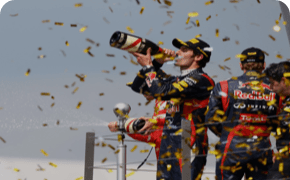
Vettel's star continued to rise as Red Bull emerged as the only serious contender to Brawn GP in the fight for the '09 championship. He scored the team's first pole and race win in China and went on to take a further three victories en route to the runner-up spot in the driver standings, just 11 points shy of Jenson Button. He went one better in 2010. Despite not once having led the standings prior to the Abu Dhabi season finale, victory there - his fifth of the season - made him the youngest world champion in Formula One history.
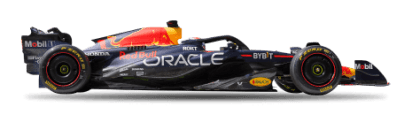
With championship glory came more confidence, more speed and fewer mistakes in 2011, as Vettel somehow stepped things up yet another gear. At the wheel of Red Bulls superb RB7, he proved all but unbeatable, making team mate Mark Webber - the man who had been favourite for the 2010 crown prior to that final race - look ordinary be comparison. From 19 Grands Prix, Vettel won 11, finished on the podium at a further six, took fourth place at one, and suffered one retirement. The result was he became the sports youngest back-to-back champion
with four rounds to spare. On top of that he took pole position 15 times, beating Nigel Mansells longstanding 1992 record.
2012 was much tougher, thanks to a frustratingly slow start to the season which saw the once dominant German become only an occasional visitor to the podium. The Red Bull RB8s patchy qualifying form and a healthy dose of bad luck secured just one win and three pole positions from the first 13 rounds for Vettel. Languishing fourth in the standings, it seemed his hopes of a third successive title were fading fast.
But then, the turnaround began. Winning four races in a row, Vettel proved untouchable in a rapidly-improving Red Bull, and with rival Fernando Alonso very much on the back foot in the Ferrari, he started to stretch out a sizeable lead in the title race. Even a pit-lane start in Abu Dhabi, an ascendant Lewis Hamilton in Austin, and a collision with Bruno Senna on the first lap of the Brazilian title finale, couldn't halt his charge.
Fighting until the very end, he clinched the 2012 drivers championship by three points to become only the third driver to win three successive titles - equalling the stellar achievements of Juan Manuel Fangio and Michael Schumacher - and the youngest triple champion in F1 history.


