HALL OF FAME - 2025
Lando Norris
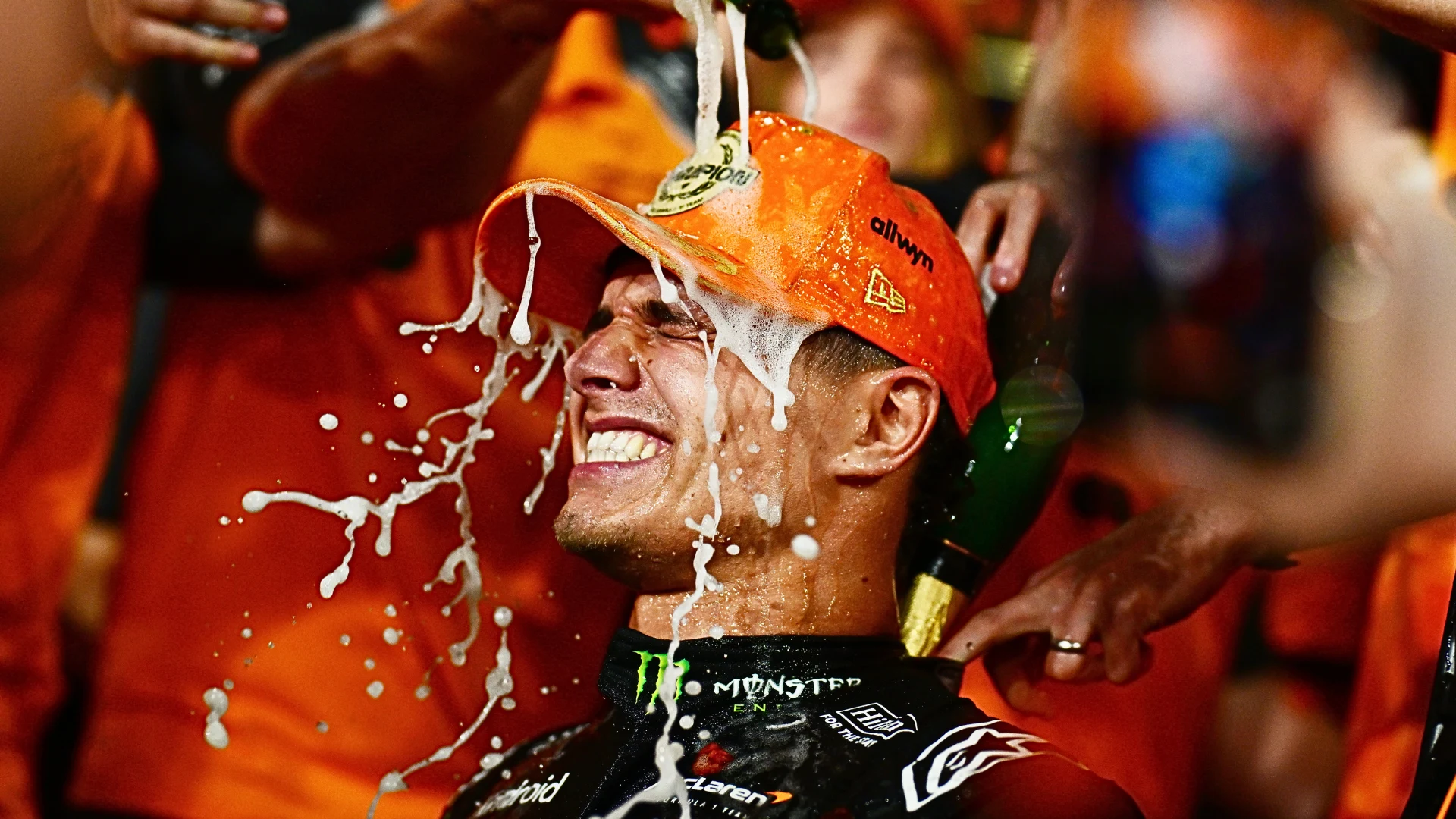
On the final day of the 2025 Formula 1 season, Lando Norris became the sport’s 35th World Champion, surviving a brutal test of nerves in the first three-way title decider for 15 years. This was a season for comebacks: first Norris, clawing back a 34-point deficit to McLaren team mate Oscar Piastri, and then, more improbably, reigning champion Max Verstappen making an end-of-season charge that McLaren boss Zak Brown likened to a horror movie character that just keeps coming back – but Norris held his nerve, vanquished the monster… and nicely set-up a string of sequels.
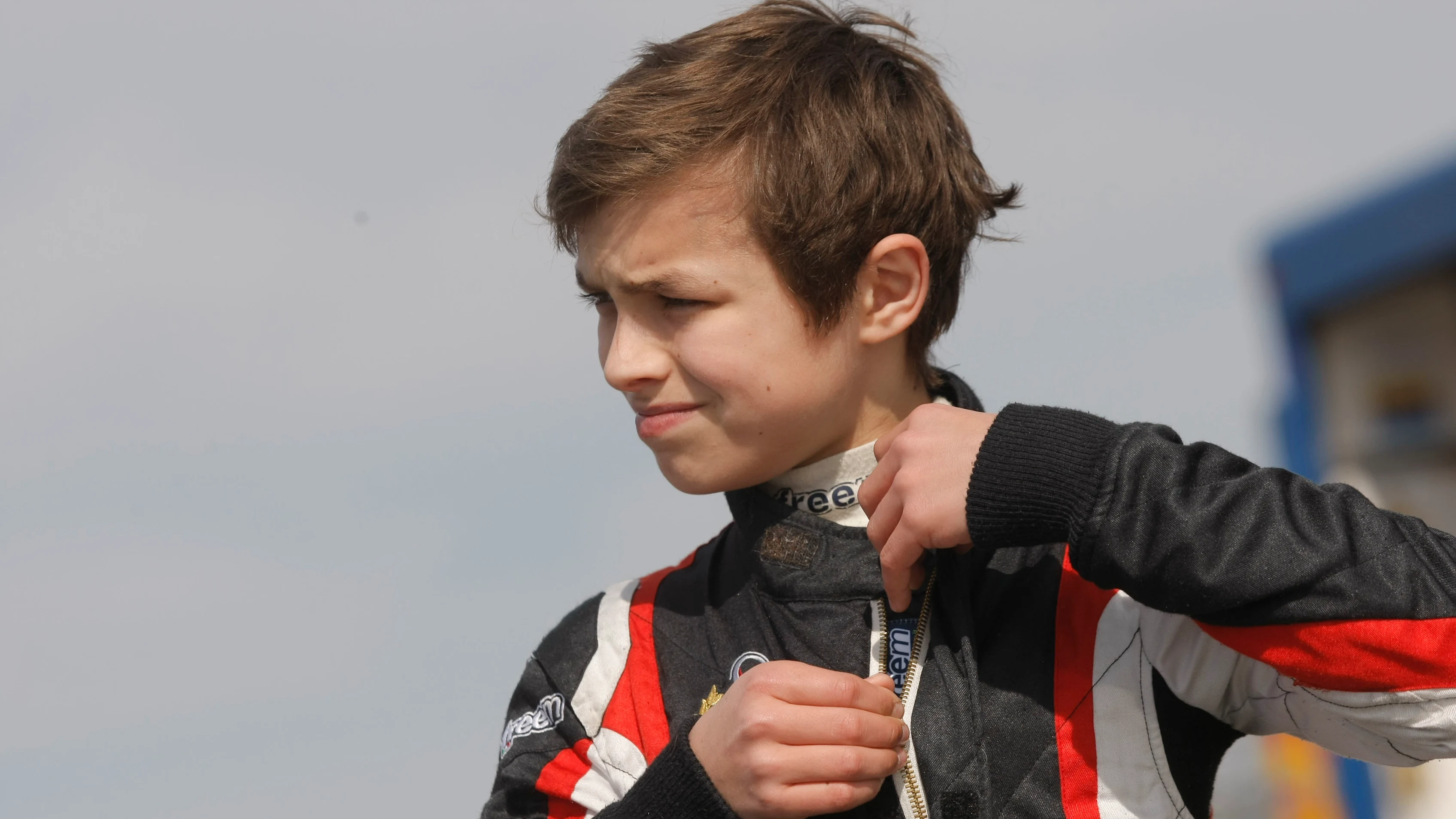
Lando Norris was born in Bristol, in the final weeks of 1999, and raised in the nearby town of Glastonbury. He had an early fascination with motorcycles – venerating Valentino Rossi – but followed Oliver, his older brother, into karting. He started at the age of eight and progressed through national and junior ranks. In 2012, champion of Formula Kart Stars’ Mini Max class; in 2013, KF-J champion of the WSK Euro Series, CIK-FIA European Championship and CIK-FIA International Super Cup. In 2014, he graduated as CIK-FIA World Champion in the KF-class, earmarked for great things in single-seaters.
Junior Formulae
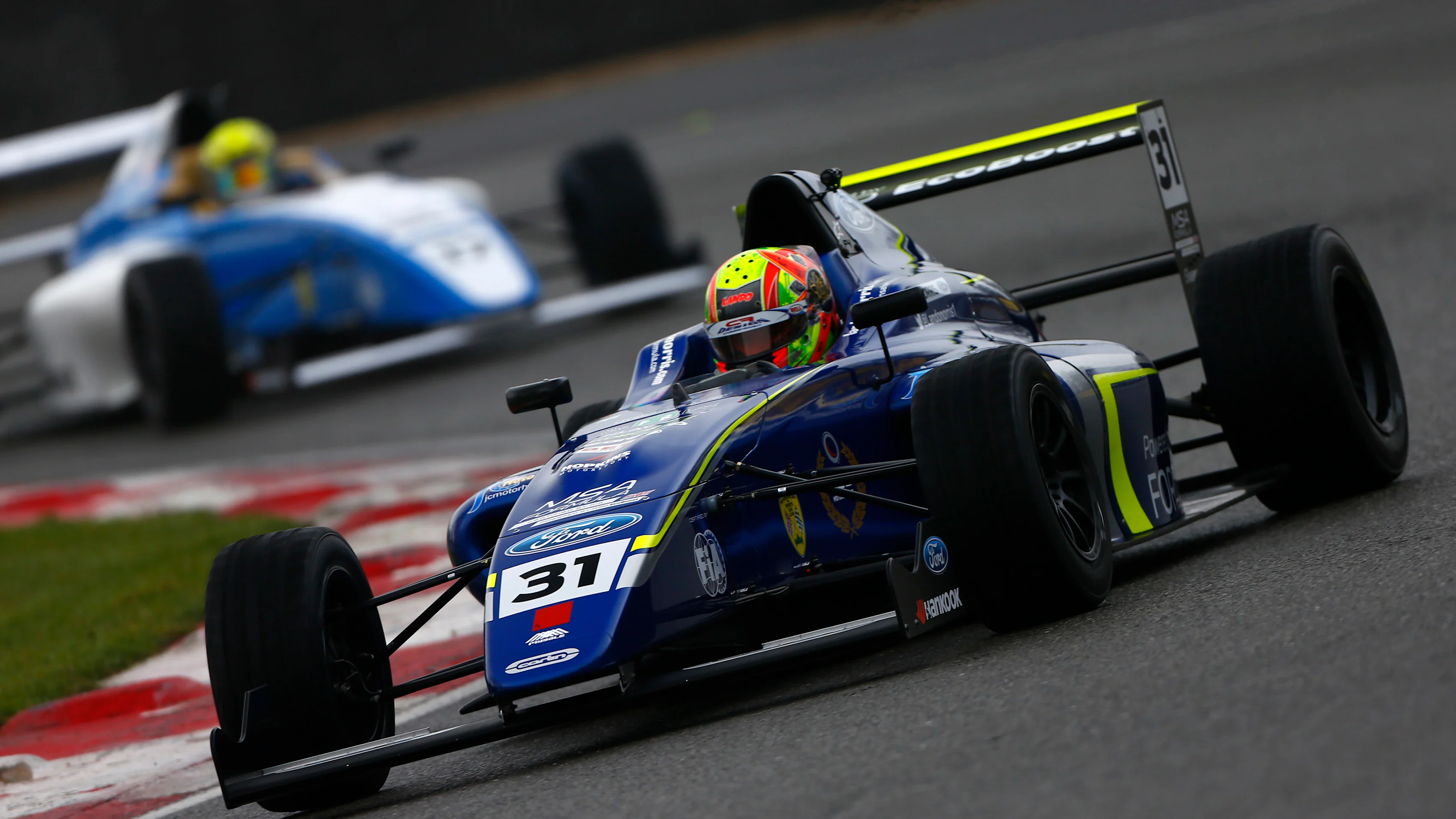
His career in the junior formulae continued where karting left off. He won the 2015 MSA Formula Championship (aka British F4), started 2016 with victory in the New Zealand-based Toyota Racing Series, then added twin NEC and Eurocup Championships in Formula Renault 2.0. Perhaps of greater significance he took four poles and four wins in his 11 races in the British F3 Championship. It was enough for McLaren to sign him to their Driver Development Programme for 2017.
Still with Carlin, he contested the 2017 F3 European Championship, taking nine victories and the title with two races to spare, and during this season he first drove a McLaren F1 car, completing 91 laps of the Hungaroring on the second day of an F1 group test. While it's very difficult to ascribe significance to testing times, only Ferrari’s Sebastian Vettel went quicker. He was back in the McLaren at the end of the season for the Yas Marina rookie test.
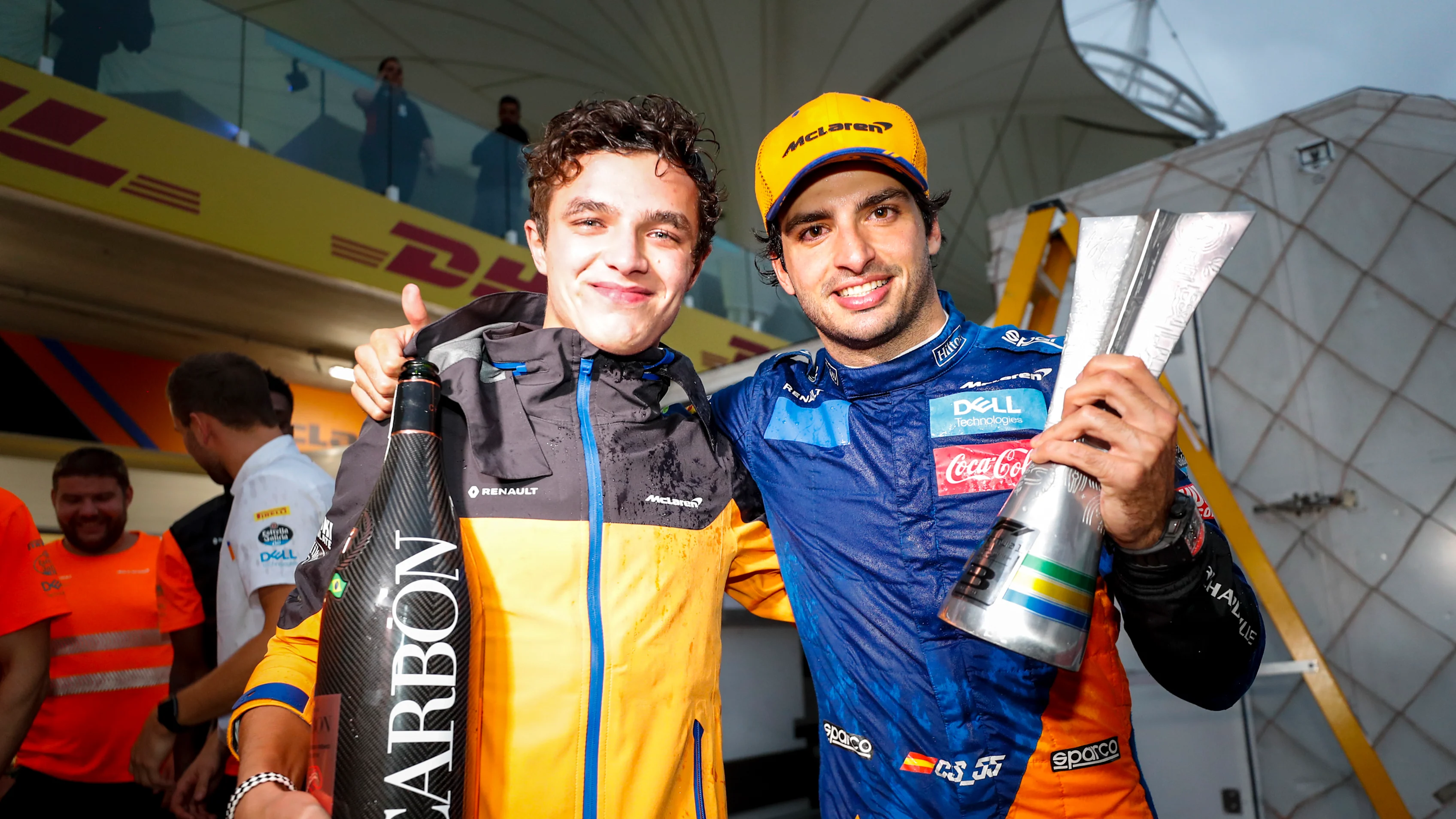
2018 was a busy year for Norris, doubling up an F2 campaign with test and reserve driver duties for McLaren. He got the former off to a flier with pole and Feature race victory in Bahrain, but never won again in a brutally competitive season, eventually finishing second to George Russell and ahead of Alex Albon. The second half of the F2 season was interrupted by regular FP1 sessions with McLaren. He made his debut at Spa and a week later, after the Italian Grand Prix, McLaren announced Norris would race in 2019, partnering Carlos Sainz.
McLaren Driver
Norris was in the right car at the right time. McLaren were on an upward swing but it was a gentle introduction for Norris, clearly cast as the understudy to the more experienced Sainz. He scored his first points in his second race, sixth place in Bahrain, and by the season end, was reaching parity with his Spanish team mate. He finished 11th in the Drivers’ Championship.
Progress was steady. A first podium came at the (delayed) season-opening 2020 Austrian Grand Prix, and he finished ninth in the Drivers’ Championship. 2021 saw McLaren switch to Mercedes power and Norris become defacto team-leader. It wasn’t supposed to be that way, with Daniel Ricciardo arriving to replace the Ferrari-bound Sainz. The Australian, a memorable Monza victory aside, never really got on with his McLaren, however, while Norris rose to sixth in the Drivers’ Championship, with podiums at Imola, Monaco, the Red Bull Ring, and Monza. He took his first pole position in Sochi, and was leading the race with four laps to go – only for a coin-toss decision to cost him victory, staying out on slicks when rain approached.
Uninformed opinion characterised it as a choke. This became a theme running through Norris’ career, fuelled, in part, by a willingness on the driver’s part to discuss his struggles with mental health. McLaren at this point had a partnership with Mind, the mental health charity and, in addition to raising funds, released frequent videos of their mechanics, engineers and drivers discussing the formerly taboo subject of mental wellbeing. Whereas previous generations of driver attempted to cultivate an air of invulnerability, the latest generation were much more willing to open-up, with Norris arguably the most forthright.
2022 saw McLaren drop back into the midfield pack. Norris, however, was very much a star performer by now, leading to the first murmurs this his team might be holding him back. He managed just one podium during the season – third at Imola – but was a strong and consistent performer in the Drivers’ Championship, finishing seventh.
For 2023, he started the year with a bad car and a different Australian team mate in Oscar Piastri. After a lacklustre first third of a season, an upgrade arrived in Austria and the MCL60 was transformed. Having finished dead last at the first race of the year, Norris was now regularly contesting podiums, taking six second places and a third in the remainder of the campaign.
Third place in the 2024 Australian Grand Prix presented Lando with an unwelcome record. His 14 podiums were the most of any driver who hadn’t tasted victory. Sadly, for Nick Heidfeld, the record returned to his keeping a few races later, with Norris winning the 2024 Miami Grand Prix.
Winning gets easier. Three more victories followed in 2024, including the season finale in which he sealed the Constructors’ Championship for McLaren. He took eight poles and finished second in the Drivers’ Championship. While never really challenging Verstappen’s position at the top of the order, Norris looked set for a tilt at the Drivers’ Championship in 2025.
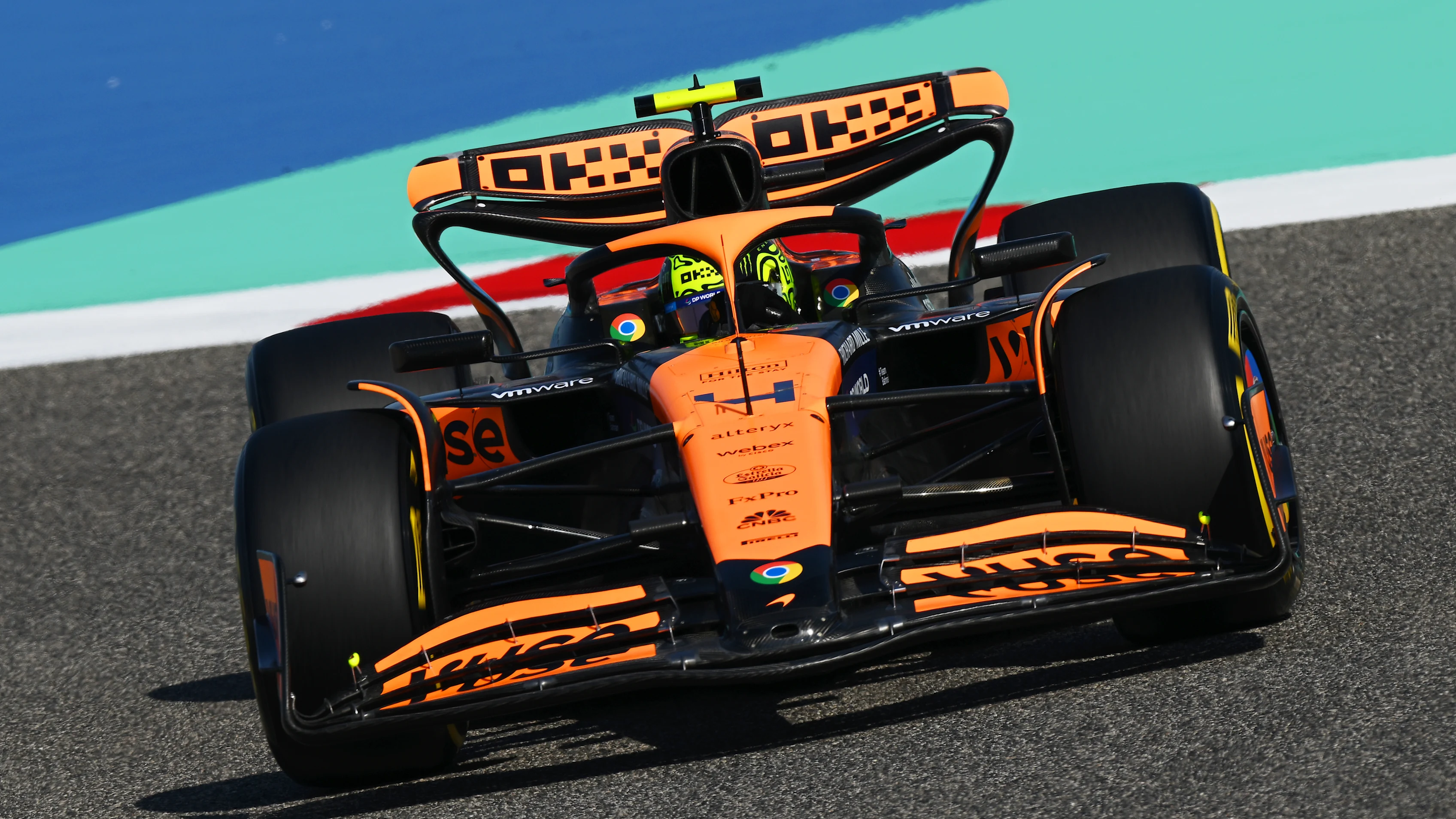
Champion
Victory in a very wet Albert Park presaged great things for 2025, and the season that could have become the Lando Norris show – but wins for Piastri in China and Verstappen at Suzuka made it abundantly clear this championship was going to be a closely contested affair. Indeed, it was Piastri who made the early running, winning the next three races, assuming the lead of the standings after the Saudi Arabian Grand Prix. Verstappen won again at Imola, meaning Norris, after winning the first round, failed to win any of the next six. He did, however, continue to score heavily and stay in touch with the lead.
The next victory was a big one. He took pole in Monaco and controlled the race from the front. A minimum two-stop obligation created some strategy headaches but Norris never looked like losing. His deficit to Piastri was down to three points – but that was the closest it got before the run-in.
Piastri won in Spain and, with Verstappen falling away at this point, attention focussed on how McLaren were going to manage two drivers scrapping for a title. History suggests these internecine squabbles rarely end well. McLaren, now with arguably the strongest driver line-up on the grid, vowed to let their drivers race, while cautioning them to be sensible – the so-called Papaya rules. Norris wasn’t sensible in Canada. Running fifth in the final stages of the race at the Circuit Gilles-Villeneuve, he ran into the back of Piastri, out on the spot, with his car subsequently bursting into flame. A contrite Norris apologised.
He bounced back well next time out in Austria. Despite relinquishing FP1 for a rookie session, he went quickest in FP2, FP3, and all three Qualifying sessions, before taking the victory. He doubled down the following weekend with victory in the British Grand Prix. That race was not without controversy, though none for Lando, who accepted the gift of a spin from Verstappen in the wet and a penalty for Piastri, to win his home race in front of his own grandstand.
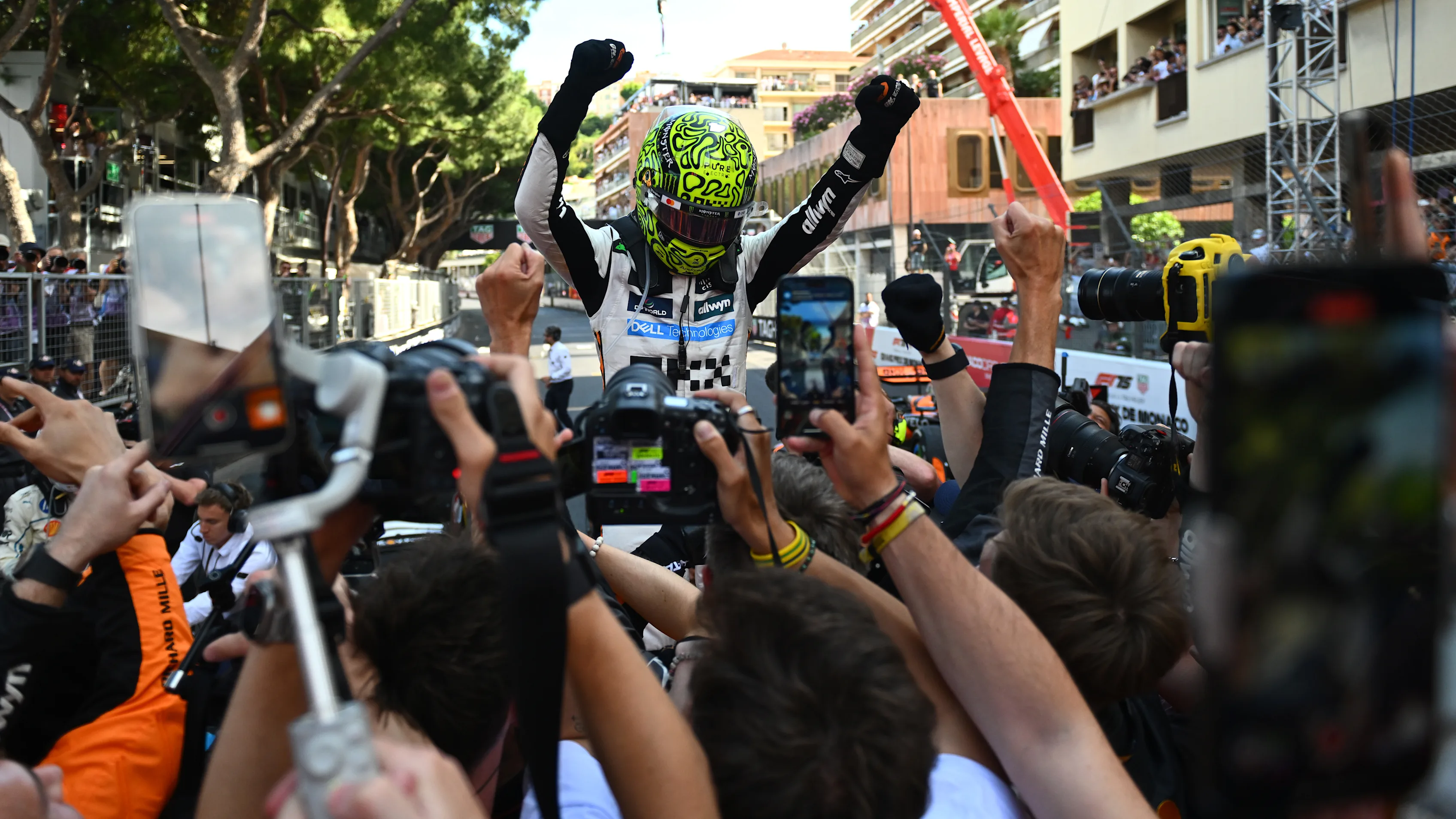
Piastri won at Spa, but split strategies at the Hungaroring saw Norris hang on by fractions ahead of his team mate to hit back immediately. He went into the summer break nine points behind Piastri, with Verstappen 88 points further back. It looked like a straight fight between the McLaren drivers in the second half of the season.
Like the Red Bull Ring, Zandvoort is a Lando Norris kind of track, and he looked every inch a winner… until he didn’t. He set the fastest time in all three practice sessions, and had a tenth over his team mate in Q2 before falling short when it mattered, missing out on pole by 12-thousandths of a second. He battered away at Piastri during the race without making any headway, before, eight laps from home, an oil leak ended his day early. It left Norris sitting on the dunes, head in hands, nursing a 34-point deficit.
He recovered three of those points the following week at Monza, albeit in controversial fashion. McLaren, like most teams without a designated #1, offer pit-stop priority to whichever car is in front. With eight laps to run, both drivers still needing to make a stop, and Norris leading, McLaren asked him to let Piastri, running second, stop first, to protect against a charging Charles Leclerc. Norris accepts when given a guarantee he won’t be undercut by his team mate. He had a slow stop, comes out behind… and McLaren make good on their promise and swap the positions back. This is the first of six consecutive races in which Norris finishes ahead of Piastri – but also the start of a Verstappen charge, that has the Dutchman win six of the last nine.
Azerbaijan is McLaren’s worst race of the year: Norris comes home seventh after Piastri crashes. They’re third and fourth in Singapore, which gets the team over the line in the Constructors’ Championship, but also sees Norris barging Piastri on the first lap, an action that has internal ramifications at the next round in Austin, with Piastri given preferential treatment. That advantage is revoked after Piastri runs into Norris at the first corner of the Sprint, taking both cars out on the spot. Both drivers have clean Grands Prix on Sunday – but Verstappen gets back into the conversation with a perfect weekend of Sprint and race victory. He’s 40 points behind leader Piastri and 26 behind Norris and very much back in the hunt – but this is the point at which Norris picks up the gauntlet.
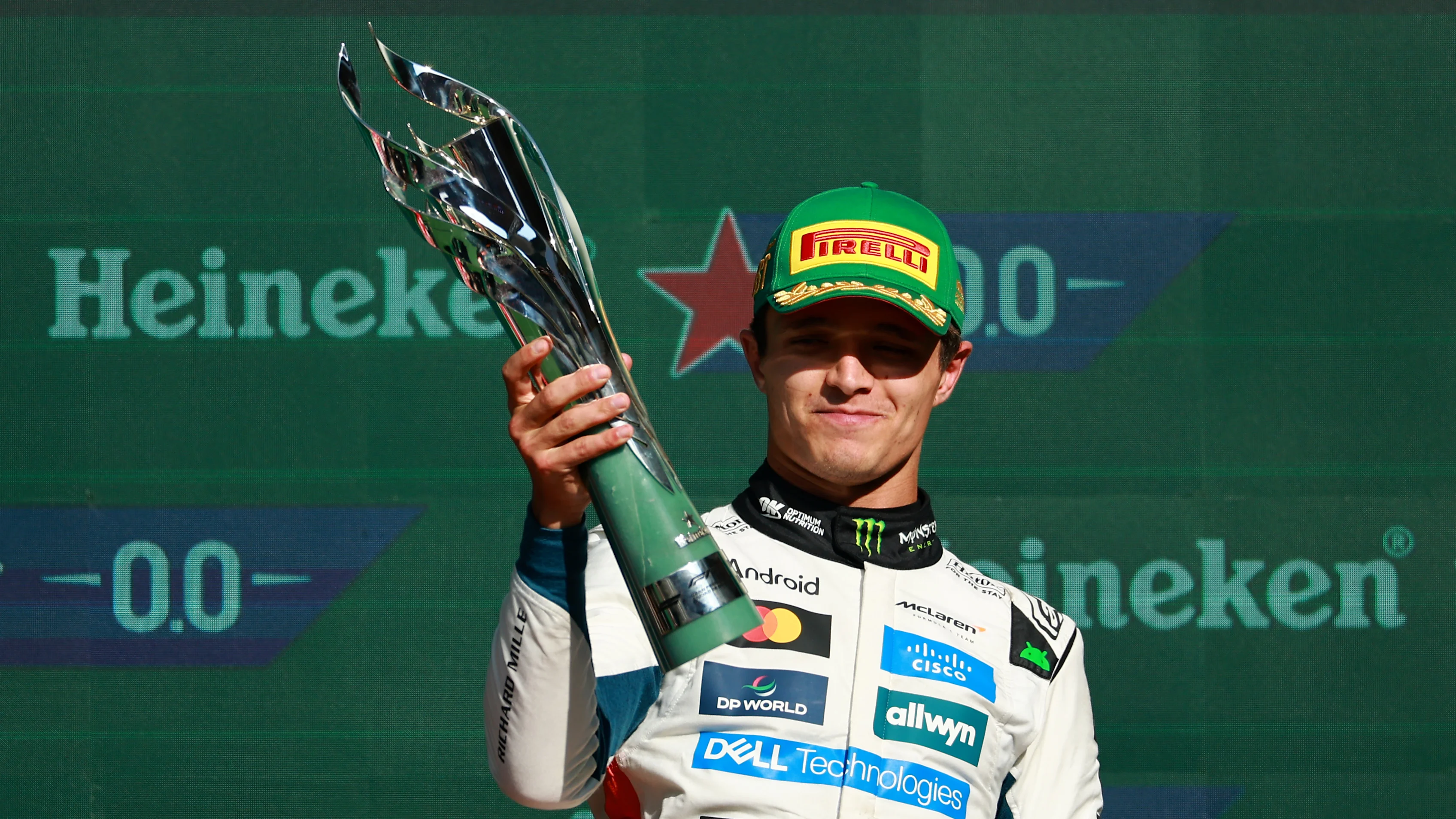
The weeks that won it for Lando were F1’s trip through Latin America. He was mesmeric in Mexico and Brazil. From pole at the Autodromo Hermanos Rodríguez, he led ever lap of the race, set the fastest lap and won by 30 seconds, to end October leading the Championship for the first time since April. He never relinquished that lead, and expanded it considerably in Sao Paulo. The gaps were smaller, but the achievements greater: victory from pole in the Sprint, victory from pole in the race.
Heading to Nevada, he had a 24-point lead over Piastri and 49 over Verstappen. Not quite enough to sew up the title under the neon lights of the Las Vegas Strip, but enough to put Verstappen to bed and make it an all-McLaren affair going to the Middle East. On a track not really suited to the MCL39, he surprised everyone with pole – but was a little too eager to hang on to that lead, and overcooked Turn One. Second to Verstappen was a decent result, certainly not a disaster. That didn’t come until shortly before midnight, when both McLarens were disqualified. With a minimum required plank thickness of 9mm, Norris’ relevant measurements were 8.88mm on the front right skid and 8.93mm on the rear right. His team made token arguments for mitigation: wet all weekend before the race; an unusually high level of porpoising – but it’s a slam-dunk DSQ. Norris was now 24-points ahead of both Verstappen and Piastri.
With two races to run, the maths favoured Norris, but so did the next circuit. Lusail was a McLaren track – but it was Piastri who took the pole in a front-row McLaren lockout. Unusual tyre restrictions gave the Qatar Grand Prix a little bit of an edge, but the McLarens seemed to be in control – until a lap seven Safety Car saw them stay out while everyone else, barring Esteban Ocon, pitted.
The Woking team had counted on at least some cars staying on track, rather than double-stacking in a congested pit lane, giving them a buffer to third-placed Verstappen and an opportunity to build a big lead. Instead, Verstappen effectively gained a free stop, and went on to win. Piastri came home second, Norris scrapped his way back up to fourth. Cue a title showdown at Yas Marina: Norris on 408 points; Verstappen on 396; Piastri 392. The rest of the paddock looked on in frank amazement: the ghosts of dramatic deciders all came out to play.
Norris took the sting out of that. A top-three finish would give him the title, regardless of whatever Piastri or Verstappen could do. Verstappen did his best, taking pole position and building a lead. Norris started P2 and didn’t put up much resistance when Piastri from P3 on the grid went past him on the first lap. Lando’s task was to stay ahead of Charles Leclerc in P4 and George Russell in P5, the only other cars that looked like a podium threat. There was a nervy moment when an out-of-sequence Yuki Tsunoda defended a little too robustly, and Norris was investigated for a track limits infringement, though the stewards called it in his favour – not that Lando was aware of their deliberations: he was simply driving the race he needed to drive. He coasted home in P3, a nerveless and undramatic drive that brought him the ultimate prize in F1.