Mercedes technical chief Paddy Lowe has admitted that in recent races the world champions have been testing research and development parts for future evolution, with the emphasis on 2017 rather than current season updates…
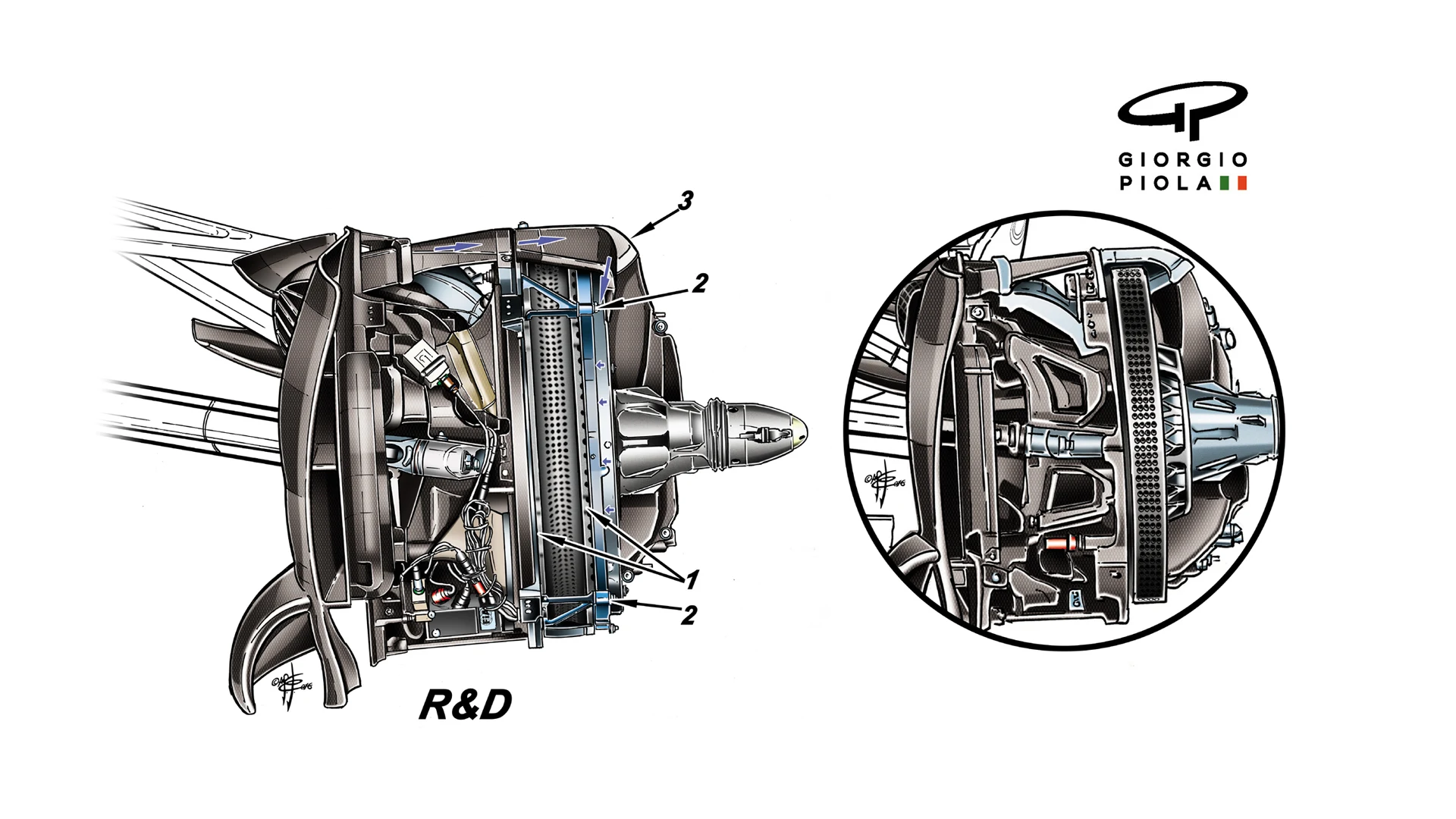
We have already looked at their radical new front wing endplate, while this experimental brake set-up was trialed in Friday morning free practice in Monza, Austin and Mexico - all circuits with very long straights and hence very heavy braking events. The team have added two additional spacers (1), one on either side of the Carbon Industries brake disc, both made of the same friction material as the disc. They are mounted very close to the disc using a special frame (2) - the shape of which is clearer in the drawing below - and are cooled by the inside of the brake duct (3).
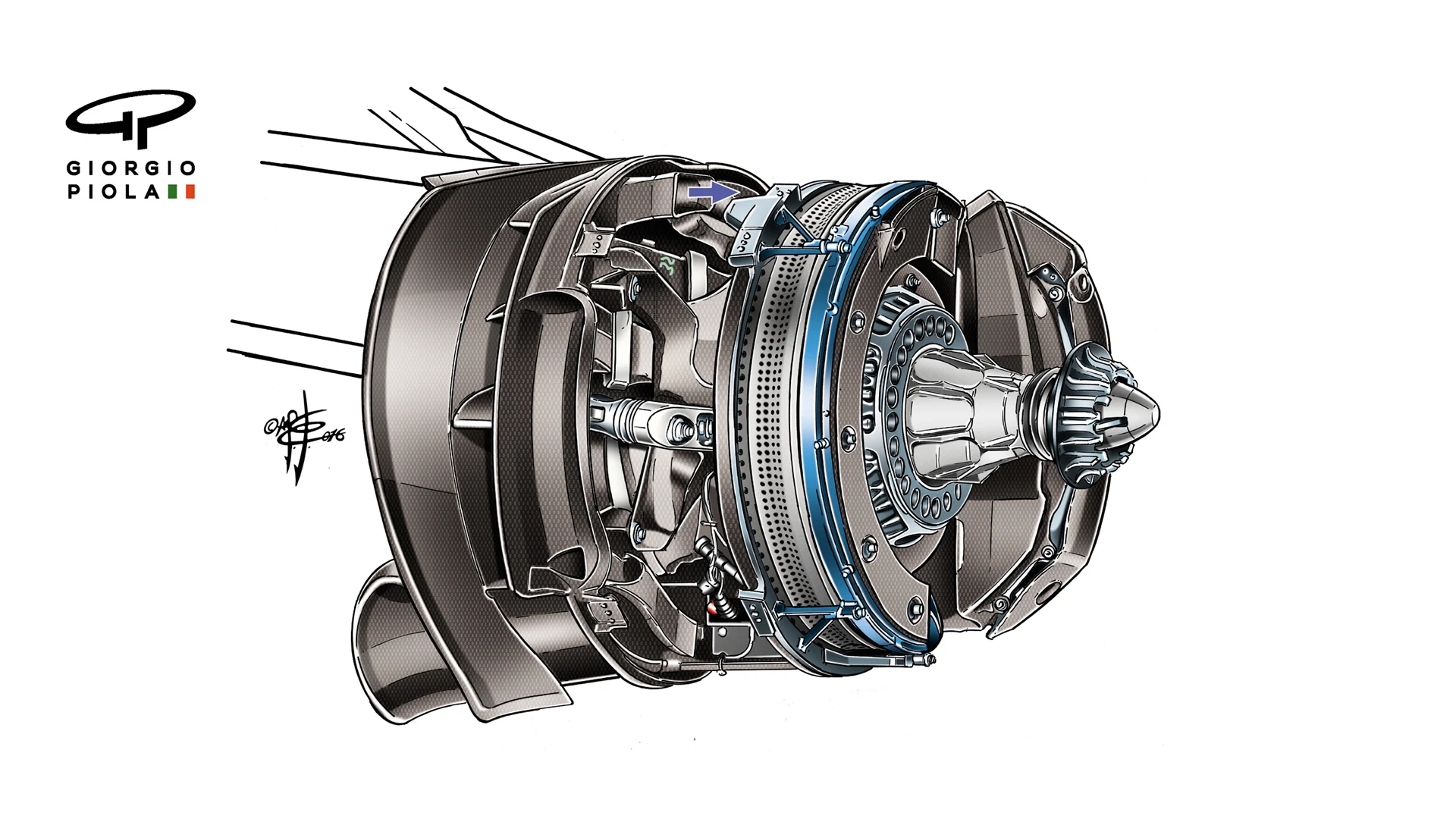
It is difficult to know the exact purpose of this solution. It could be to provide better brake temperature and bite at the beginning of the braking area, or it could be to dissipate heat away from the discs by transferring it to the spacers, which have their own cooling holes and dedicated duct (see blue arrows). It is also possible the set-up is designed to simulate the slightly wider brake discs that will become legal for 2017, allowing the team to study the thermal impact on the brakes and the tyres.
Next Up
Related Articles
 Palmowski crowned 2026 champion as Larsen takes maiden victory
 What the teams said – Qualifying in the United States
 Antonelli explains approach to US GP after taking pole
 How Lawson helped Lindblad by sacrificing his Q3 run
 UnlockedWhat To Watch For in the United States Grand Prix
 AS IT HAPPENED: All the action from Qualifying for the US GP