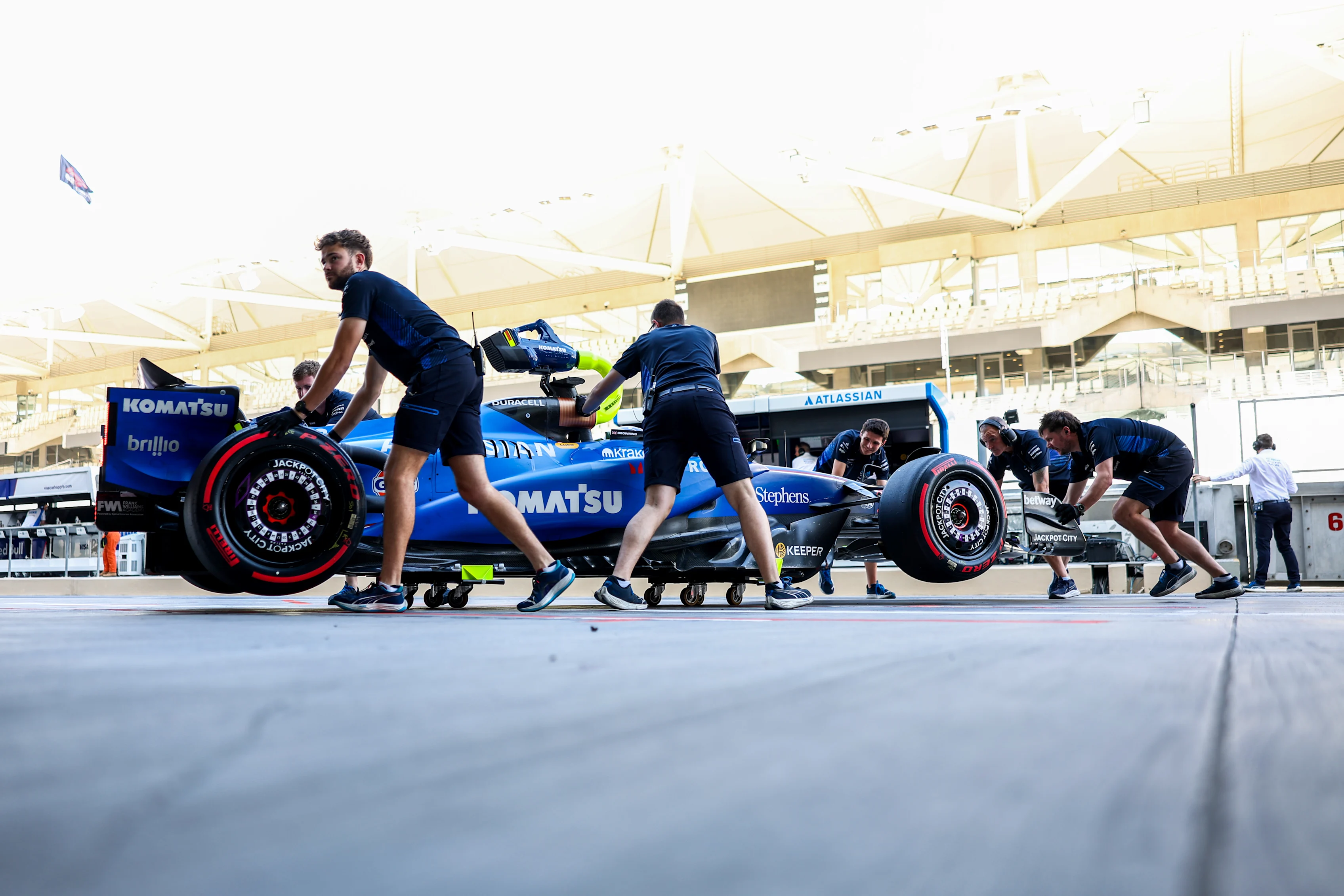
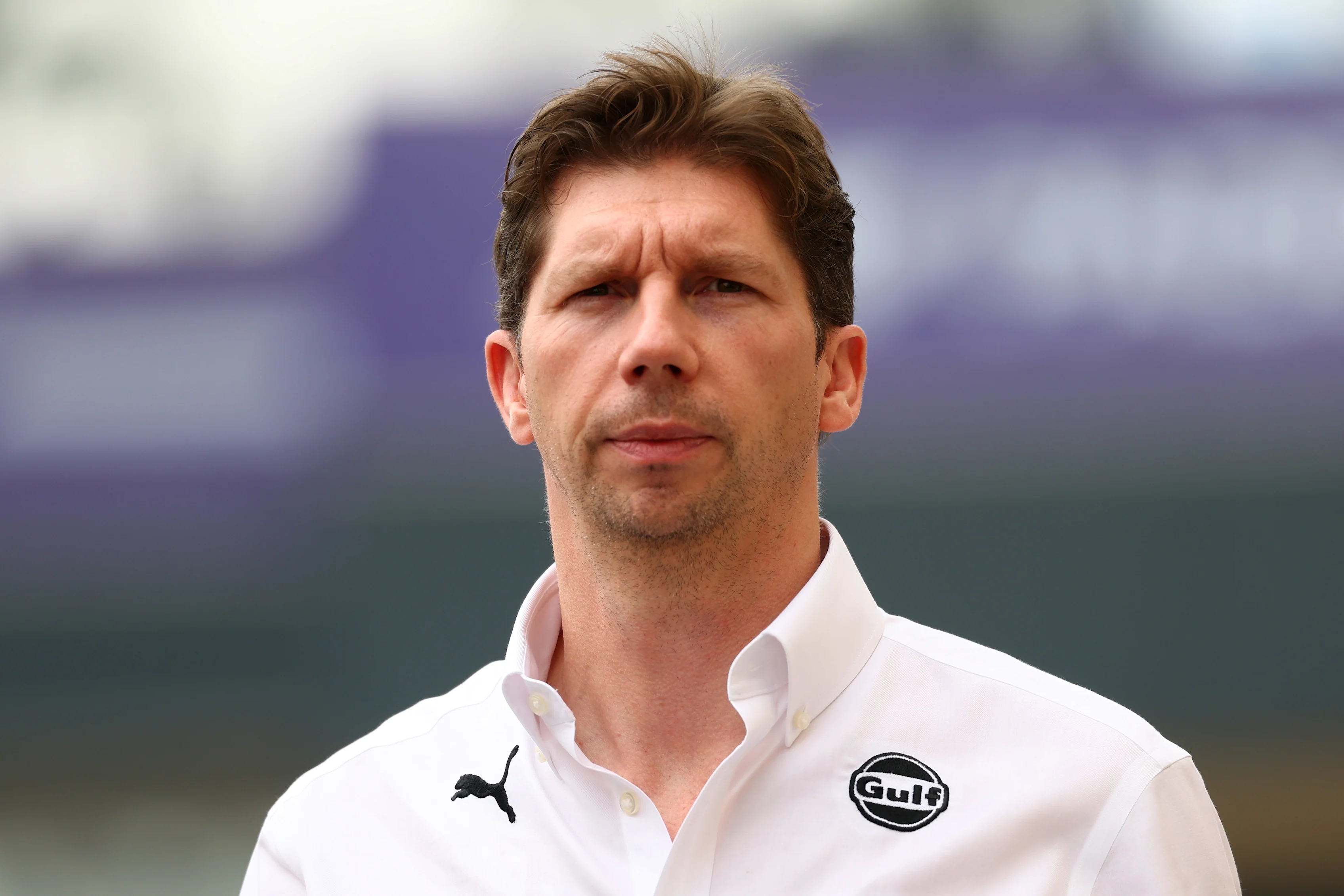
Williams Team Principal James Vowles says his Formula 1 team's 2026 car has passed all mandatory crash tests and they are ready to take part in official pre-season testing in Bahrain.
The iconic British squad chose not to take part in this week's Barcelona Shakedown, where teams are permitted to run their new cars for three days over a five-day period.
Speaking to a select group of media on Wednesday, Vowles admitted that the call to miss the Spanish shakedown "clearly wasn't our plan" and that not being there is "incredibly painful" but it was the result of their call to "push the limits of performance under the new regulations".
Williams are now in a position to complete a filming day, where they are permitted to run for 200km, ahead of the first of two three-day Bahrain tests.
"We are transforming here in Williams and fast," Vowles said. "One of the tasks that has been on my shoulders for a few years is making sure we transform this business at the absolute maximum rate possible and, in my experience, the only way you achieve that is pushing the boundaries and limits hard and aggressively and find your limitations.
"There's no point being just underneath the curve or well and truly underneath the curve if you want to transform at speed. You need to find the pain points and put them right very quickly which is exactly what we're doing.
"I'm confident in our decision to miss Barcelona and I’m confident it was the right one to prepare for the first test in Bahrain and Melbourne.
"I'm pleased to say that we've passed all necessary tests and we're ready to run in Bahrain and we'll carry out a promotional filming day ahead of it."
Williams are in the midst of a rebuild, with Vowles strengthening the team in all areas - and that has inevitably led to some growing pains.
The team boss also said that the development of this year's car, built to sweeping new regulations, has been "three times more complicated" than anything they have previously put through the business since he joined in 2023.
The increased load through the system meant the team "started falling a little bit behind and late on parts".
He added: "We have absolutely pushed the boundaries of what we're doing in certain areas and one of those is in certain corresponding tests that go with it, but those were only, I would say, a blip in the grand scheme of things.
"They are one item out of quite a few that were pushing us absolutely beyond the limit of what we can achieve in the space of time that we have available to us, so it's more of an output than anything else – of pushing not just the boundaries of design but the boundaries of just simply how many components can be pushed through the factory in a very short space of time."
Because the team don't yet have the "agility" to react to delays in the system, Vowles says there has been a greater reliance on "humans going above and beyond to make sure we get the car built".
He added: "We're not having to unwind a lot of what we've done actually. A lot of the structure we have, I think, is correct.
"But what's very clear to me is when [we're in] this halfway house – where we're using systems and where they're not quite fit for purpose – we're falling back to old techniques and human glue and that's what's causing the problem."
The Williams boss admitted the team could have made it to Barcelona, but it wasn't worth the negative knock-on effect.
"[To attend Barcelona] I would have to turn upside down the impact on spares, components and updates across Bahrain, Melbourne and beyond and the evaluation of it was that for running in a cold, damp Barcelona against doing a VTT (Virtual Track Testing) test against the spare situation – and frankly there were zero points for running in a shakedown test – we so made the decision," he said.
"I stand by it, that the right thing to do is to make sure we're turning up at Bahrain correctly prepared – and prepared in Melbourne as well."
The Virtual Track Testing allows Williams to test various systems, including brakes and cooling, while assessing reliability – and with that in mind, Vowles is hopeful they can catch up.
"I'm confident we won't be behind for the following reason," he said. "We've still got six days of good testing in… dry Bahrain, in representative conditions.
"We're fortunate we have the power unit provided by Mercedes and the gearbox provided by Mercedes so the learning that they're going through this week in Barcelona will carry over to us into Bahrain.
"Now, it's not that I want to be resting on their hard work, but also it is worth stating that that is still an advantage for us that falls out of it, or a disadvantage that's negated.
"I'm confident that with six days in Bahrain we [can] run through the programme that we need to, and it's why I wanted the VTT now.
"What I wanted to do is to make sure that from the outset in Bahrain we have a reliable car ready to go so that we're not sitting there doing what a lot of individuals and teams are trying their best to in Barcelona but not leave the garage. We've got to be there ready to go."
Bahrain testing begins on February 11 and runs for three days. Following a four-day gap, there will be three further days of testing at the desert track before the season opener in Australia on March 6-8.
Next Up
Related Articles
 Piastri reveals ‘clear sign of progress’ in ‘challenging’ year
 Verstappen backs Mekies' Red Bull contract extension
 UnlockedMatch the grid for your chance to win the ultimate F1 experience
 BettingBest value early odds for the United States Grand Prix
 How F1 drivers and strategists tackle the Circuit of The Americas
 Hadjar insists Red Bull don’t have ‘the fastest car’