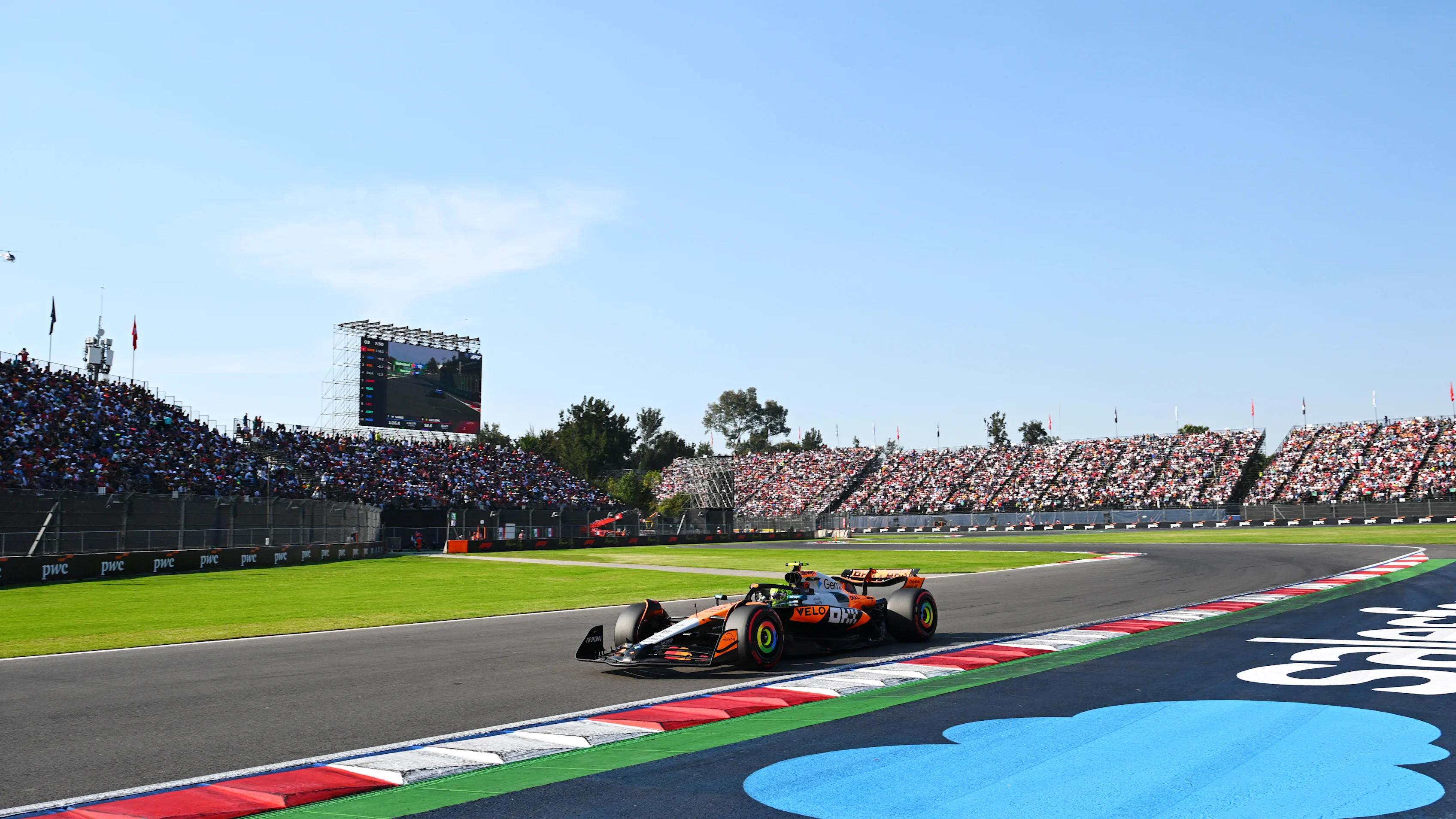
With the Drivers’ Championship within Kimi Antonelli’s reach, Formula 1 is back in action this weekend for the Mexico City Grand Prix. But how much do you know about the Autodromo Hermanos Rodriguez? F1.com has your all-in-one guide…
Key Autodromo Hermanos Rodriguez statistics
- Circuit length: 4.304km
- Number of turns: 17
- Number of laps: 71
- Race distance: 305.354km
- Lap record: 1m 17.774s – Valtteri Bottas (2021)
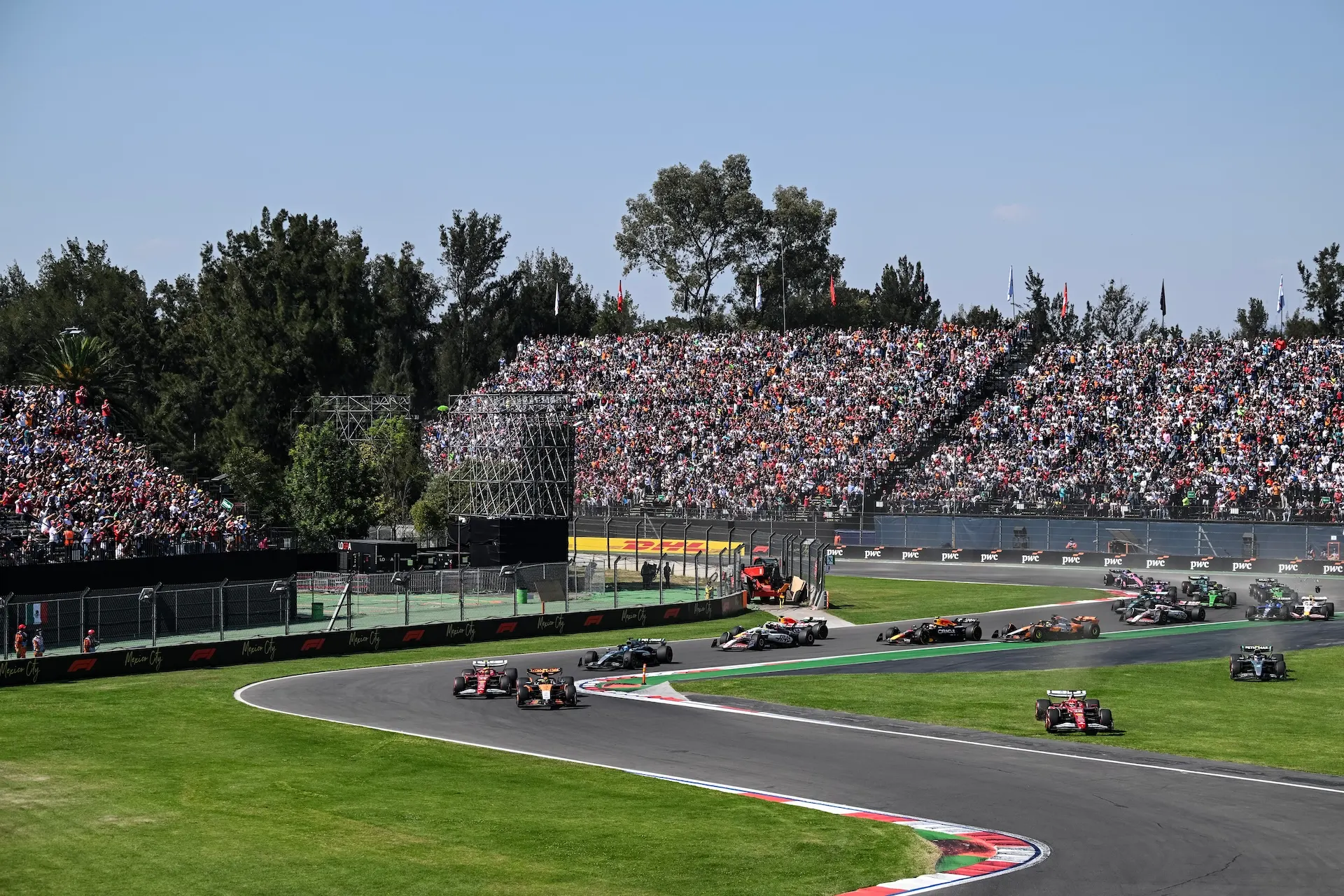
When was Mexico’s first Grand Prix?
We can thank the father of pioneering racing brothers Ricardo and Pedro Rodriguez for the existence of the Mexico City Grand Prix – he used his connection to President Adolfo Lopez Mateo to encourage the construction of the Magdalena Mixiuhca circuit in 1959.
Located in a public park, it hosted its first non-championship race in 1962 before F1 went back for a bona fide Grand Prix the following year, which was won by Jim Clark and proved that Mexico’s one-of-a-kind energy made it a worthy addition.
While the track was later renamed in honour of the aforementioned brothers after their untimely deaths, it eventually dropped off the calendar due to safety concerns, returning in 2015 with some significant alterations.
What’s the circuit like to drive?
The greatest challenge at the Autodromo Hermanos Rodriguez is undoubtedly the high altitude – thinner air impacts downforce, cooling and physical exertion, necessitating a unique approach to the Grand Prix.
Meanwhile, Mexico City’s passionate crowds roar drivers around the circuit as they snake through long straights and technical chicanes before tackling the Foro Sol stadium and remnants of the historic Peraltada corner.
Jolyon Palmer, former Renault F1 driver, explained: “The Autodromo Hermanos Rodriguez has a low downforce effect but, here in Mexico City, you run to the maximum due to the thin air. The car always feels low on grip and on the edge around here.
“The big braking zones are tricky in the first half of the lap and it is always loose through the middle sector thanks to the aforementioned low downforce. You've got to work out how much kerb you can take early on; take too much and it can really unsettle the car.
“The last sector is fiddly and it feels ridiculously slow through the stadium. The penultimate right-hander feels like it might be nothing, but it is arguably the easiest to crash on with low grip and the wall so close.
“Grip level overall is very low and the car feels so clumsy at such a low speed. But the atmosphere around here in Mexico is great, which is such a buzz.”
The atmosphere around here in Mexico is great, which is such a buzz
Where are the Straight Mode zones and overtake detection?
As a reminder, and as explained in our pre-season summary of regulation changes, Straight Mode is a different aerodynamic configuration that allows cars to reduce their drag, making them more efficient when accelerating up towards top speed.
The rear wing continues to open up a gap – just like it did when drivers used DRS (the Drag Reduction System) in the past – but now the front wing also moves. The uppermost front wing elements drop down at the same time the rear wing’s top element does.
This is a mode that is used on every single lap in dry conditions, in every area that is designated for it. Essentially, the car will adapt between two different configurations depending on where it is on the track, providing maximum downforce in corners but then less drag on straights.
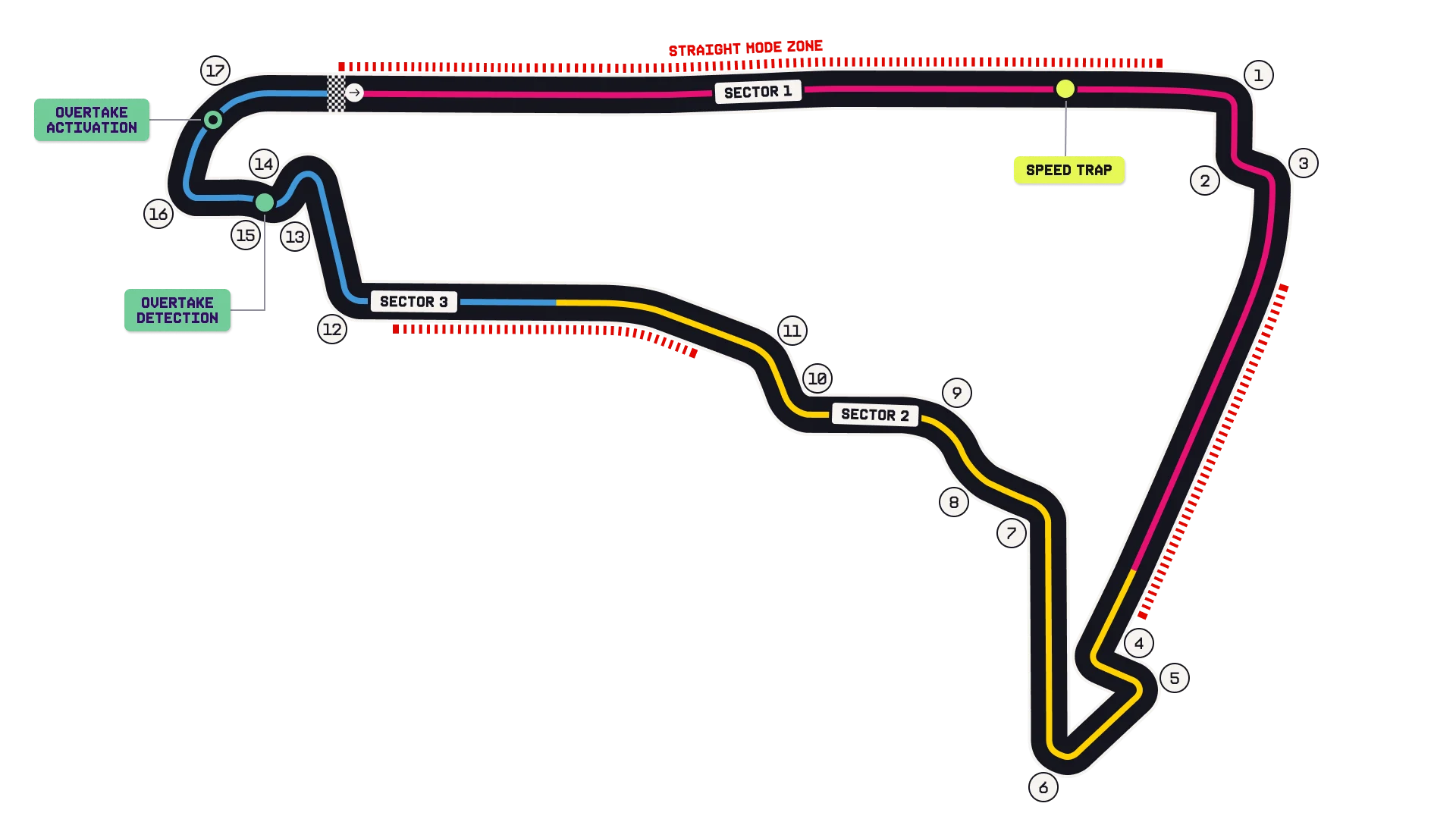
In Mexico City, there are three designated Straight Mode zones – down the long start/finish straight, between Turns 3 and 4, and between Turns 11 and 12.
Meanwhile, Overtake Mode replaces DRS and is a new power mode that allows a driver to recharge more electrical energy, and generate an additional electrical power profile, so they can sustain a higher speed for a longer period.
There is one detection point per lap for this mode – expected to be out of the final corner on many occasions, leading onto a long straight – and it will be available to drivers on the following lap as long as they stay within a second of the car in front at that detection point.
Around the Autodromo Hermanos Rodriguez, the Overtake Detection point comes at Turn 14, while the Overtake Activation line follows at the entry of Turn 17.
Five fun facts about the Mexico City Grand Prix
- At an altitude of over 2200 metres, Mexico City is F1's highest circuit
- The thinner air allows for incredible speeds down the main straight – in 2025, Oscar Piastri recorded a top speed of 363kph
- Mexico City is a happy hunting ground for Max Verstappen, who has clinched a record five wins
- Home hero Sergio Perez is set to take his 300th Grand Prix start in Mexico City
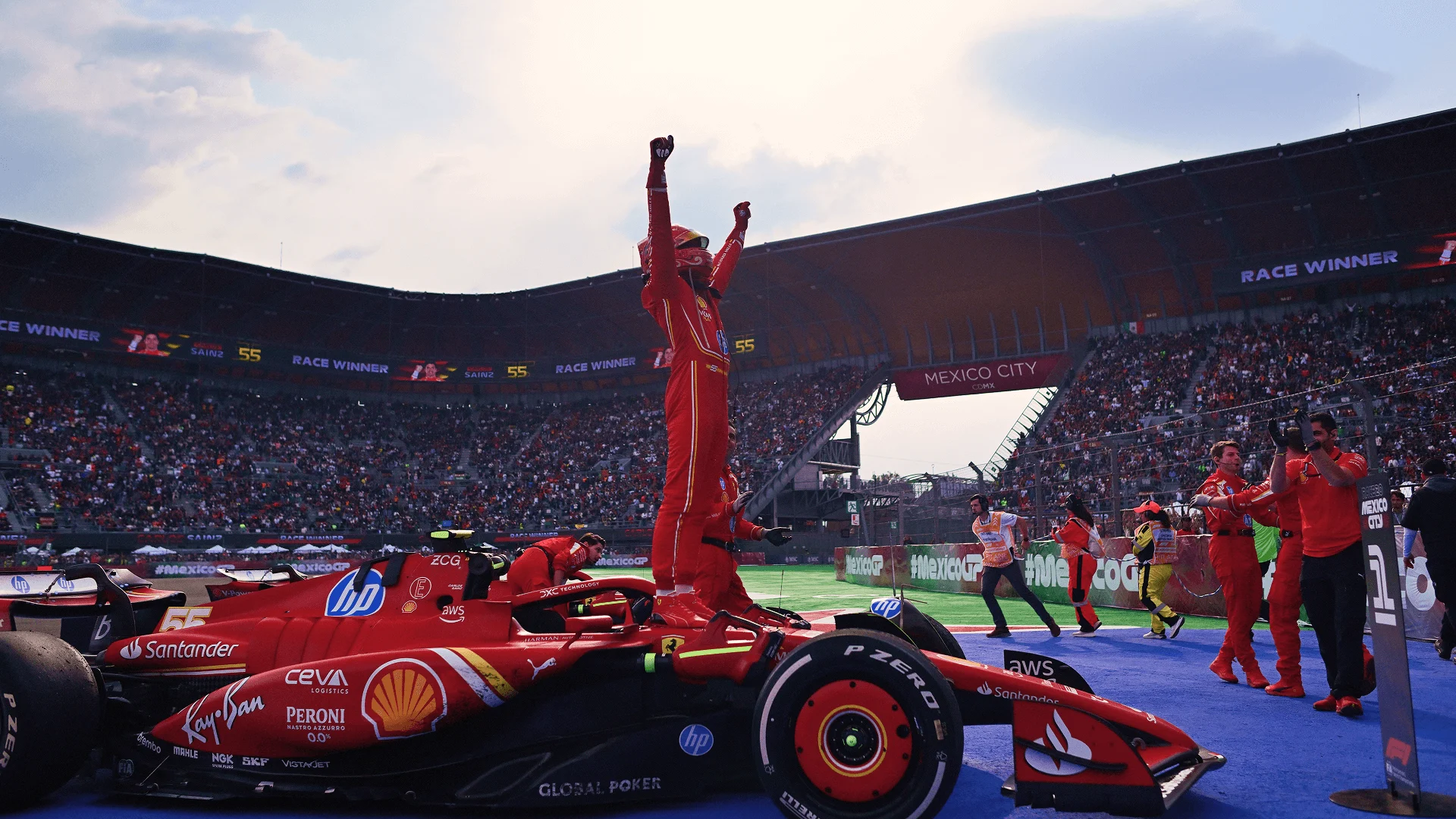
- Several drivers have been crowned World Champion at the Autodromo Hermanos Rodriguez, including John Surtees, Graham Hill and Lewis Hamilton
Next Up
Related Articles
 Perez signs Cadillac contract extension until at least 2029
 How to stream the 2026 Mexico City Grand Prix on F1 TV Premium
 5 storylines we're excited about ahead of the Mexico City GP
 What tyres will the teams have for the Mexico City GP?
 UnlockedQUIZ: How much do you know about the drivers in the F1 '300 club'?
 BettingThe 5 drivers most likely to qualify fastest in Mexico