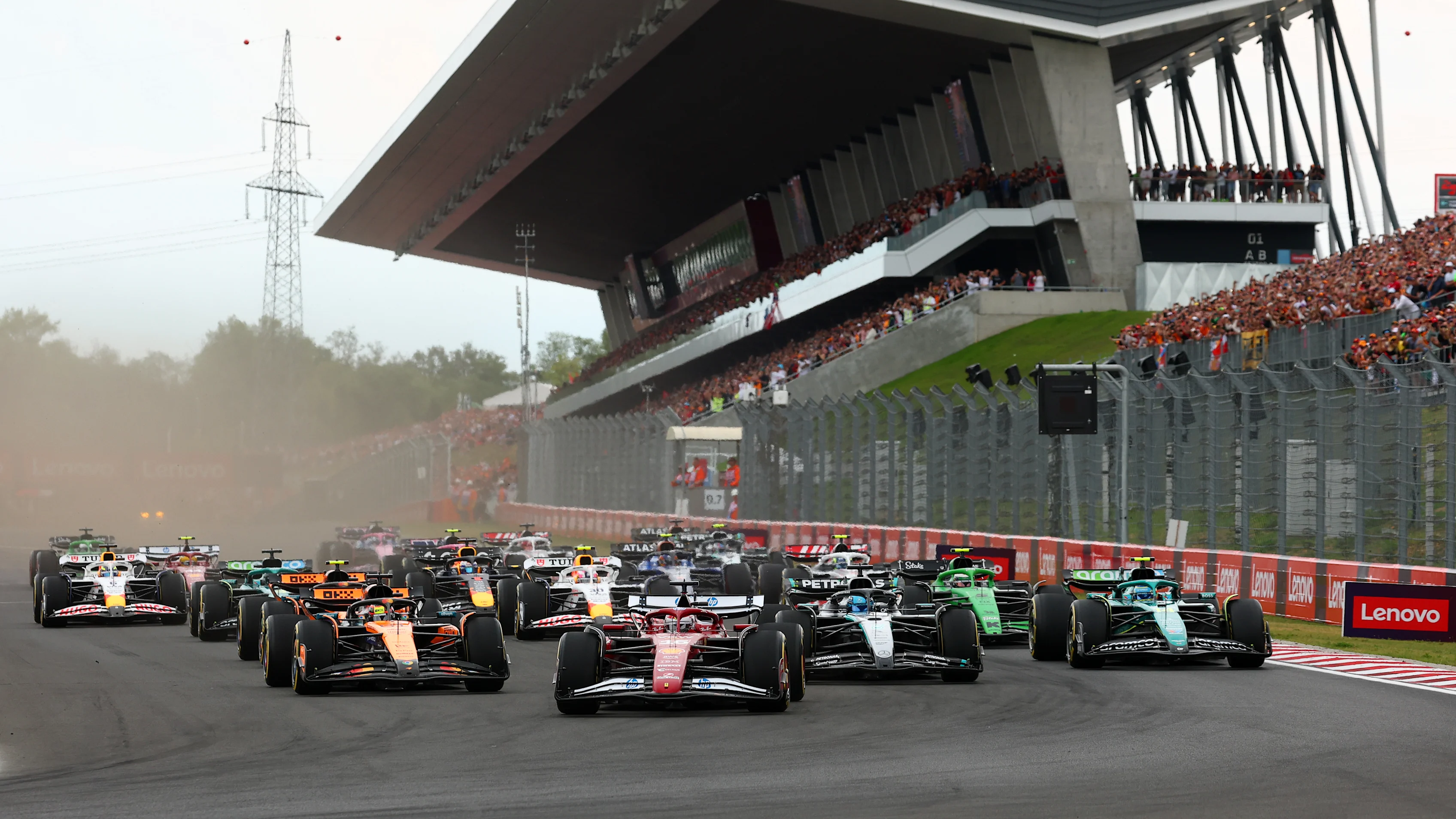
With the competition continuing to heat up, F1 is back in action this weekend with the Hungarian Grand Prix. But how much do you know about the Hungaroring? F1.com has your all-in-one guide…
Key Hungaroring statistics
- Circuit length: 4.381km
- Number of turns: 14
- Number of laps: 70
- Race distance: 306.63km
- Lap record: 1m 16.627s – Lewis Hamilton (2020)
When was Hungary’s first Grand Prix?
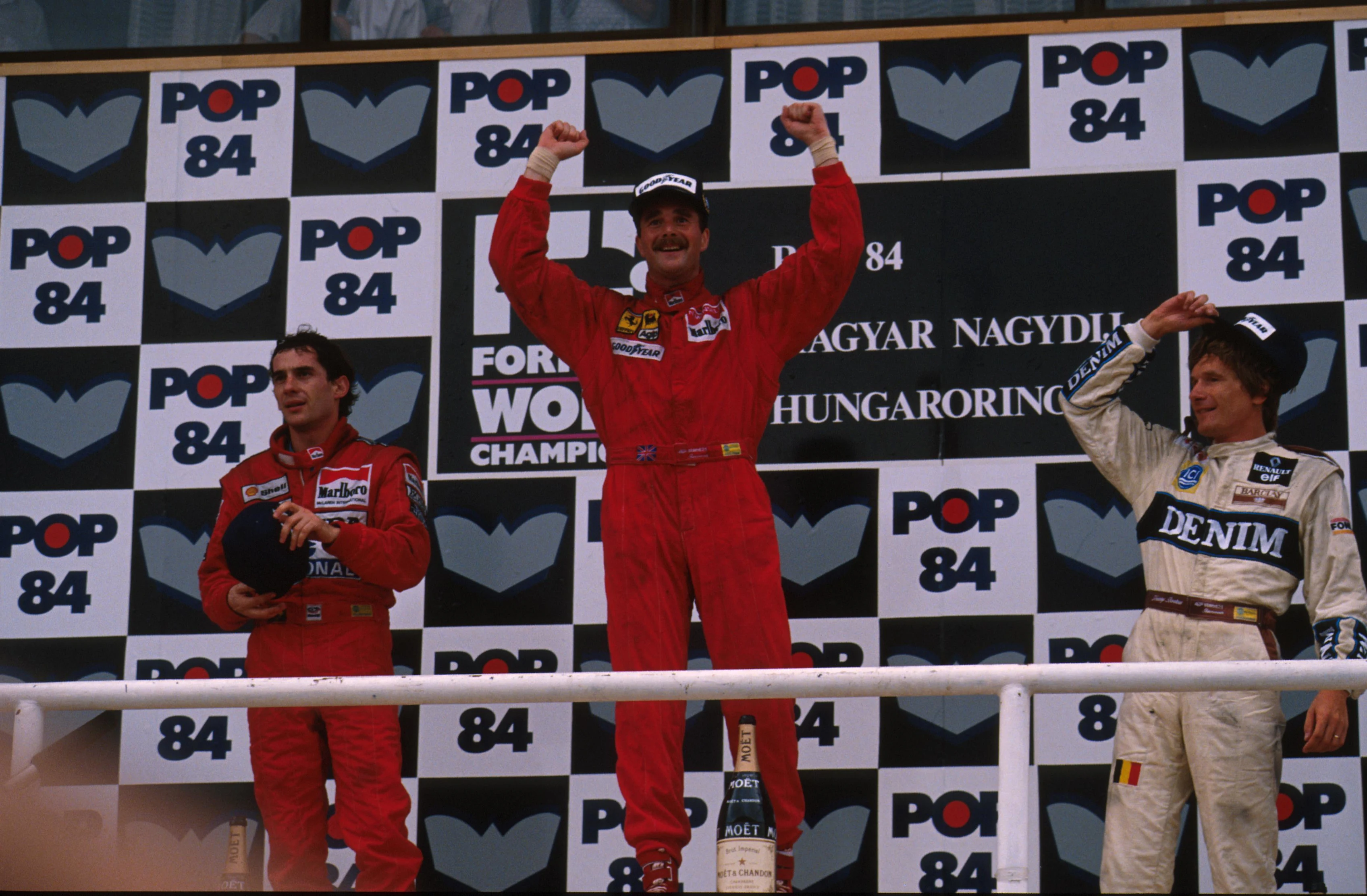
The very first – and for 50 years, the only – Hungarian Grand Prix was held in a park in Budapest called Nepliget in 1936, with the circuit remaining open for racing until 1972. However, the country didn’t host a Formula 1 race until the championship made its debut in the country in 1986, making it the only race at the time to be held behind the Iron Curtain.
An early plan suggested refreshing the circuit at Nepliget to make it more similar to Monaco, but it was eventually decided that a brand new venue would be built just outside of the capital city, and the Hungaroring was impressively constructed in less than nine months.
It’s undergone a number of changes over the last four decades, including the removal of a temporary chicane that was originally in place at Turn 3 to avoid an underground spring. The most recent major alteration to the track came in 2003, when the main straight was lengthened and the first hairpin tightened to encourage overtaking.
What’s the circuit like to drive?
Despite its four Straight Mode zones (more on that later), the Hungaroring is actually notorious for its relative lack of straights, leading to its frequent comparison to the karting tracks that many of the drivers spent their childhoods on.
It’s narrower than the historic circuits of Silverstone and Spa-Francorchamps that preceded this round, and is made up of sets of corners that feed into each other, so a consistent rhythm is key here – nail the entry of a corner and you’ll be rewarded in the following turns.
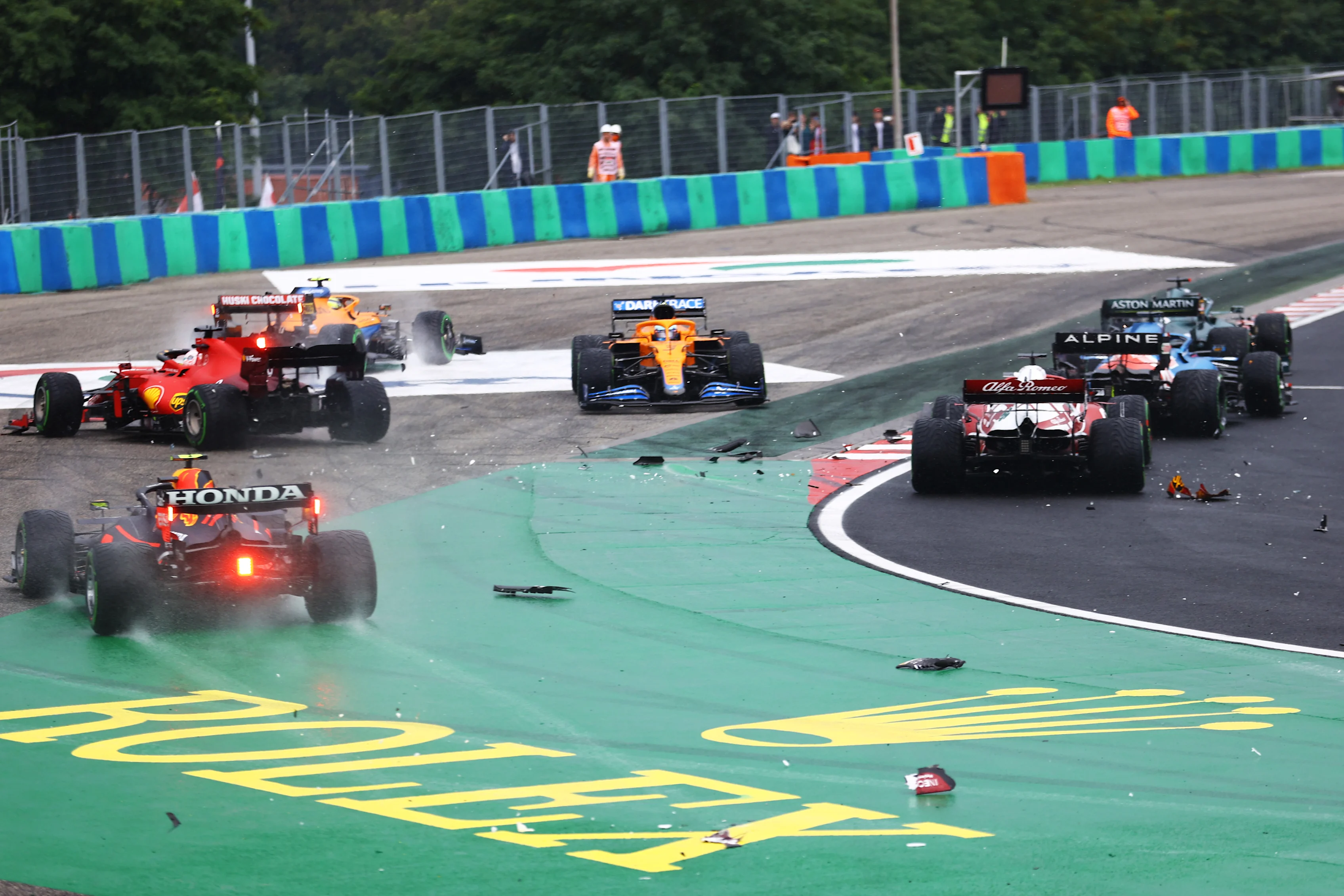
The layout does mean that overtaking is more difficult, with most moves executed at the beginning of the lap, but its twisty nature and lack of emphasis on sheer horsepower make the Hungaroring an enjoyable challenge for drivers.
Jolyon Palmer, former Renault F1 driver, explained: “Budapest feels like a small circuit when you’re there but there’s plenty that goes into it with 14 corners.
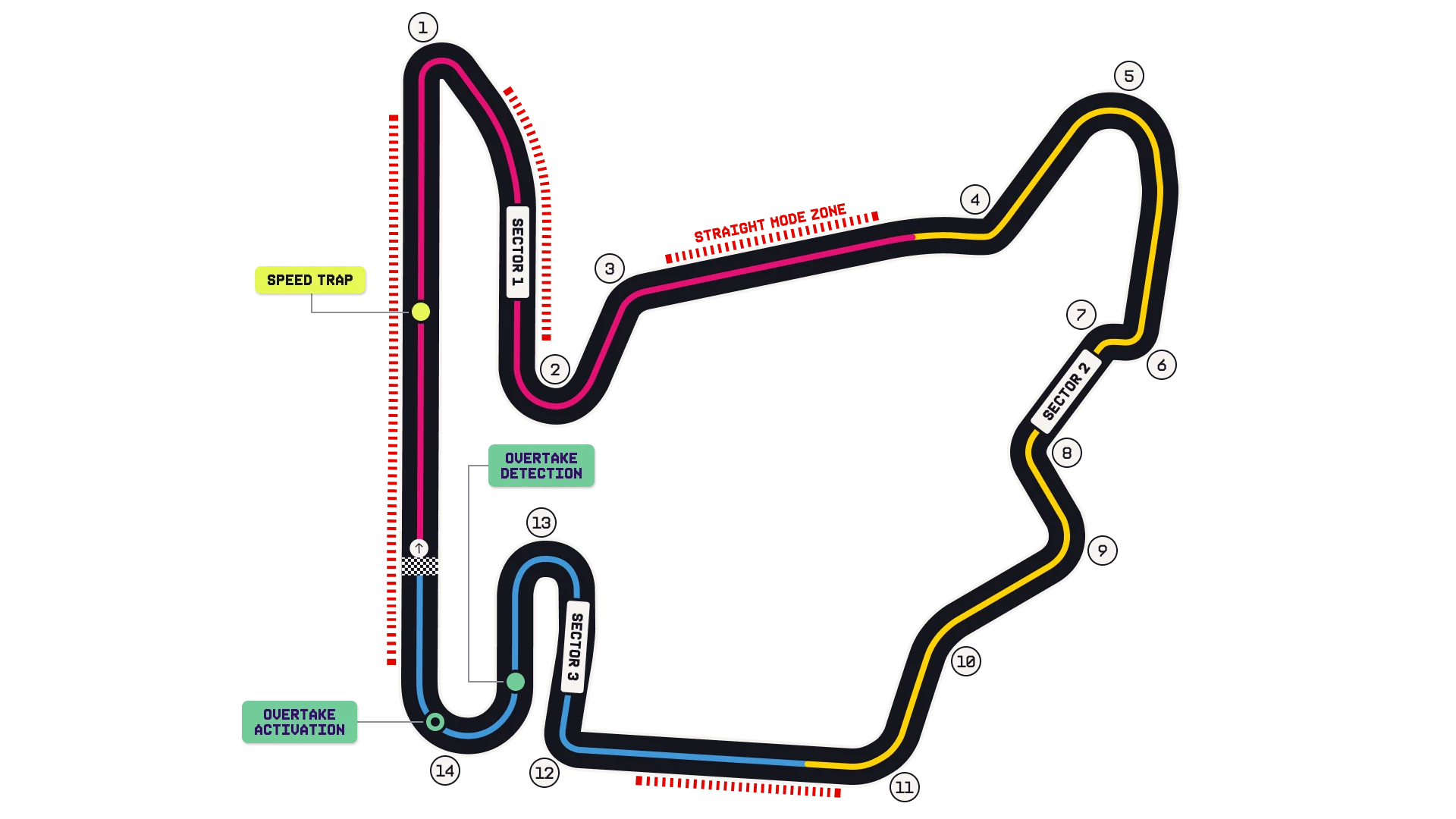
“The first sector is basically two corners: a big braking zone at Turn 1, which is a relatively straightforward right-hander but quite bumpy in the braking area, so it can induce some front locking, before heading into Turn 2, which is slightly downhill.
“The middle sector is one of those ones where you’ve got to find a rhythm because out of pretty much every corner you need to be positioned for the next corner coming through it. You go from Turn 4 into 6, then you get a tiny breather, but it carries you through the next sweeping section, building speed all the way.
“In the final sector, sometimes the tyres are starting to overheat and you start to scramble around for a little bit of grip there. In the race, you’ve got to think about setting up your overtake coming out of Turn 14, the final corner, because that is your one chance to do something into Turn 1 and, if not, into Turn 2. If you don’t get it done there, you’re probably going to be following for the next lap.
“I had some good battles here in GP2, and while it’s not easy to overtake in Hungary, you can. The layout of the circuit lends itself to overtaking at Turn 2, particularly as you can go inside or outside, so it can be hard to defend. It’s a nice one to have some battles at.”
Budapest feels like a small circuit when you’re there but there’s plenty that goes into it.
Where are the Straight Mode zones and overtake detection?
As a reminder, and as explained in our pre-season summary of regulation changes, Straight Mode is a different aerodynamic configuration that allows cars to reduce their drag, making them more efficient when accelerating up towards top speed.
The rear wing continues to open up a gap – just like it did when drivers used DRS (the Drag Reduction System) in the past – but now the front wing also moves. The uppermost front wing elements drop down at the same time the rear wing’s top element does.
This is a mode that is used on every single lap in dry conditions, in every area that is designated for it. Essentially, the car will adapt between two different configurations depending on where it is on the track, providing maximum downforce in corners but then less drag on straights.
In Hungary, there are four designated Straight Mode zones, beginning with the run down the start/finish straight, then between Turns 1 and 2, between Turns 3 and 4, and finally between Turns 11 and 12.
Meanwhile, Overtake Mode replaces DRS and is a new power mode that allows a driver to recharge more electrical energy, and generate an additional electrical power profile, so they can sustain a higher speed for a longer period.
There is one detection point per lap for this mode – expected to be out of the final corner on many occasions, leading onto a long straight – and it will be available to drivers on the following lap as long as they stay within a second of the car in front at that detection point.
Around the Hungaroring, the Overtake Detection point comes as drivers head into the final corner, Turn 14, while the Overtake Activation line follows at the exit to lead onto the start/finish straight.
Five fun facts about the Hungarian Grand Prix
- The 2026 Hungarian Grand Prix marks the event’s 40th anniversary
- It has been the scene of several drivers’ first F1 victories, including Oscar Piastri in 2024, Esteban Ocon in 2021, Jenson Button in 2006 and Fernando Alonso in 2003
- None of the last five Hungarian Grands Prix have been won from pole – the longest ongoing run at any F1 circuit
- Lewis Hamilton, Charles Leclerc and Ferrari all took their most recent pole positions to date at the Hungaroring
- Hamilton also holds the record for most wins at the track (eight), while McLaren are the most successful team in Hungary with 13 victories
Next Up
Related Articles
 The 2026 Qualifying and race head-to-heads so far
 Verstappen thrilled with first Singapore win at 10th attempt
 BettingMercedes’ fading dominance opens doors for F1 bettors
 Wolff wary of Red Bull's growing threat to Mercedes
.webp) UnlockedVote for Your Heineken® F1 Season Ticket Winner
UnlockedVote for Your Heineken® F1 Season Ticket Winner When is the earliest Antonelli could win the title?