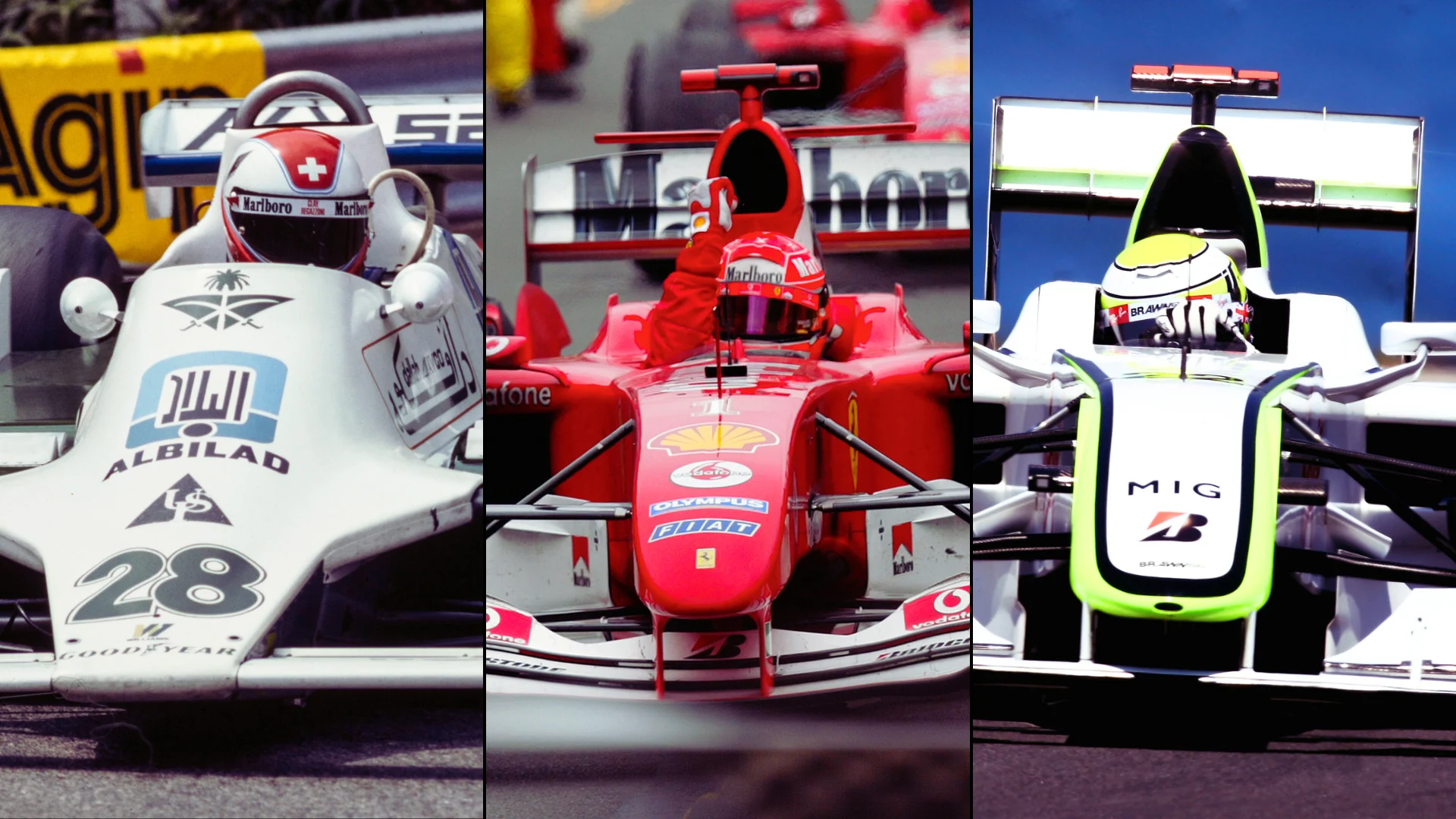
Formula 1 will enter an all-new era in 2026, with overhauled regulations – affecting both chassis and power units – coming into play. Before the latest cars break cover, F1.com sat down with design legend Ross Brawn to revisit some of the most memorable creations from his time in F1 and motorsport as a whole, which spanned various rulesets.
Brawn has an extensive list to choose from, given that his motorsport career began back in the mid-1970s, and featured stints at Williams, Arrows, Benetton, Ferrari, Honda, his own Brawn GP team and Mercedes – plenty of race wins and world titles being secured with cars that he helped turn from concept to reality.
Scroll down for the seven challengers Brawn ultimately chose, including one away from the world of F1, as well as some snippets of background and insight from the man himself…
Williams FW07
Factfile
Years: 1979 to 1982
Brawn’s role: Aerodynamicist
Races: 43 (including several variants)
Pole positions: 8
Victories: 15
Drivers: Alan Jones, Clay Regazzoni, Carlos Reutemann, Rupert Keegan, Keke Rosberg, Mario Andretti
Titles: 3 (1x Drivers’, 2x Teams’)
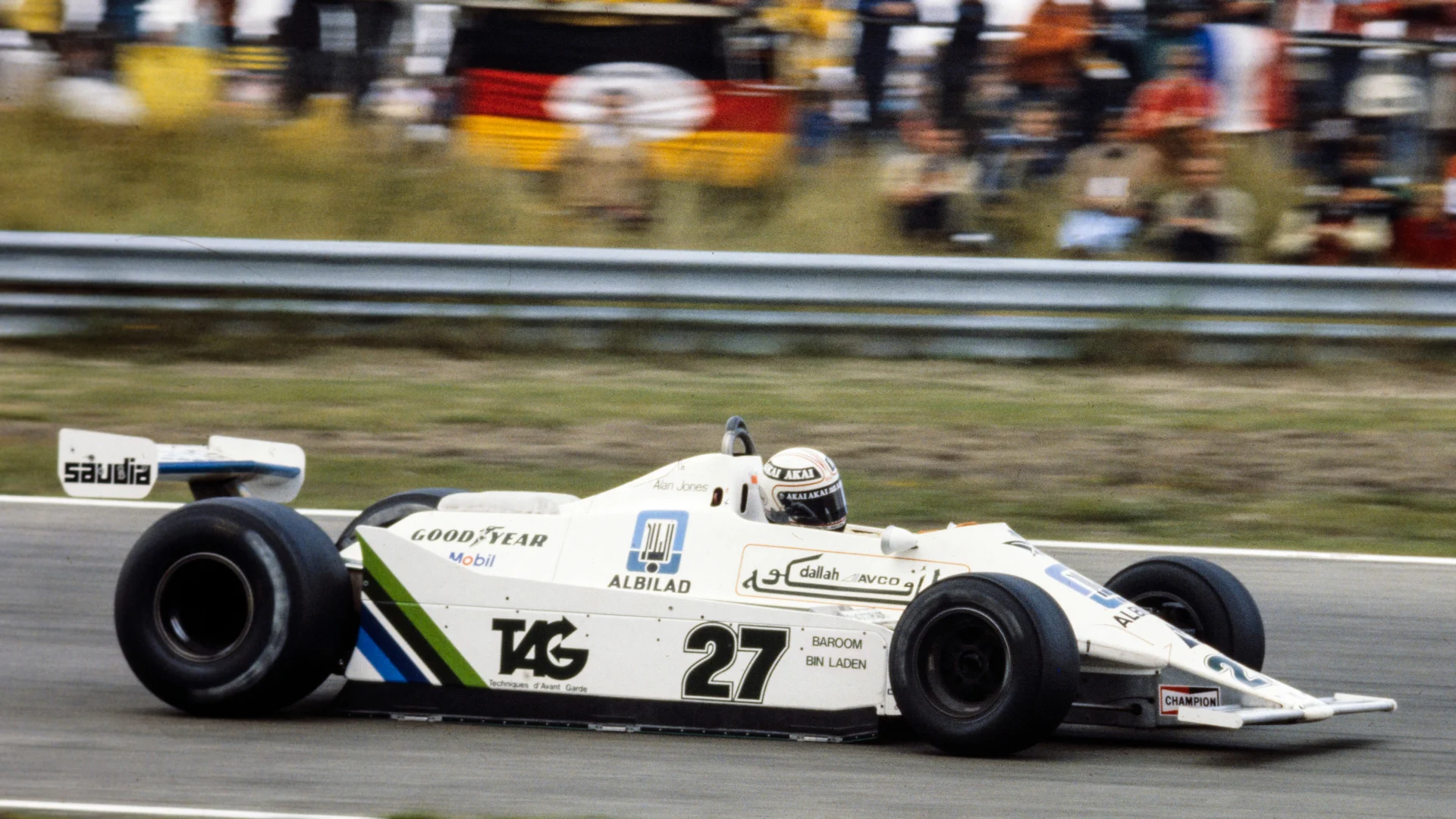
My early career at Williams was pretty crucial, and very influential, on the culture, thinking and approach I took to F1. Patrick Head [then Technical Director] was my mentor, and I don’t think you could find anyone better in terms of clear thinking, discipline, and a balanced approach. So, that education was definitely the foundation for everything that came afterwards.
It seems amazing now, because I was a young guy who had an interest in aerodynamics for something completely different. I used to race slot cars and model cars, so we played around with the aerodynamics on those all the time, without really knowing what we were doing. I started to study aerodynamics in a very amateur way, and bought all the books. It was very rudimentary, but it was enough to get going in F1, because no one else really knew anymore.
In those early days I ran the wind tunnel programme at Williams, then Frank Dernie joined [as Head of Aerodynamics] and added a lot more strength to that group. It was a period of incredible progress, and with the Williams FW07, which was the first ground effect car we made, I can honestly say that I was very involved in the aerodynamic design. We won Williams’ first World Championship in 1980, so it’s one of the cars that’s really close to my heart.
Arrows A10
Factfile
Years: 1987 to 1988
Brawn’s role: Designer
Races: 32 (including A10B variant)
Best result: 3rd
Points scored: 34
Drivers: Eddie Cheever, Derek Warwick
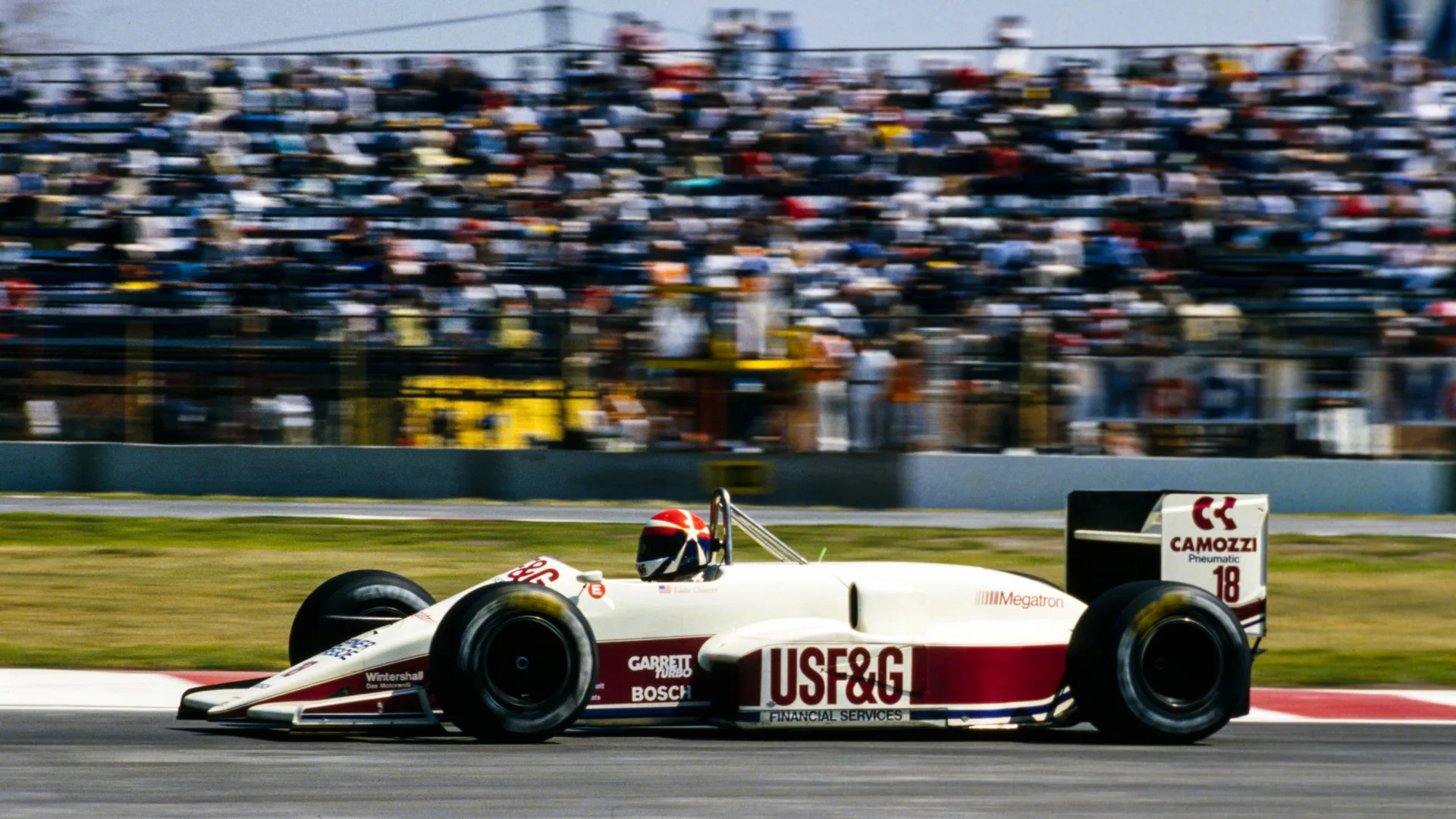
I left Williams because I decided I wanted to try and face some different challenges, and ultimately designed my first F1 car at Arrows – the A10. I remember a chap called ‘Megatron John’, who was the owner of our main sponsor Megatron. Megatron was a company that basically bought second-hand computers from large corporations and leased them back to smaller corporations. ‘Megatron John’ was making millions out of this process, and he was an enthusiast, so he got us a BMW straight-four engine and put his name on it. It was a moderately successful car. We finished third at Monza during the 1988 season, so we got on the podium with it, and we scored some points with it.
Jaguar XJR-14 (sportscars)
Factfile
Years: 1991 to 1992
Brawn’s role: Designer
Races: 19
Pole positions: 11
Victories: 6
Main drivers: Martin Brundle, Derek Warwick, David Brabham, Teo Fabi, Davy Jones, Arie Luyendyk
Titles: 2 (1x Drivers’, 1x Teams’)
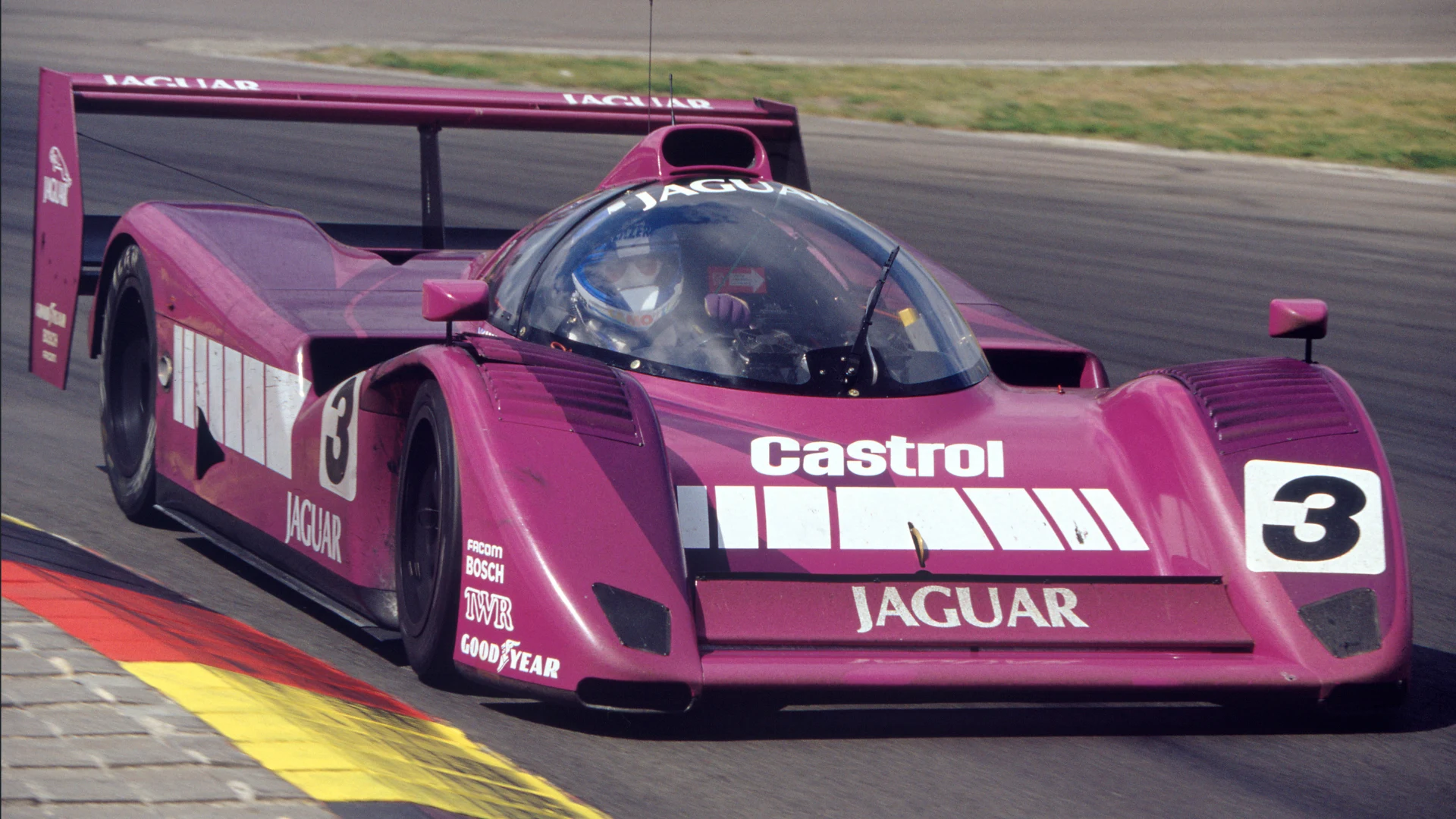
The next big car for me was the Jaguar XJR-14, which was essentially an F1 car with a sportscar body over the top. The World Sportscar Championship rulebook opened up in front of me, and I could see all sorts of ways of interpreting the regulations that had not been intended. It was like being in a playground.
It was quite controversial… I mean, the door was actually the window, and the driver crawled out of the car NASCAR-style! We also had an underwing that we counted as a wing, but it was actually an extension of the underbody, which made it much longer than intended. Of course, when the car appeared, we were told, ‘You can’t do that’, but when the scrutineers read the regulations, they realised you could.
It was several seconds faster than the opposition when we first raced. I loved it. It was one of those cars that just looked fast. It later got developed into two or three different cars that won the 24 Hours of Le Mans with a Porsche engine in the back, so it had a very interesting history after we won the World Championship in 1991.
That’s also when I first met Jean Todt [future Ferrari Team Principal and colleague], who was the Peugeot team manager at the time. He was my nemesis during that period, because he objected to everything we did!
Benetton B194
Factfile
Year: 1994
Brawn’s role: Technical Director
Races: 16
Pole positions: 6
Victories: 8
Drivers: Michael Schumacher, Jos Verstappen, JJ Lehto, Johnny Herbert
Titles: 1 (Drivers’)
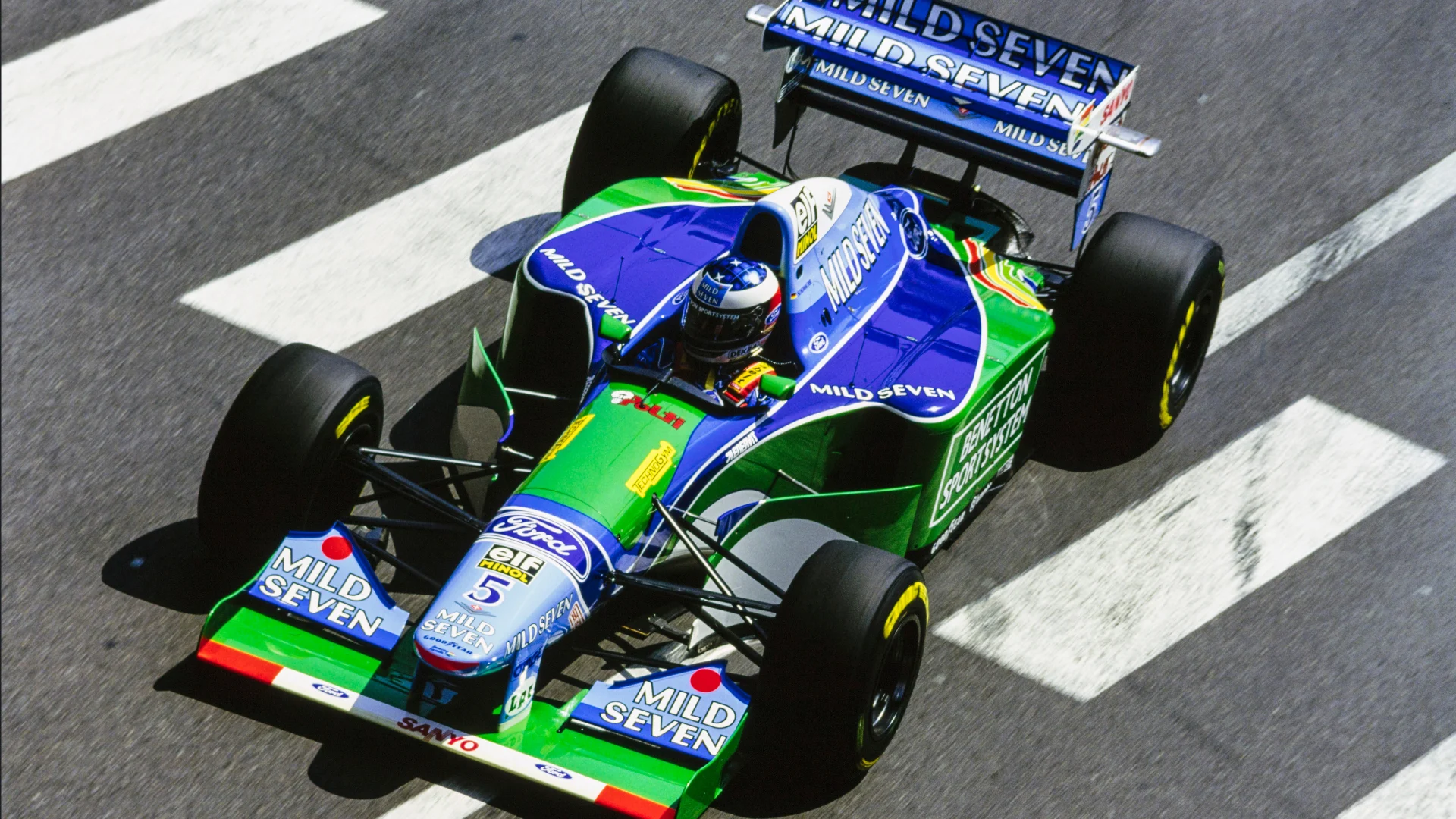
Next on my list is the Benetton B194, which won the Drivers’ Championship with Michael. It was an extremely controversial year (writer’s note: given the allegations of rule-bending, disqualifications for Schumacher and a collision with title rival Damon Hill at the season finale), but one that demonstrated the value of starting projects early. In 1993 we had active suspension, and in 1994 it was passive suspension, so the cars were very different. We started designing the 1994 car at the beginning of 1993, which was almost unheard of in those days, because cars tended to be designed in the last few months of the previous year.
We had some, not original, but very important ideas around the centre of gravity and weight. It was a very, very light car, so we had a huge amount of ballast that we could stick on the bottom, which got the centre of gravity down. Those physics still apply, whatever the racing car is. It was one of the very special cars in my career, clouded a little bit by the controversy – but a fabulous design and a highlight.
Ferrari F2004
Factfile
Year: 2004
Brawn’s role: Technical Director
Races: 18
Pole positions: 12
Victories: 15
Drivers: Michael Schumacher, Rubens Barrichello
Titles: 2 (1x Drivers’, 1x Teams’)
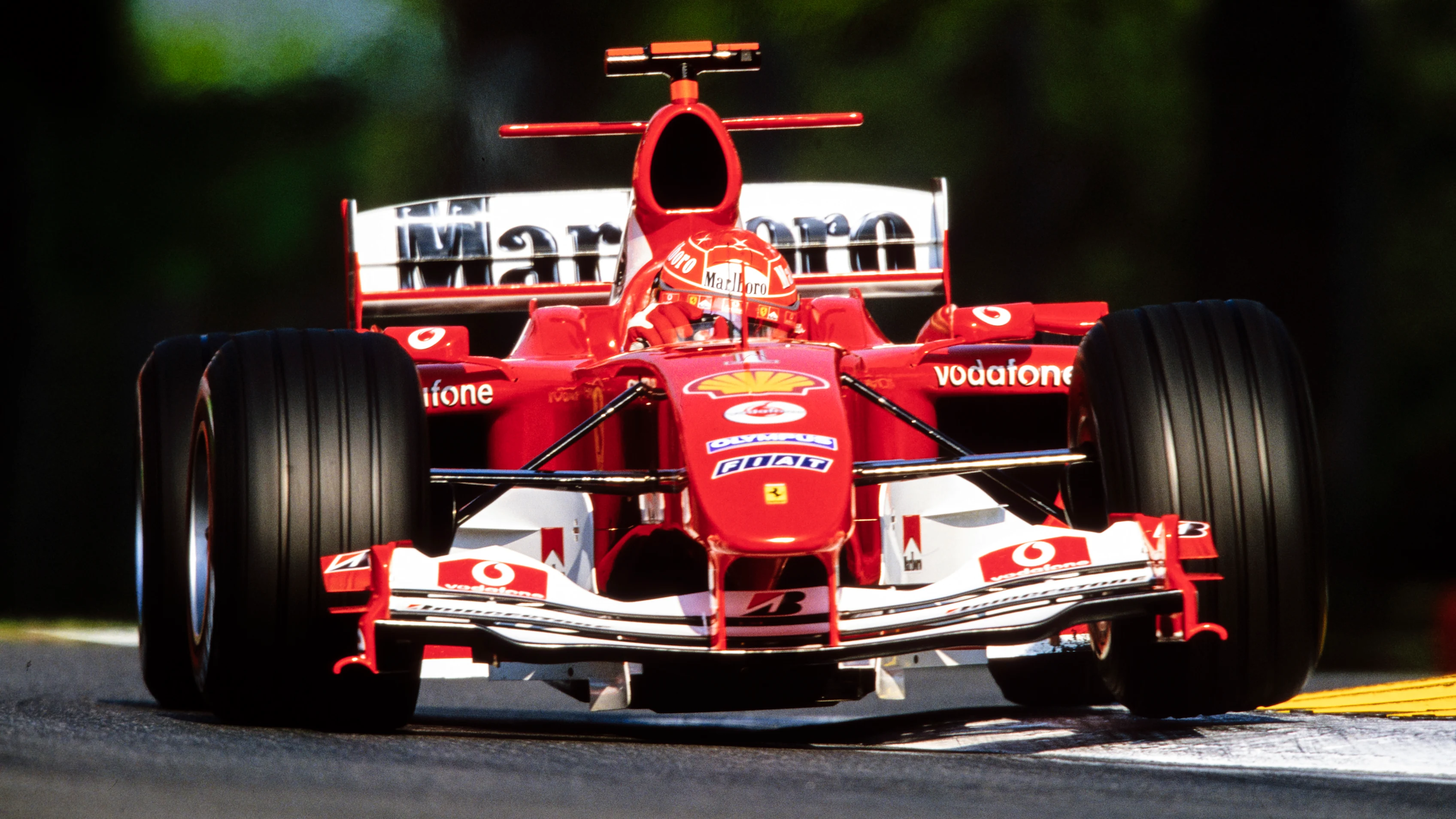
I think the pinnacle of my time at Ferrari was the 2004 car. It all came together. The thing I loved at Ferrari was every year being better than the one before – in terms of the team, the cars we built, the way it was functioning. Every year we were chipping away at it, and every year we were making things a bit better. It culminated in the 2004 car, I think, being the best ever.
We got screwed thereafter by the tyre regulations changing, but I think we’d become too successful, and we had to be stopped somehow. That juggernaut would not have stopped any other way, because we just had everything working so well. Having sat on the other side of the fence since then, I can understand the frustration of Bernie [Ecclestone, then F1 chief], Max [Mosley, then FIA President] and the promoters. It was becoming a shock when we didn’t win, rather than a shock when we did win. That was a very special car.
Brawn BGP 001
Factfile
Year: 2009
Brawn’s role: Owner and Technical Director
Races: 17
Pole positions: 5
Victories: 8
Drivers: Jenson Button, Rubens Barrichello
Titles: 2 (1x Drivers’, 1x Teams’)
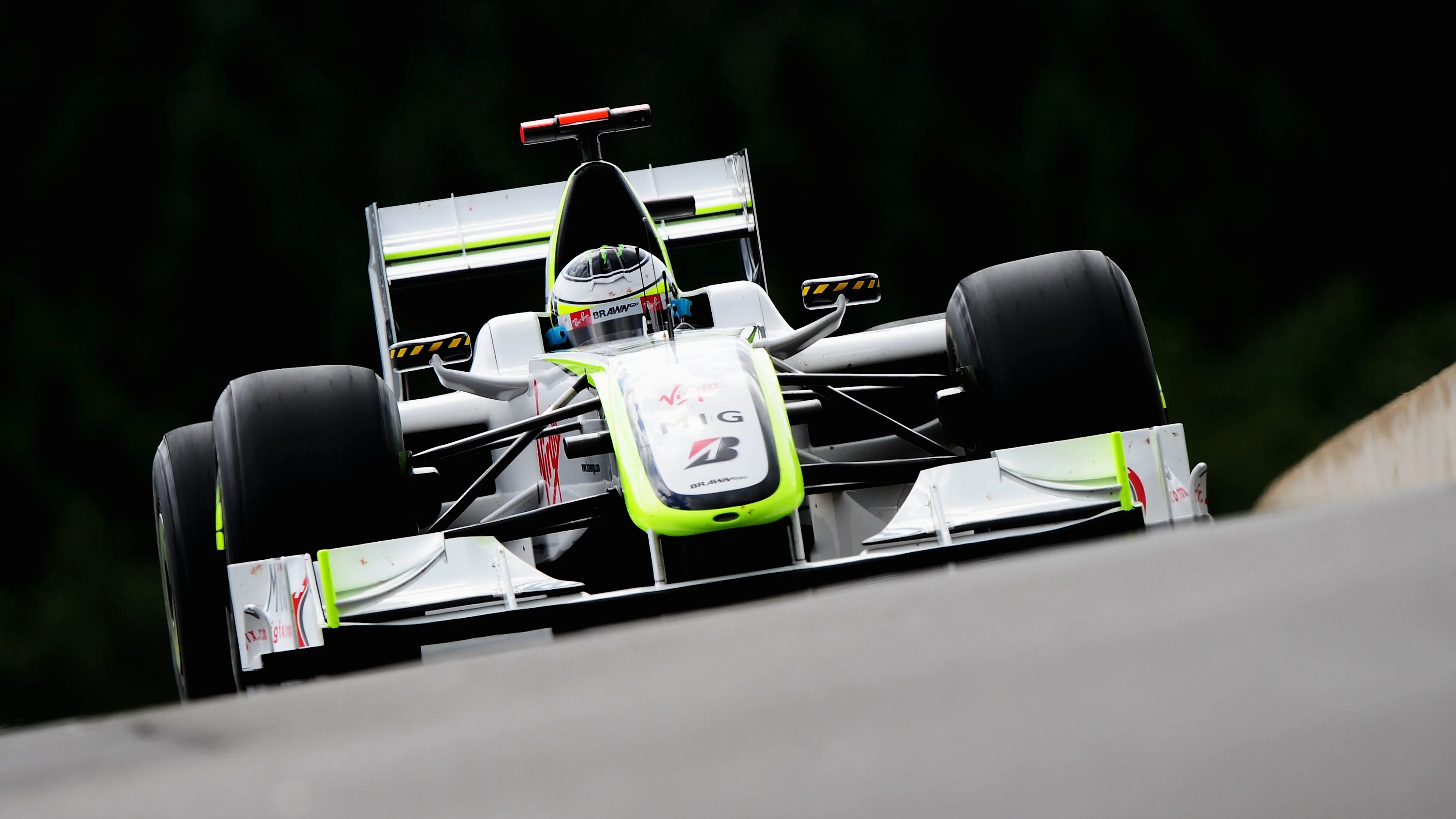
Then, of course, the Brawn car, which had the whole fairy tale story around it. It’s well documented, but what I would emphasise is how the resources of Honda built that car, or the resources of the Honda F1 team. We had three wind tunnels working in parallel at one stage, and that can get confusing if you don’t manage it carefully. We designed the programmes to complement the strengths and the weaknesses of each particular tunnel. It was one of the Japanese engineers who came up with the twin floor concept using the tunnel in Japan.
Due to the withdrawal of Honda and the very late adaptation of the Mercedes engine in the car, it’s also worth mentioning just how compromised the engine installation was. The gearbox was up in the air, because the crankshaft output height was higher on the Mercedes, so we had to lift the gearbox up to get it to fit. Again, that damages the centre of gravity, and affects the suspension geometry and all sorts of things. There were a lot of compromises on that car to fit the Mercedes engine, so I think if it had been designed with a Mercedes engine from scratch, it would have been even quicker than it turned out to be!
Mercedes F1 W05
Factfile
Year: 2014
Brawn’s role: Team Principal until late-2013
Races: 19
Pole positions: 18
Victories: 16
Drivers: Lewis Hamilton, Nico Rosberg
Titles: 2 (1x Drivers’, 1x Teams’)
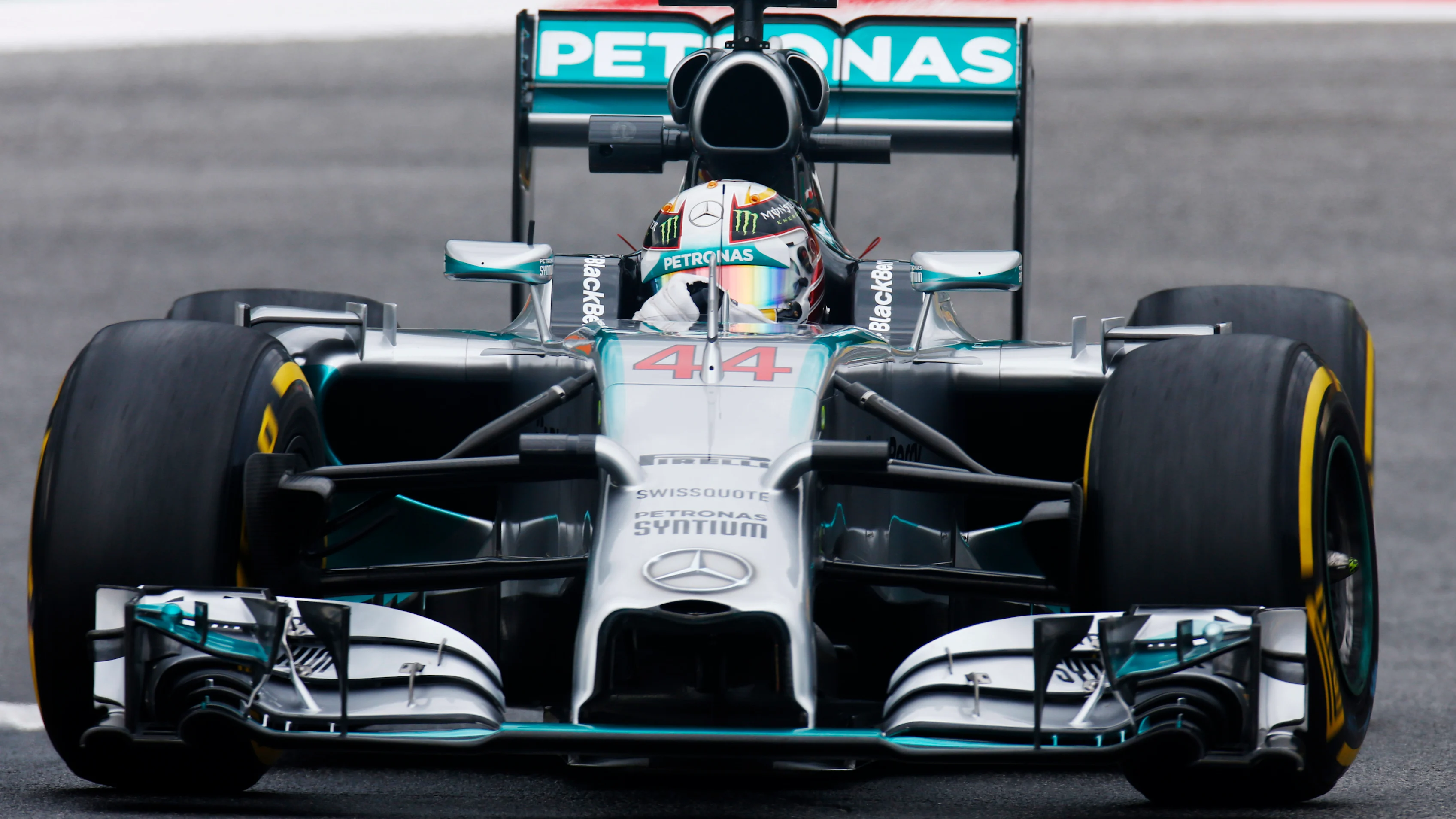
One car I’d also mention, which in a way was a repeat of the 1994 Benetton and the 2009 Brawn, is the 2014 Mercedes. Whilst I was no longer there – I’d left in the winter – that car was a result of exactly the same philosophy: start early, have a dedicated programme, and have a very integrated programme. Andy Cowell [then Engineering Director for Mercedes-AMG High Performance Powertrains] was right in tune with everything we were doing on the chassis, and the two groups worked amazingly well together. The car was a runaway success, so I took a great deal of pride in that.
Next Up
Related Articles
 BettingThe 5 drivers most likely to win in Mexico
 The 2026 Qualifying and race head-to-heads so far
 Betting5 betting lessons after Antonelli wins United States GP
 Lawson excited for what’s to come after more points in Austin
 Leclerc your US GP Driver of the Day after fighting drive to P2
 When is the earliest Antonelli could win the title?