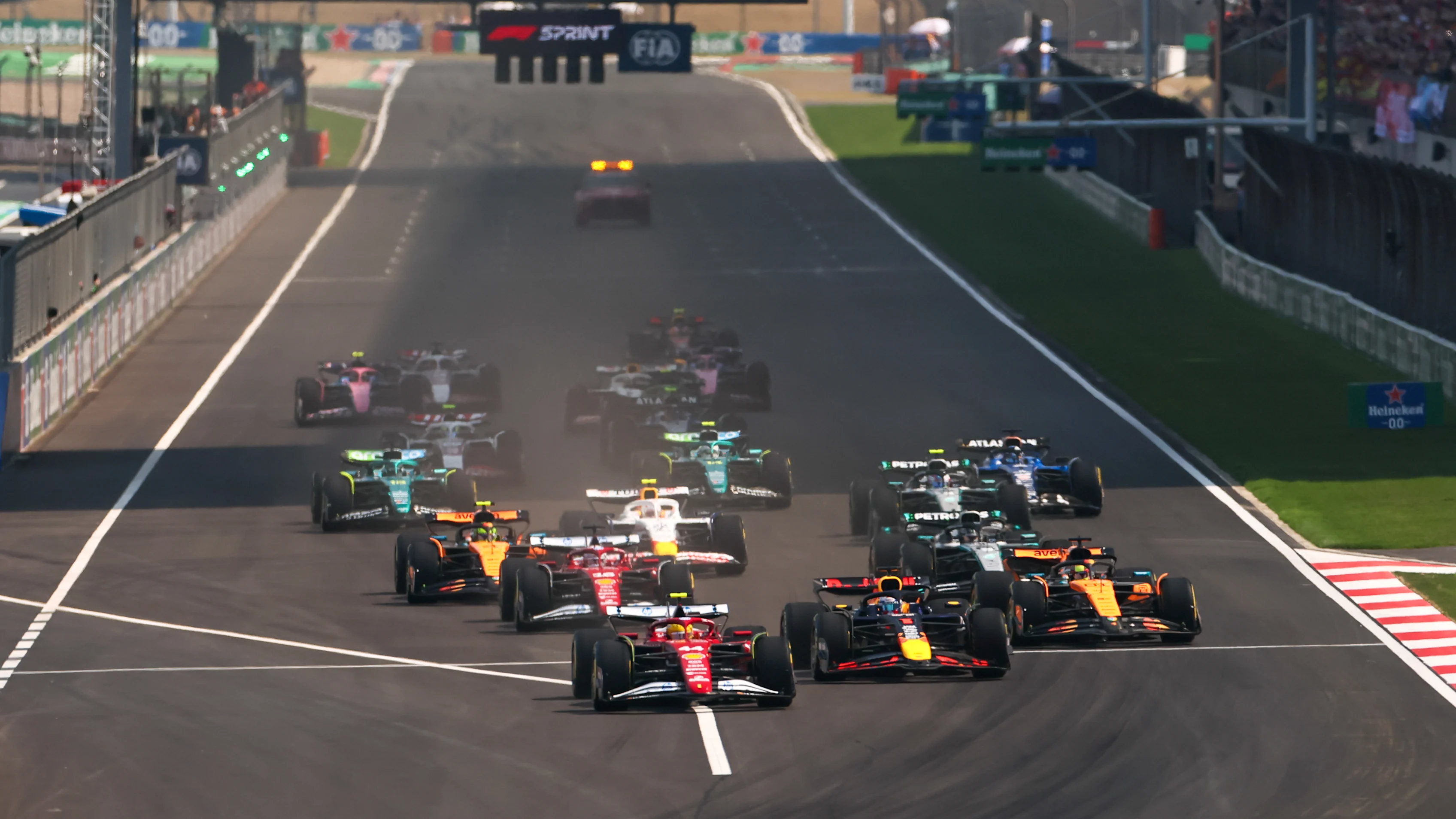
The Formula 1 season continues with Round 2 in China, where the first Sprint weekend will present another new challenge for the teams and drivers. But how much do you know about the Shanghai International Circuit? F1.com presents your all-in-one guide…
Key Shanghai International Circuit statistics
- Circuit length: 5.451km
- Number of turns: 16
- Number of laps: 56
- Race distance: 305.066km
- Lap record: 1m 32.238s – Michael Schumacher (2004)
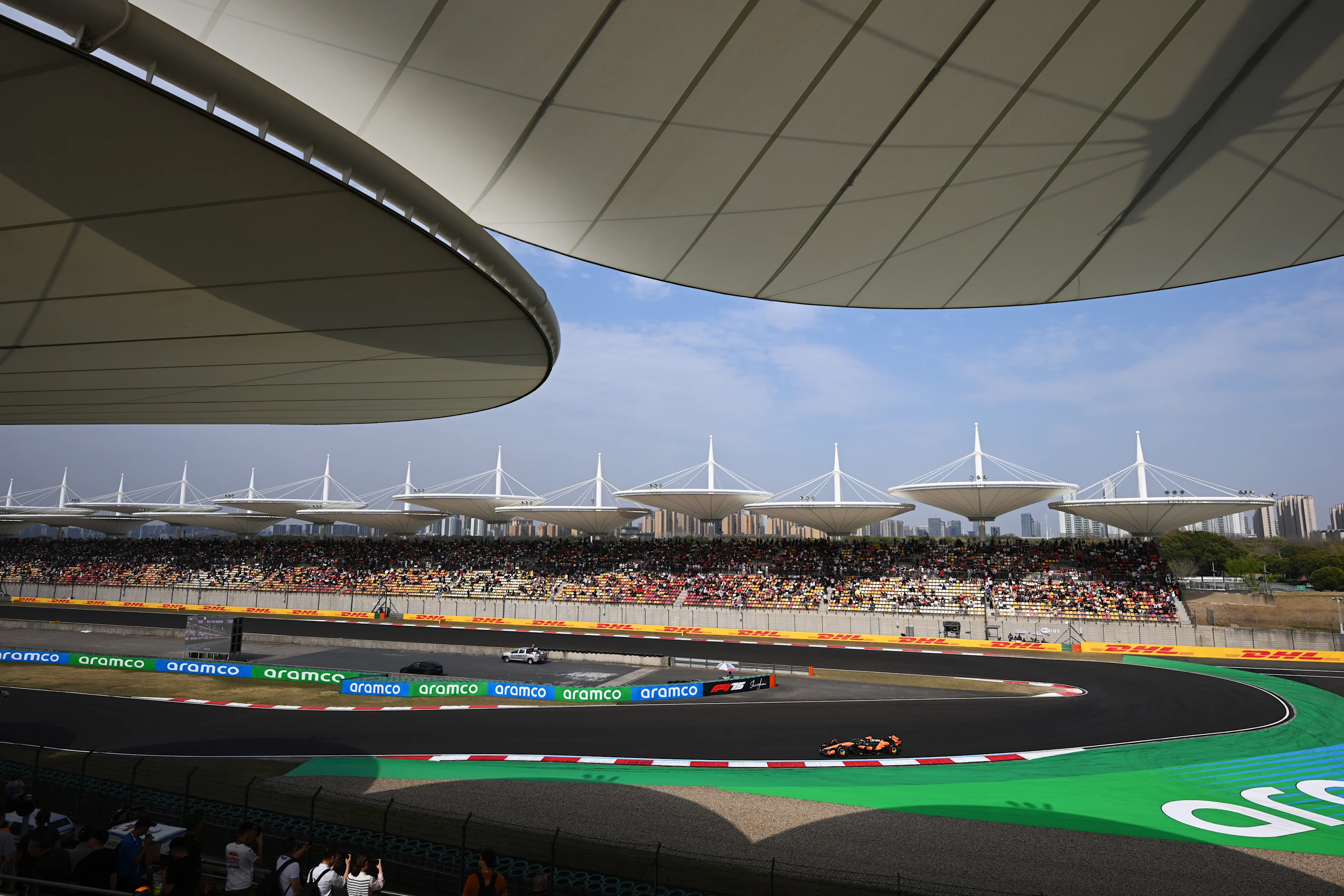
When was China’s first Grand Prix?
While there were rumblings of a Chinese Grand Prix from the early 1990s onwards, it wasn’t until the early 2000s that the owners of the Shanghai International Circuit signed a seven-year deal with Formula 1 to host a race from 2004 onwards.
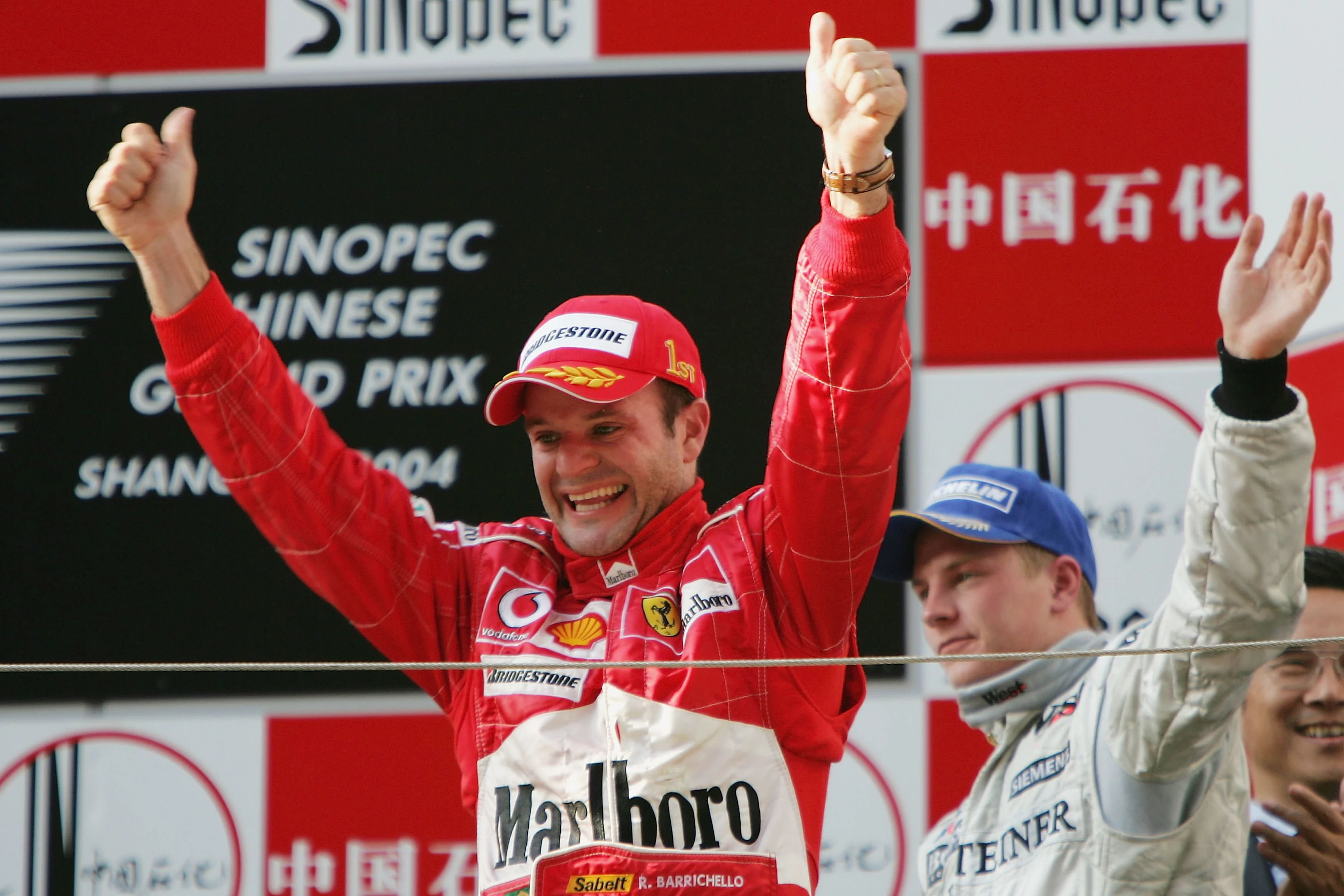
It was one of two tracks to debut in the 2004 season – the other being Bahrain – and featured in the midst of Ferrari dominance, with Rubens Barrichello taking victory from Jenson Button and Kimi Raikkonen.
The track hosted the season finale the following year and remained tucked towards the end of the calendar until 2009, when it was shuffled forward to become one of the opening rounds.
Although the contract has been extended multiple times, there was a significant break between 2020 and 2023 due to the Covid-19 pandemic, with the venue making its return in 2024.
What’s the circuit like to drive?
Unlike Melbourne's Albert Park, the Shanghai International Circuit is a permanent race track that was resurfaced ahead of the 2025 event – this massively increased the grip levels, but saw drivers struggle with graining on their tyres. With plenty of action over the last year, the circuit will have evolved significantly and this shouldn’t be as much of a problem this time around.
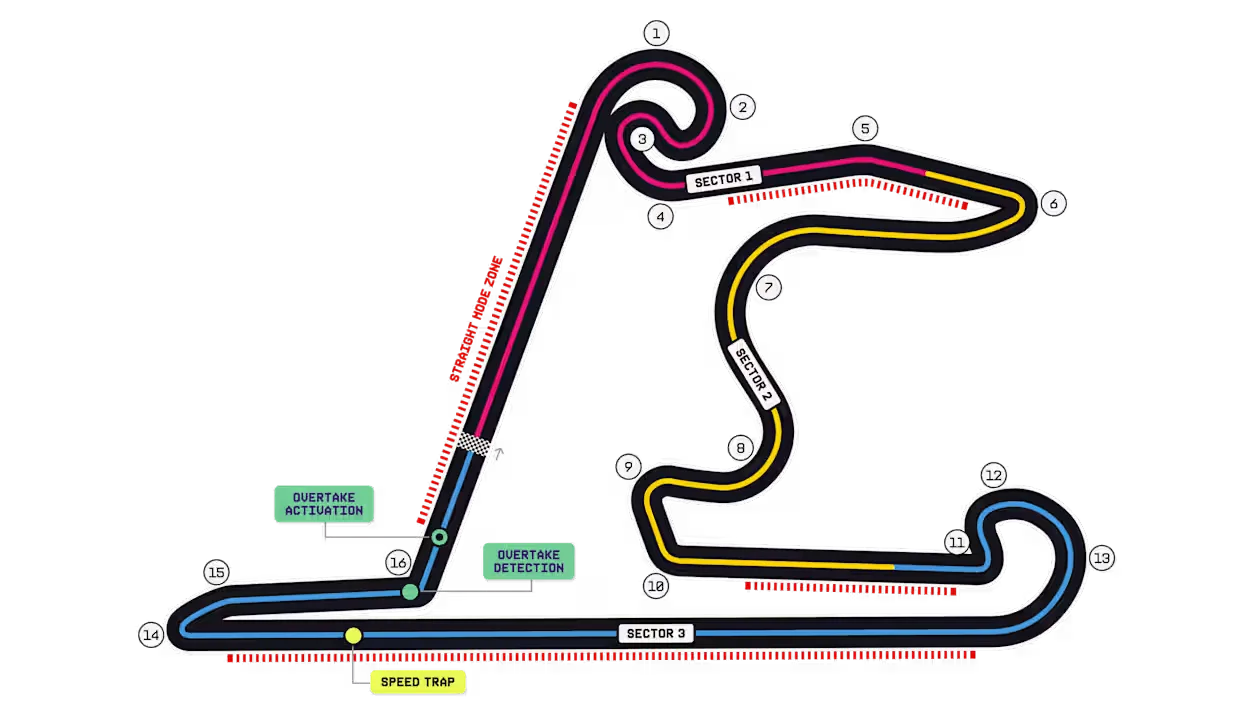
The start presents a unique challenge for the drivers as they navigate the twisty opening turns before preparing for the super-high g-forces in Turns 7 and 8. There’s also one of the longest straights on the calendar at 1.2km, offering some brilliant overtaking opportunities.
Heavy braking zones, similar to those seen in pre-season testing in Bahrain, and the circuit’s technical nature could take some getting used to in the new cars, especially with only one practice session on offer ahead of Sprint Qualifying.
Former Renault F1 driver Jolyon Palmer, who competed in two Chinese Grands Prix, elaborated on the track’s distinctive design: “Shanghai is a circuit with long straights and even longer corners.
“The first corner is unique with a wickedly fast approach before you scrub off the speed through an almost 360 degree turn which feels never-ending from the cockpit. That brings you into a slow left-hander where the exit is crucial for traction to the end of a short Sector 1.
“Sector 2 is a nicer section of fast sweeping bends, again gradually scrubbing speed through the high-speed sequence of Turns 7, 8 and 9.
“Sector 3 again features an almost endless right-hand turn, building speed this time onto the back straight, another reason this circuit is so hard on the left-front tyre.
“The back straight is the best overtaking opportunity into a big braking zone for a really tight right-hander, leaving just a quick and satisfying left-hander to round out the lap.”
Where are the Straight Mode zones and overtake detection?
New for the 2026 season, Straight Mode is a different aerodynamic configuration that allows cars to reduce their drag, making them more efficient when accelerating up towards top speed. In a similar vein to the previous Drag Reduction System (DRS), the rear wing opens up a gap, but now the front wing moves too.
It will be automatically used on every lap in dry conditions in the designated zones – the car will essentially adapt between two different configurations depending on where it is on the track, providing maximum downforce in corners but then less drag on straights.
In China, there are four Straight Mode zones, commencing with a run along the start/finish straight, then between Turns 4 and 6 and between Turns 10 and 11, before the long straight leading down to Turn 14.
Meanwhile, Overtake Mode is the direct replacement for DRS, acting as a performance aid that allows a driver to recharge an extra +0.5MJ and generate an additional electrical power profile.
This can only be deployed when a driver is within a second of the car ahead at the detection point, which in China is at Turn 16 – the beginning of the start/finish straight – with the activation point coming marginally further down the track.
The detection point will most likely be at the final corner at most circuits, as any subsequent long straight is perfect for drivers to maximise the higher speed they gain with Overtake Mode.
Five fun facts about the Chinese Grand Prix
- From a bird’s-eye view, the circuit layout resembles the Chinese symbol for ‘shang’, meaning upwards
- 8 of the last 12 Grands Prix held at Shanghai have been won from the front row of the grid
- Lewis Hamilton has won the most Chinese Grand Prix with 6 victories
- Ferrari and Mercedes have achieved the most podiums at the Chinese Grand Prix with 13 podiums each
- A victory for Lando Norris this weekend would see him equal Mario Andretti, Carlos Reutemann, and Alan Jones for 25th on the all-time list with 12 wins
Next Up
Related Articles
 FIA Formula 2 and FIA Formula 3 announce 2027 calendars
 Audi unveil special livery for Singapore GP
 Who impressed our judges at the Bahrain GP in Malaysia?
/Hulkenberg%20Bahrain%20Malaysia%20Sunday.webp) Audi unpick eventful weekend amid penalty and last-lap drama
Audi unpick eventful weekend amid penalty and last-lap drama How Singapore changed F1 as the sport's first night race
 Facts, stats and trivia ahead of the 2026 Singapore GP