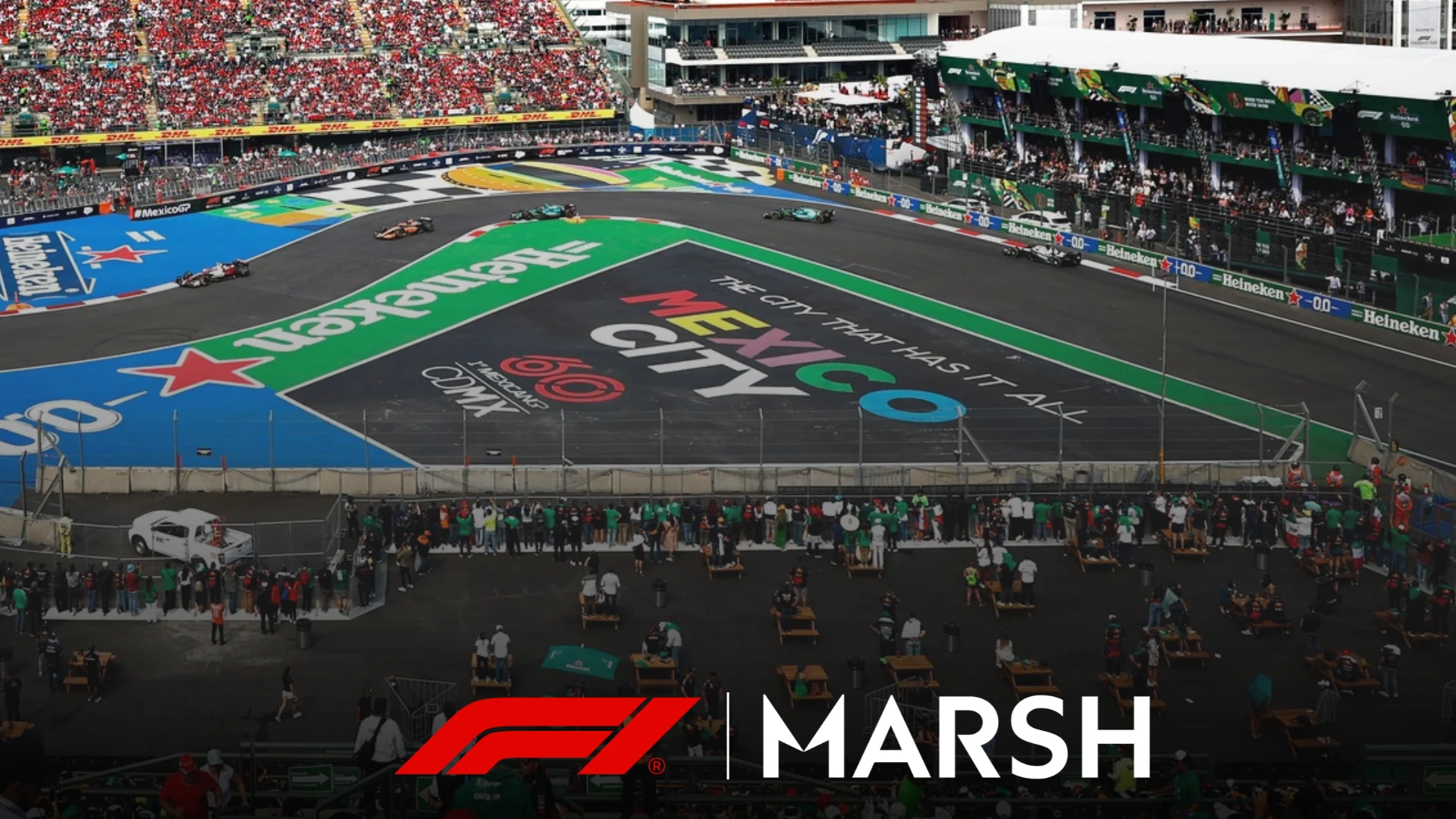
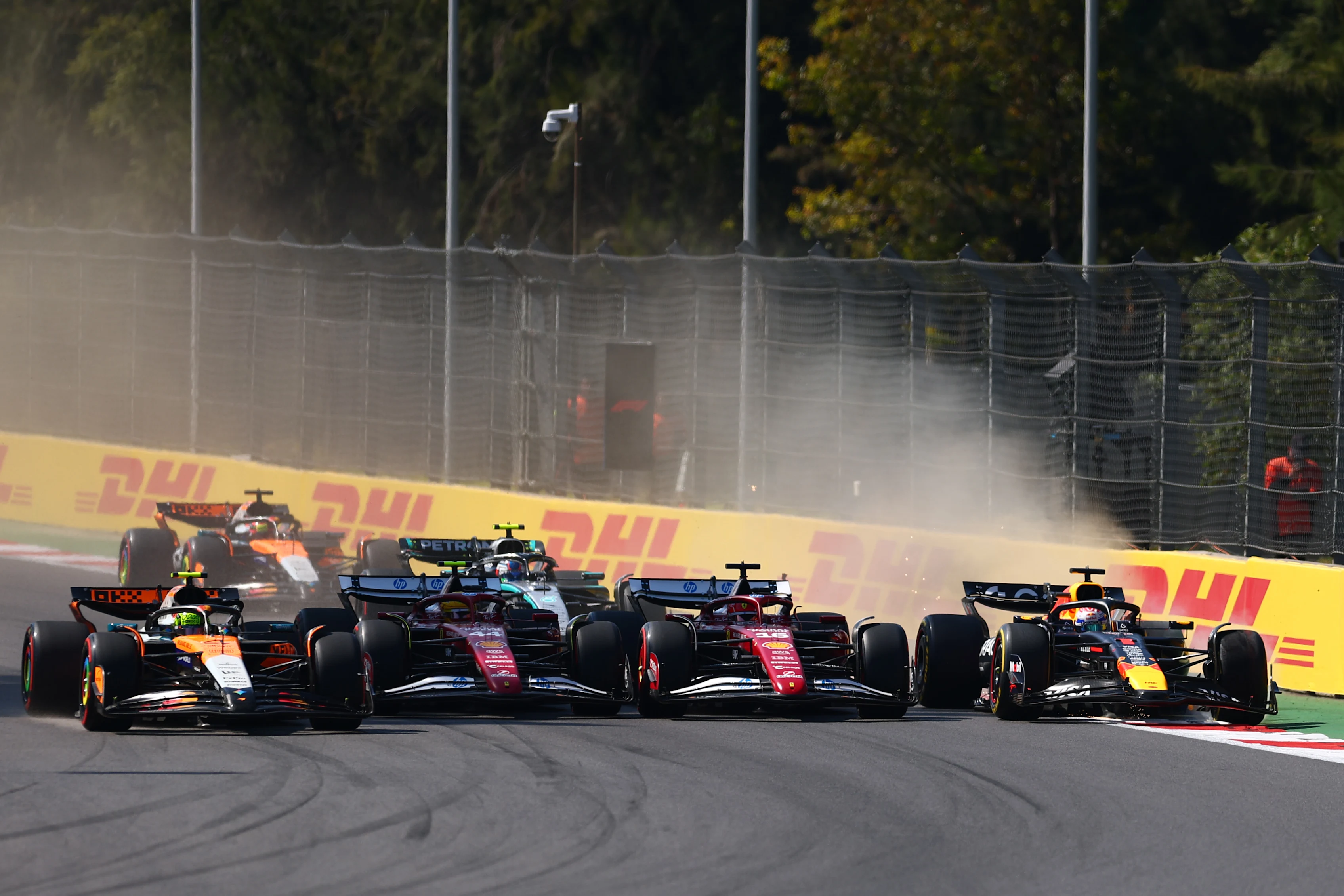
Every race demands risk for reward, but for the Mexico City Grand Prix, at the Autodromo Hermanos Rodriguez, everything tends to be a little more extreme. It’s a race that breaks engines, fries brakes, breaks the spirit, and has a regular rotation of Safety Cars, VSCs and red flags to turn races on the simple caprices of fate – and all in front of the loudest, most raucous crowd in F1.
It can also be a race of subtle strategy, where overtaking is difficult. One-stop races tend to dominate, but nuances within those single-stops can make all the difference. It’s never dull in Mexico.
So how will the teams, drivers and strategists approach the weekend? It’s time to take a look in The Risk Perspective, in partnership with Marsh, Formula 1's Official Risk Partner and Official Insurance Brokering Partner.
The Set-Up
Altitude, altitude, altitude. Everything that happens around the Autodromo Hermanos Rodriguez is predicated on the circuit being at 2,250m above sea-level. It’s a monster, poking up out of the atmosphere, three-times the altitude of Interlagos, next on the list at 800m.
There’s a 20%-ish drop in air density, compared to sea-level, and so a corresponding 20% drop in downforce and cooling potential. The turbo engines don’t lose power like the old normally-aspirated engines did – but the turbo has to work a lot harder to deliver enough air, and this therefore tends to be an attrition race.
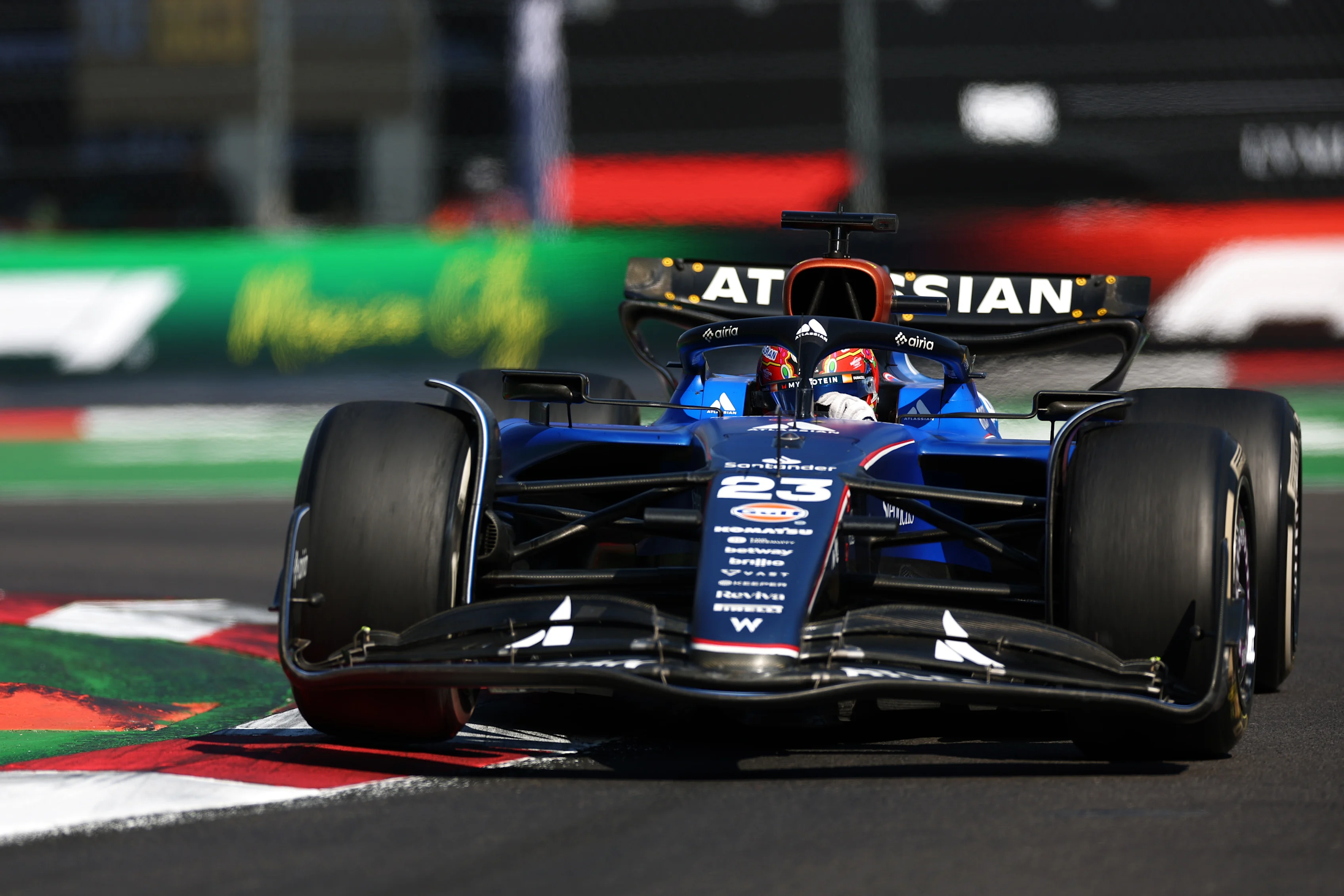
For cooling, the cars will all run with big brake scoops, and loose bodywork. Look closely at the sidepods and you’ll see a lot more shoulder louvres than are normally present. Look closely at the rear of the cars and you’ll see a lot more space between bodywork and powertrain – allowing for more airflow.
It creates a more draggy car, with the teams very keen to make sure they have enough cooling, but not a scrap more than is absolutely necessary.
Teams will run with all the downforce they can possibly find. In years past, the rule of thumb has been that Monaco levels of bodywork will deliver Monza levels of downforce – but since the advent of active aero, teams were able this year to run quite large wings in Monza, which means the Autodromo Hermanos Rodriguez will have by far the lowest downforce levels of the year, despite having the largest wings and every winglet and gurney the teams can find glued to the car.
The drop in downforce means the teams can set-up their cars to run a little lower for a given stiffness – though there’s always a lot of work to do figuring out how to set-up the cars in heave and roll to cope with the bumps and the kerbs the cars need to run.
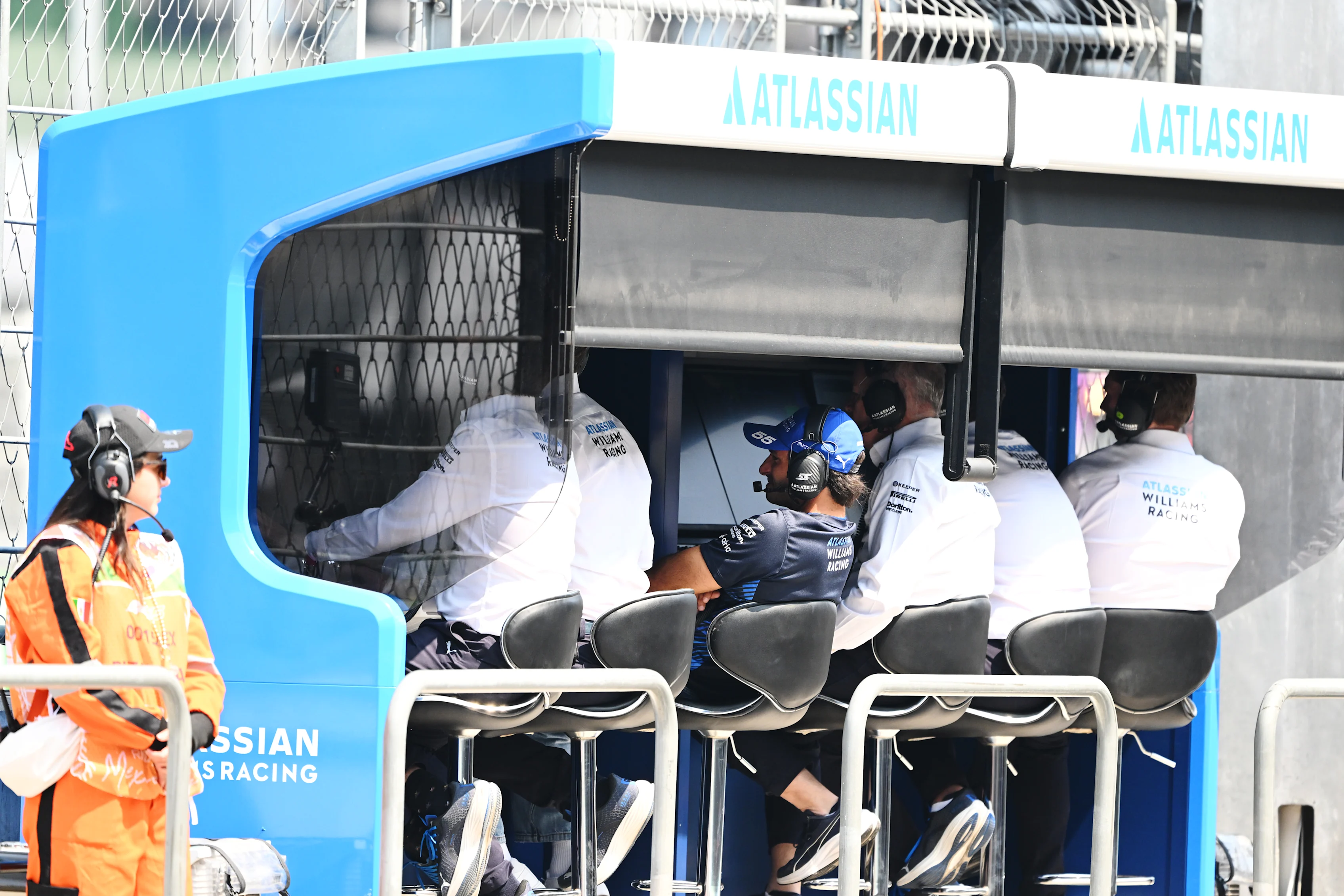
The Strategy: Charles-Antoine Florentin, Head of Race Strategy, Williams
“The biggest trap in Mexico is overreacting to Friday. The track starts very green and rubbers-in a lot over the weekend. The degradation often reduces drastically from free practice to the race. You’re always correcting practice data for track evolution, and the question is, by how much?
“Across practice we want to know four things: what are the real lap-time gaps between the three compounds? Can the soft tyre do a meaningful race stint? How much will the track improve by Sunday? How will the power unit cope with the altitude, where turbo speed and cooling are both harder?
“Regarding risks with set-up, most weekends, our main contribution as a strategy group is typically a steer on the trade-off between qualifying pace and race pace. Mexico is different, and we get more involved. Because of the altitude, everything cools less well: brakes, power unit, and now a bigger electrical system.
“The turbo also has to work harder in the thin air. You fix the cooling level before the race, and more cooling means more drag. How much you need depends on how long the car spends behind other cars, because running in someone’s wake increases overheating.
“So, we predict how much traffic each car will be in, and in which phase of the race. A car stuck in a train in the first stint is a different problem from one in traffic after the stops. That prediction feeds the cooling choice. Get it wrong one way and you give away performance. Get it wrong the other way and the driver has to manage temperatures, which costs time and makes them easy to pass.
“The straight is long, but the thin air takes away a lot of the tow. The harder part is getting close in the first place. The fast esses of the middle sector, and the stadium section, are sensitive to dirty air, so the following car loses ground before it reaches the straight.
“Teams' overtaking models puts numbers on that. For 2026, DRS is gone, and the car behind gets help from extra electrical energy instead. In Mexico, with the very long straight, teams and drivers will be sure to deploy as much energy as possible into T1, which will remain the prime overtaking corner.
“Regarding tyre choices, 2024 and 2025 had different tyre allocations. In 2024, the hard was the C3. In 2025, Pirelli skipped a step and brought the C2. This meant the lap-time difference between medium and hard was much higher than it was in 2024. That’s a penalty to carry for about 40 laps.
“Another big change was the tyres themselves. The 2025 tyres were much more resistant to graining and overheating. Those are normally what limit you in Mexico, because the thin air means low downforce and a lot of sliding. In Mexico, the soft degradation in 2025 was half what it was expected to be in 2024. This is why nobody wanted to race it in 2024.
“Because soft was the fastest tyre and could do half the race at low degradation, soft>medium became the natural one-stop in 2025, and soft-medium-soft a genuine alternative. Overall, 60% of the field stopped once and 40 % twice, last year.
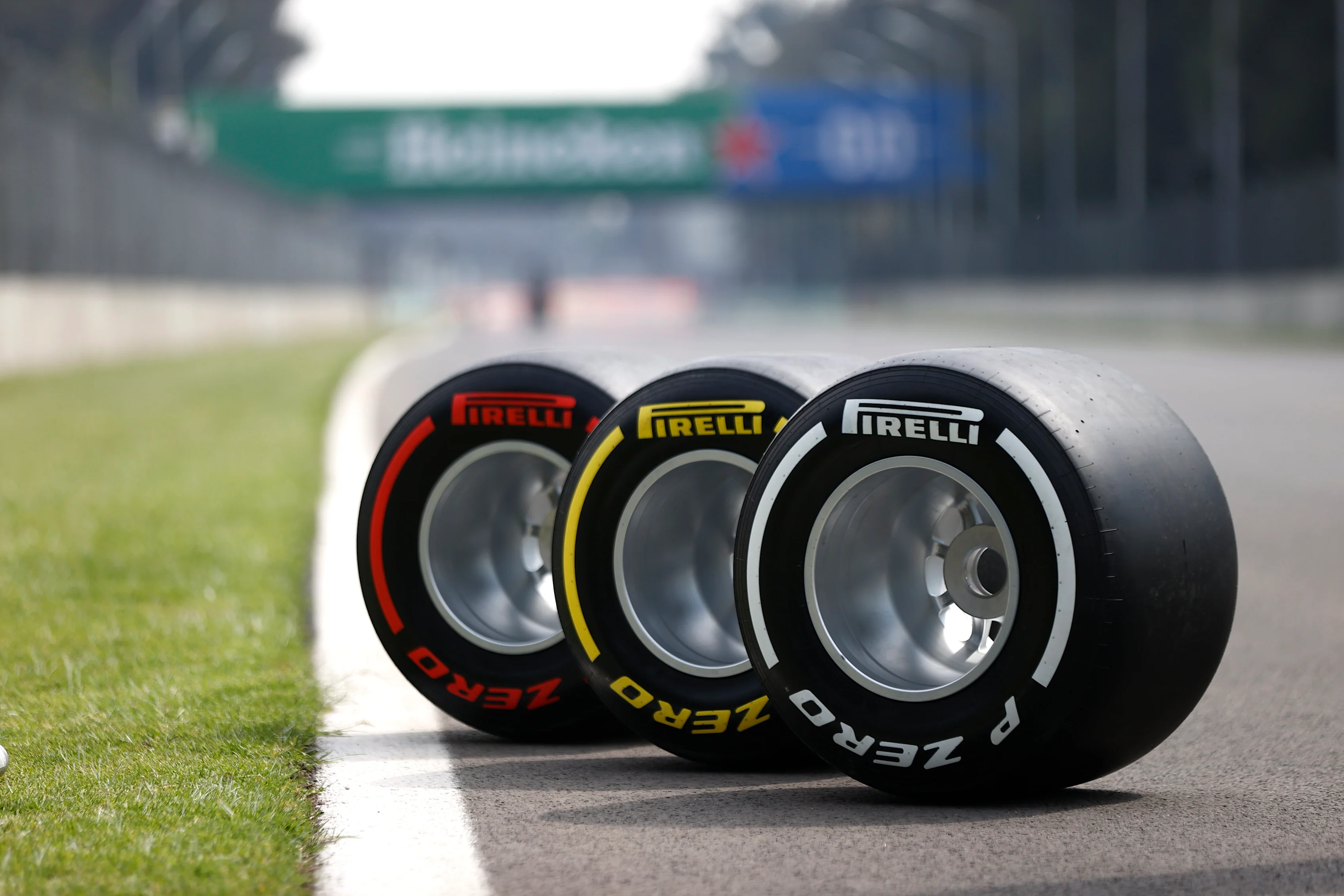
“Some of this learning carries over in the 2026. The 2026 tyres behave more like the 2025 tyres than those of 2024, so graining and overheating could be less of a problem than they used to be here.
“Degradation is a bit higher than last year, though. The selection is also back to consecutive compounds, C3-C4-C5, so the hard could be much closer to the medium than last year’s C2. That brings medium>hard back into play – but the soft will still be a race tyre.
“We also plan for interruptions. Mexico has always seen at least a Safety Car or a Virtual Safety Car intervention.”
The Drivers’ Perspective: Sergio Perez
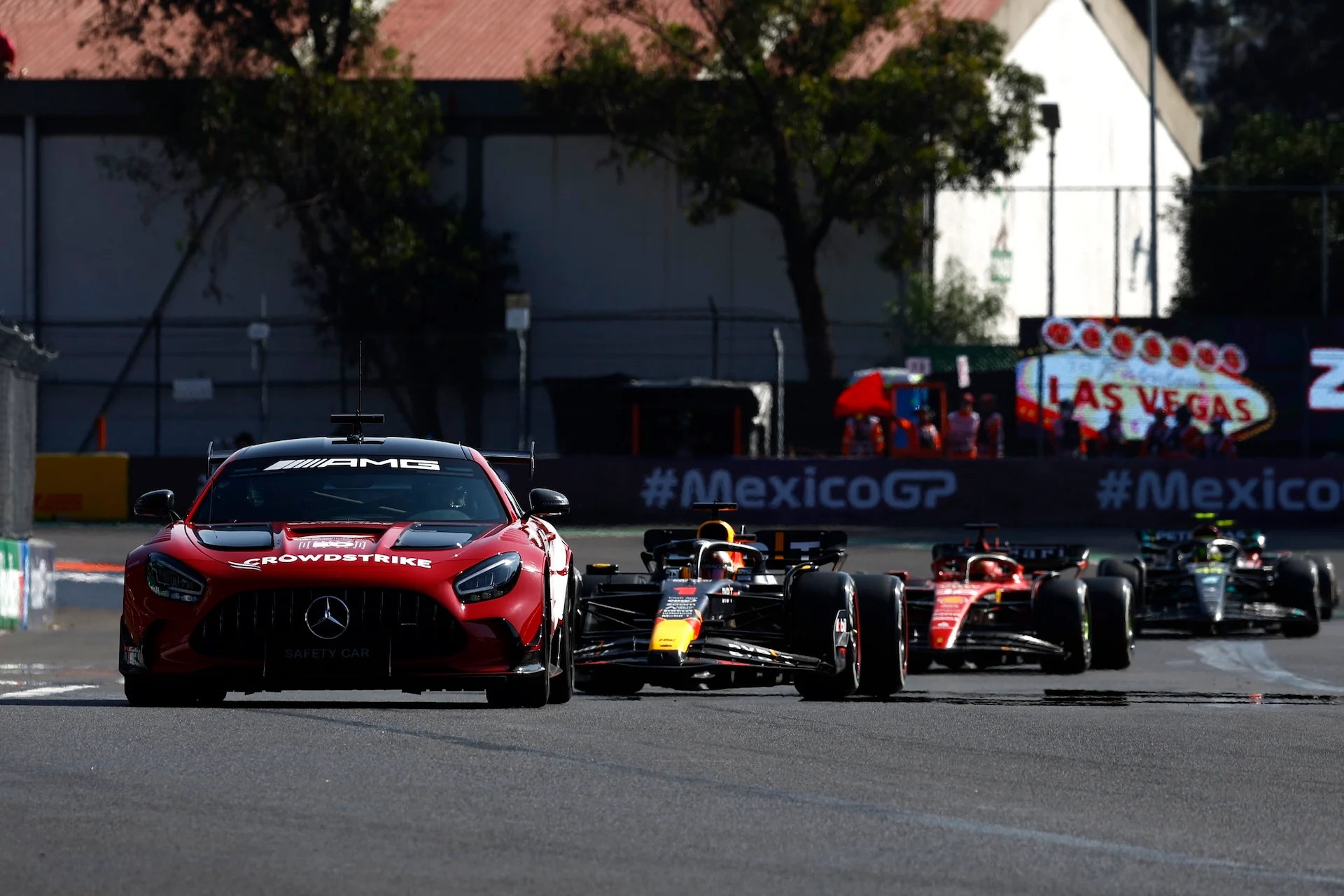
Happenstance means Sergio Perez celebrates his 300th Grand Prix start this weekend at his home Grand Prix. This moves the Cadillac driver above Sebastian Vettel to seventh outright on the list of F1 starts – not that the race wasn’t going to be special for Checo without the milestone.
Some 150,000 fans will be crammed into the Autodromo Hermanos Rodriguez on Sunday, and they’ll all be chanting the same name. It makes the spine tingle even if you’re not Sergio Perez.
“Really how much has to happen that you make your 300th race at your home? It's incredible!” says Checo. “To have all the people that have been with me since day one, supporting me, all my sponsors, all my family, all my fans, it’s very special.
“We talk about it a lot, but the big thing here really is the altitude. It plays a massive part. It puts a lot of stress on the tyres, on the brakes, on the engine: everything is running to the absolute limit.
“From the driver’s perspective, the thing you really have to concentrate on is minimising the sliding. The downforce is very low, so that’s difficult, but it’s really, really key to getting a good lap, getting into a good rhythm. It’s super-critical.”
The key section: The Foro Sol
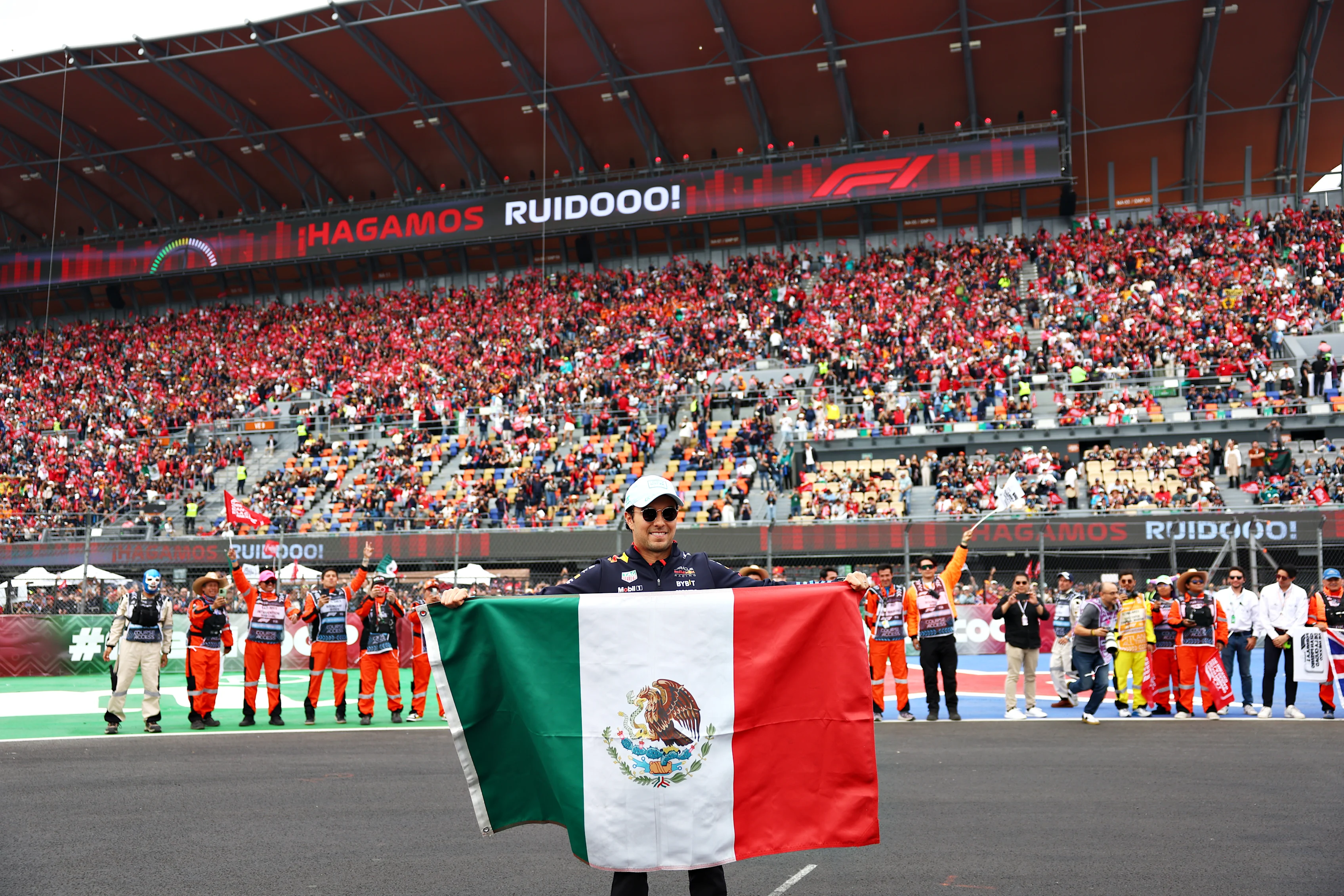
That the Foro Sol baseball stadium even exists was disheartening for many F1 fans, as it was constructed squarely in the path of the fearsome Curva Peraltada, the signature 180° banked corner that flings cars back onto the main straight, mixing high-speeds and incredible danger in the first two incarnations of the Mexican Grand Prix.
The section of track, from Turn 12 through to Turn 16, cuts through the stadium now, before returning for a half-Peraltada Turn 17, now named in honour of Nigel Mansell.
The stadium section itself is spectacular: a cauldron of noise looming over the track, where a low-speed sequence of corners rolls across what is usually the baseball diamond. This section is key to the lap because, as is usually the case, there’s much more time to be gained and lost in low speed – and more so at altitude where the cars aren’t quite so glued to the track as they would be with the downforce piled-on at sea-level.
This is particularly true on a Qualifying lap where the trick is ensuring the car arrives in the stadium with some life left in its tyres. Overheating the tyres earlier in the lap can cause real problems in the stadium, so there’s a need to judge carefully how hard to push.

The Greatest Race: 1968: A three-way title showdown
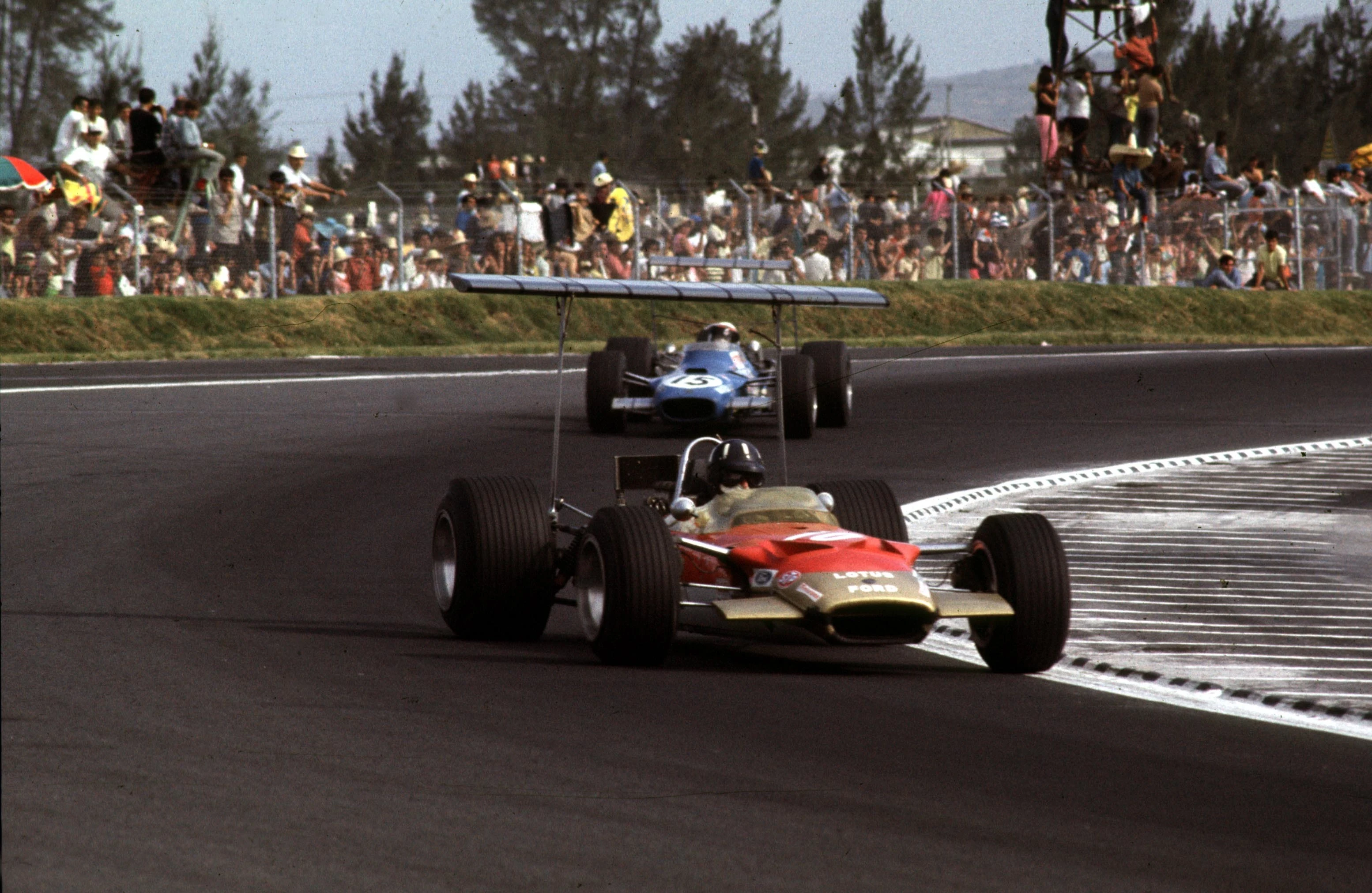
The stars aligned in 1968, with the final race of the year, at the future Autodromo Hermanos Rodriguez (then the Magdalena Mixhuca Circuit) being the scene for a championship showdown between reigning World Champion Denny Hulme, of McLaren, 1962 Champion Graham Hill of Lotus, and future triple World Champion Jackie Stewart of Matra.
Hill led on 39 points, Stewart had 36, Hulme 33. There were nine points for victory, but with unreliability common, the title was there for the taking.
There was time to savour the title fight, with the race moved back two weeks to clear the decks for the Mexico City Summer Olympics. When F1 did finally arrive, it was Hill’s team mate Jo Siffert on pole, with Hill and Hulme third and fourth on the grid, with Stewart down in P7 – though starting position in the 1960s rarely had much bearing on the race result.
Hill made a fast start and took the lead, only to be passed by John Surtees who made a better one from P6. Hill came back and retook the lead before the end of the lap. Jackie Stewart also got a rocket and was up to P2, on the tail of his former BRM team mate by Lap 2.
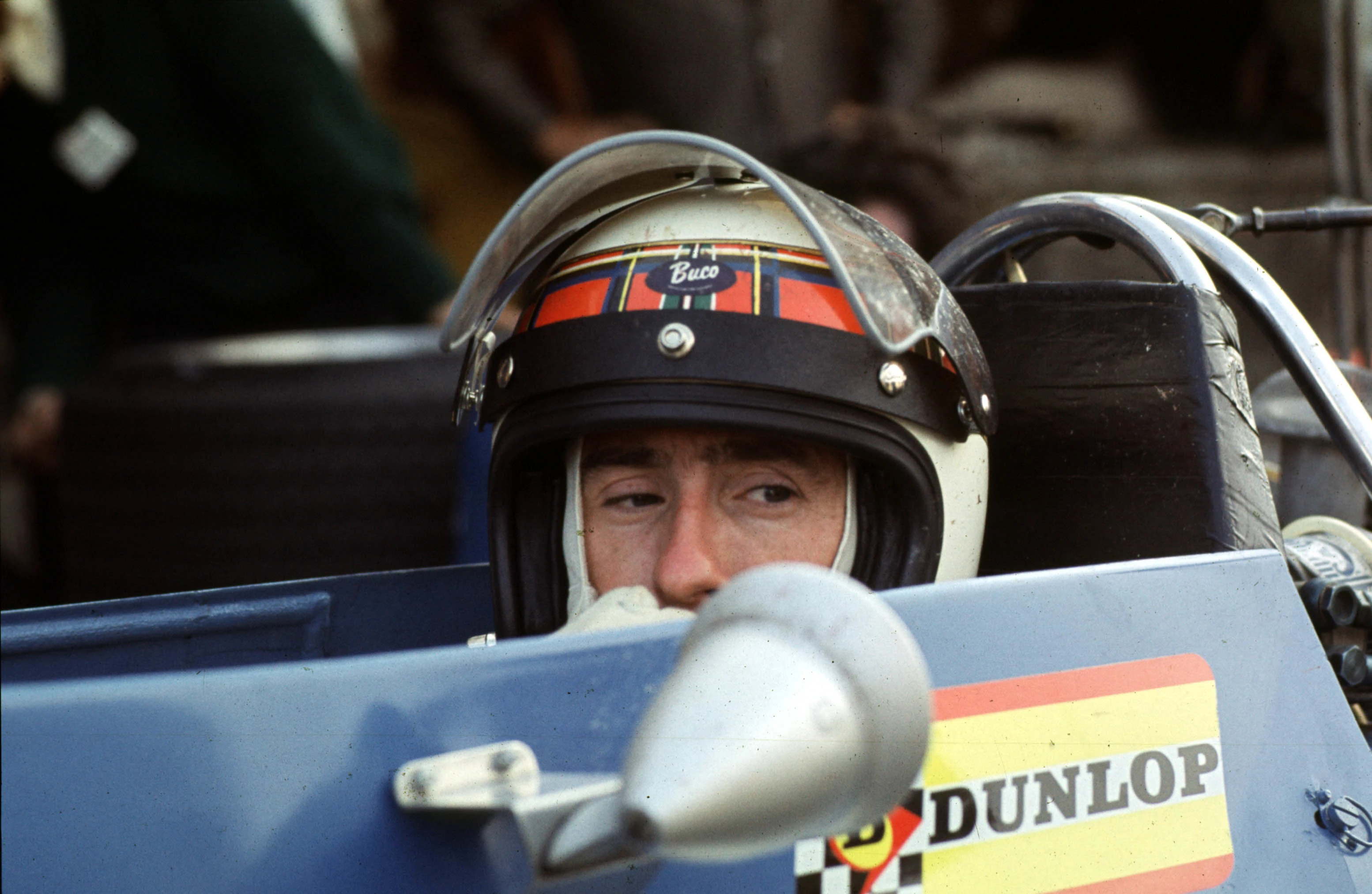
The race refused to settle. Stewart took the lead on Lap 5; and Hulme made his way through the pack to be running P3, so the three contenders were holding the top three places. Siffert then started to recover from his start and passed Hulme; Hill retook the lead on Lap 10, before Hulme retired with a rear suspension failure.
It wasn’t quite a straight fight then between Hill and Stewart, as Siffert passed the Scotsman on Lap 17 and provided his Lotus team mate with something of a buffer… though Siffert was intent on victory and look the lead from his team mate on Lap 22.
He then suffered a broken throttle cable and was out of the race. It was then a straight fight between Hill and Stewart. Were Stewart to win, the pair would be level on points and Stewart would take the title.
They ran 1-2 for 25 laps, but just when the crowd might have been anticipating a grandstand finish, Stewart began to drop back, a fuel feed problem ending his challenge. He eventually finished seventh, lapped by Hill, who became a double World Champion, and Stewart would have to wait another year to open his account.
The Strategic Masterstroke: 2023 – Lando’s Massive Offset
2023 was the year McLaren returned from a decade in the wilderness to be a serious contender again. They notched-up nine podium finishes, four front row starts, and a Sprint victory. None of those things happened in Mexico, where they finished fifth and eighth.
Nevertheless, Team Principal Andrea Stella felt compelled post-race to call it “one of the best races I have been part of,” thanks to an oddball strategy that had Lando Norris charge from 17th on the grid to fifth at the flag.
It didn’t look so clever on Saturday, when Norris was ejected in Q1, having made a mistake on one attempt, having a car issue on another, and seeing a third attempt banjaxed by a yellow flag. The car had pace, but overtaking is difficult at the Autodromo Hermanos Rodriguez.
While the straight is very long, the lack of downforce made the impact of DRS negligible. A car has to be very close coming onto the straight – but again, the lack of load makes them very twitchy when following closely through the high-speed final corner. McLaren’s strategy for Norris therefore, was to keep him away from other cars unless he had a sizeable tyre advantage.
And so, when the tyre blankets came off on the grid, Norris was the only driver with a soft tyre fitted. He used that to claim three places in the opening laps, before making an early pit stop, for hards. That dropped him back to P18 – but gave him 17 seconds of clear air up to Esteban Ocon.
McLaren, however, were giving him lap times for Nico Hulkenberg, running in P8, confident he could undercut his way up to the German… which he did.
Norris passed Ocon, Fernando Alonso, Lance Stroll, Valtteri Bottas and Alex Albon on track, but made up five more places with the undercut, to be running P8 on Lap 33, when a Safety Car came out, following a heavy crash for Kevin Magnussen.
This wasn’t what Lando needed, because it was too early to ditch the hard compound, but he came into the pits anyway, because a new set would be less of a problem than restarting the old hard tyre.
As soon as he committed to that, everything went wrong. First of all the Safety Car turned into a red flag, and then at the restart, Lando had a poor getaway that dropped him to P14. After that it was all about patience.
The medium tyre he had for the final stint had a tendency to overheat, so the team had him play a very long game – targeting George Russell in P5, but asking Norris to use all of the race to get there. He picked off a car every few laps: Bottas on 41; Gasly, Ocon and Hulkenberg as a job-lot on 45,46,47; Albon on 49.
Piastri moved aside on 56; Ricciardo fell on 60, and then Norris took seven laps to cruise-up behind the Mercedes of Russell. Russell defended hard, but Norris had tyres in good shape, brakes that were cool and a battery pack fully charged. He made his final overtake five laps from home.
The first half of a race was a tactical masterclass from McLaren’s strategists; the second half proved out the adage that there’s no strategy as effective as having a fast car. It did, however, demonstrate that you do have to use that fast car wisely.
The Risk Perspective is brought to you in association with Marsh, Formula 1’s Official Risk Partner and Official Insurance Brokering Partner.

Next Up
Related Articles
 Russell struggling with 'difficult' operating window – Wolff
 Antonelli and Mercedes 'faster than us' in US GP – Mekies
 What the teams said – Race day in the United States
 Lawson excited for what’s to come after more points in Austin
 ANALYSIS: Why Cadillac moved quickly to secure Perez
 BettingThe 5 drivers most likely to qualify fastest in Mexico