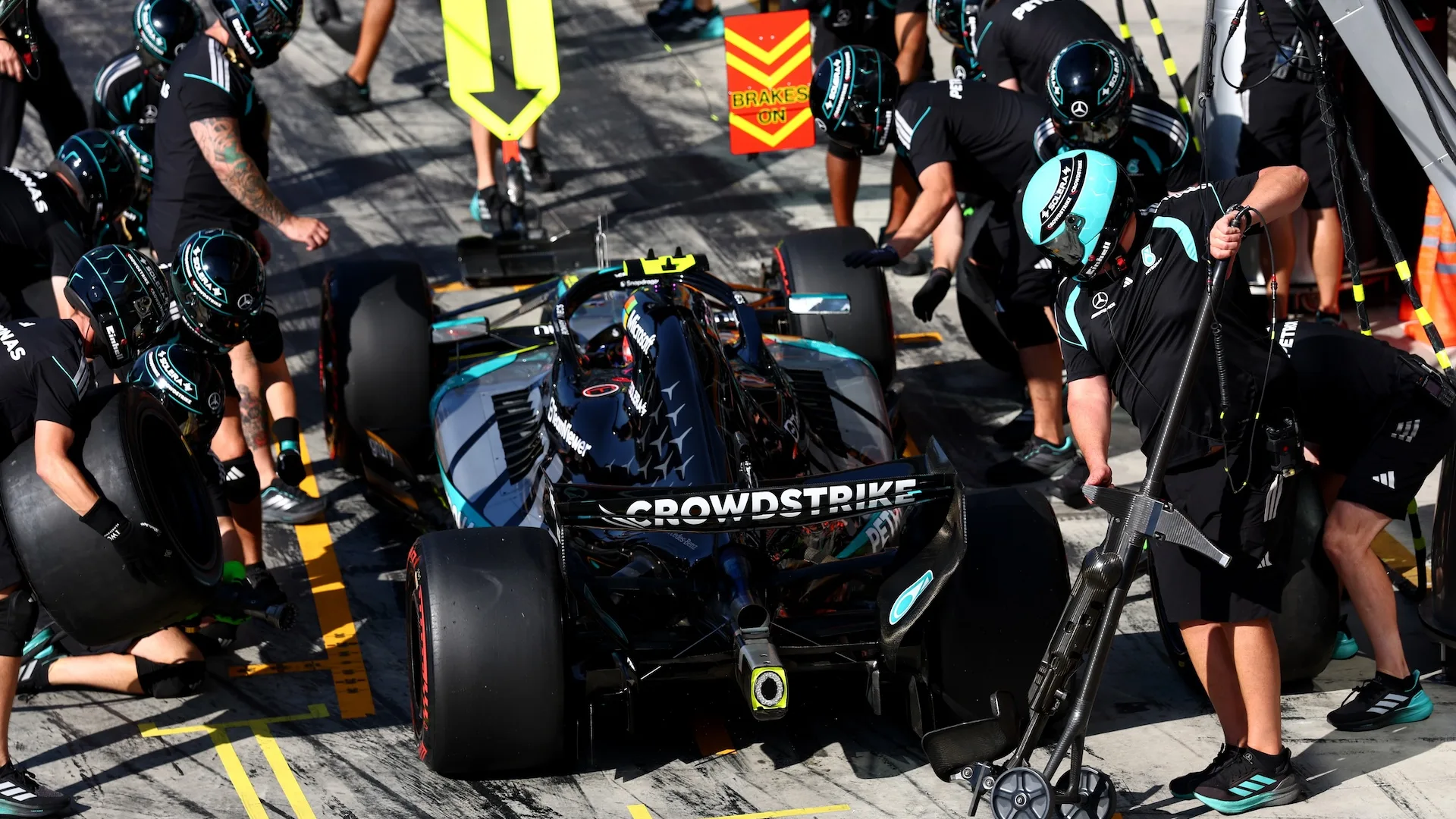
The Madring will make its debut on the Formula 1 calendar when it hosts Round 14, the Spanish Grand Prix – and tyre suppliers Pirelli have confirmed the compounds that will be in use throughout the weekend.
Pirelli will provide the drivers and teams with their C2 (as the hard), C3 (as the medium) and C4 (as the soft) compounds at the brand-new track, with tyre management likely to be a big talking point due to the smooth surface.
Drivers will get two sets of the hard tyre (marked white), three sets of the medium tyre (marked yellow), and eight sets of the soft tyre (marked red), as well as access to the green intermediate tyre and the blue full wets, should they be required.
An extra set of softs is reserved for those who reach Q3 in Qualifying, while all drivers must use at least two different slick compounds during the race, providing the track is dry.
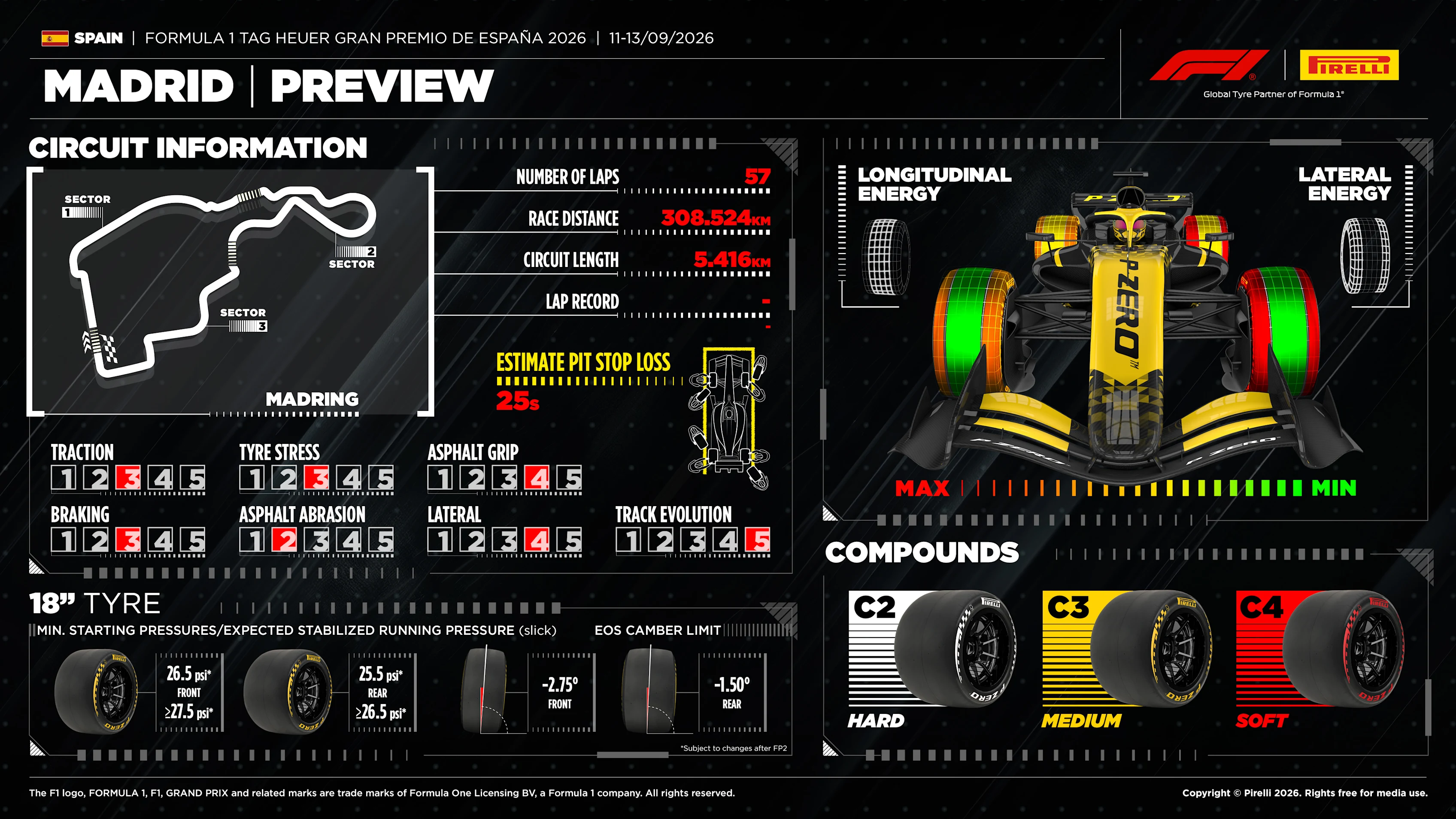
"The start-finish line and Turn 1 are separated by just 200 metres," reads Pirelli's weekend preview. "The first sector is very fast and leads into a second section featuring several medium and low-speed corners, including the banked Turn 12. The final part of the lap also includes a number of 90-degree corners similar to those drivers encounter in Baku.
"Pirelli's work to identify the forces that tyres will be subjected to at the Madring began three years ago, when the designers provided the first information on the final layout. Using simulation tools, the trajectories that the cars would follow around the circuit were identified and, consequently, the loads to which the tyres would be exposed were calculated.
"Once the circuit had been completed, a group of Pirelli engineers visited the venue to measure the asphalt's macro and micro roughness, refine the simulations and produce a technical briefing document that was shared with the teams to support their preparation for this new event.
"From an energy perspective, the Madrid circuit ranks among the five most demanding on the calendar, with lateral forces comparable in intensity to those recorded at Barcelona and Silverstone. The "Monumental" is the corner that generates the highest vertical load of the season, not only because of its banking but also because of its length.
"Its configuration will also present a significant challenge in terms of tyre grip. Drivers may adopt different approaches when tackling it, depending on how much they wish to prioritise the opportunity to attack into the following corner.
"The asphalt is very smooth and therefore offers a relatively low level of grip. For this reason, it has been treated with high-pressure water jets, as is already done at other circuits, including Singapore, to remove dust and oily residues typically associated with newly laid surfaces."
Next Up
Related Articles
 Facts, stats and trivia ahead of the 2026 United States GP
 UnlockedThink you're Fan1? Win a VIP trip to Las Vegas
 How Williams entered the Marvel Universe
 What tyres will the teams have for the United States GP?
 Clinching maiden F1 title 'would be a dream' – Antonelli
 AS IT HAPPENED: Build-up to the United States GP weekend