Pit-lane procedures
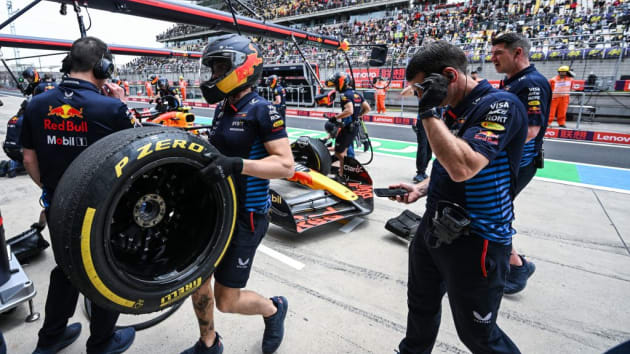
The pit-lane at every circuit is divided into two lanes. The lane closest to the pit wall is known as the fast lane, whilst the lane closest to the garages is the inner lane.
The FIA allocates garages and an area in the inner lane where the teams may work, and within each space is one position - or pit box - where pit stops may be carried out during practice sessions, qualifying and the race.
Apart from drying or sweeping, teams are forbidden from improving the grip of their pit-stop position. Personnel are only allowed in the pit lane immediately before the stop and must withdraw to their garages as soon as their work is complete. It is also the team's responsibility to release a car from its stop only when it is safe to do so.
During practice, refuelling is only permitted in a teams garage. The driver may remain in the car, but the engine must be stopped. During all refuelling or fuel handling operations personnel working on the car must wear protective fire-resistant clothing and an assistant carrying a suitable fire extinguisher must be present.
Teams are free to alter their cars fuel loads at will during practice and qualifying, but since 2010 adding (or removing) fuel during a race has been forbidden.
SEARCH INSIDE F1
SPORTING REGULATIONS
- 2013 season changes
- Car livery
- Classification
- Drag Reduction System
- Driver changes and additional drivers
- Driving protocol and penalties
- Officials
- Parc Ferme
- Pit-lane procedures
- Points
- Practice and qualifying
- Race distance
- Race start procedure
- Safety car
- Scrutineering and weighing
- Spare cars, engines and gearboxes
- Suspending and resuming a race
- Testing
- Tyres