ce
The size and dimensions of Formula One cars are tightly controlled by the regulations. They must be no more than 180cm wide. The length and height of the car are effectively governed by other specific...
Formula One cars must have one brake system operated through a single brake pedal. However, the system must comprise two hydraulic circuits - one for the front wheels and one for the rear. Should one...
The construction of Formula One cars and the materials used are strictly controlled by the regulations to maximise their safety...
The size of a Formula One cars cockpit opening must comply with strict specifications. Compliance with these specifications is tested by lowering a specially made template into the cockpit...
The electrical and software systems of all cars are inspected by the FIA at the start of the season and the teams must notify them in advance of any subsequent changes to the systems. All teams must...
Formula One engines may be no more than 2.4 litres in capacity. They must have 8 cylinders in a 90-degree formation, with two inlet and two exhaust valves per cylinder. They must be normally...
Formula One cars run on petrol, the specification of which is not that far removed from that used in regular road cars. Indeed, the FIA regulations state that the rules are intended to ensure...
The fuel tanks on Formula One cars comprise a single rubber bladder. These must be made of materials approved by the FIA and must be manufactured by certain approved companies...
Formula One cars must pass strict impact tests to ensure they meet the necessary safety standards before they are allowed out on track. The tests must be carried out under FIA guidelines and in the...
The design and location of the oil tanks on Formula One cars are strictly controlled to minimise the risk of oil leaking in the event of an engine failure or an accident. Oil may not be added to cars...
All Formula One cars must pass strict roll structure tests to ensure that the driver is adequately protected should the car turn over during an accident...
All cars must be fitted with a fire extinguishing system that will discharge into the cockpit and engine compartment. It must be operable by the driver and must function even if the cars main...
In addition to impact tests, Formula One cars, and in particular the survival cell that houses the driver, must also pass static load tests. These ensure that the structure of the car meets minimum...
Formula One cars must have conventional sprung suspension. Any system, such as active suspension, that can alter the suspension or its geometry while the car is moving is forbidden...
Throughout the Grand Prix weekend all cars must be fitted with at least five housings for cameras which are used to provide on-board TV footage...
Modern Formula One cars use seven-speed semi-automatic gearboxes. Regulations stipulate at least four forward gears, up to a maximum of seven. All cars must also have a reverse gear. Constantly...
Cars must weigh at least 640kg (including the driver) at all times. Teams may use ballast to bring cars up to weight. This must be firmly secured to the cars. Ballast may not be removed or added...
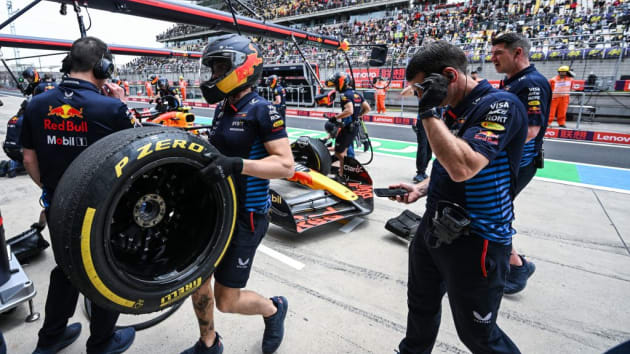
Formula One cars must have four, uncovered wheels, all made of the same metallic material, which must be one of two magnesium alloys specified by the FIA. Front wheels must be between 305 and 355mm...