FIA Friday press conference - Canada 08 Jun 2012
Reproduced with kind permission of the FIA
Team Representatives - Andrew Green (Force India), Antonio Cuquerella (HRT), Graeme Lowdon (Marussia), Jonathan Neale (McLaren), Mark Gillan (Williams).
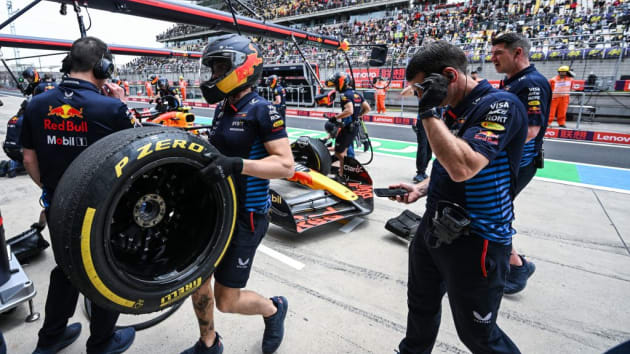
Q: Antonio, today there was an incident in the pitlane with one of your mechanics and Pedro De la Rosa. Just to clear up any misconceptions or any misunderstandings, can you tell us how your mechanic is?
Antonio Cuquerella: The mechanic I think, happily, is OK. He just got some bruises and a swollen knee. So, it looked worse when it happened but luckily hes going to be back with us tonight from hospital. Some checks have been done but nothing important. Hes going to have some pain but in a few days hes going to be back to work.
Q: No broken bones?
AC: No, no.
Q: Andrew, your drivers are expecting updates, at least Paul Di Resta told us so yesterday. Whats the situation? Are you going to be able to deliver those updates?
Andrew Green: Were going to follow the same plan as last year, which is well continually bring new part to the track every race, as a strategy that weve followed before, as most teams do. Yeah, we will deliver what we can, thats our target. There are updates here, there will be updates in Valencia, there will be a bigger one at Silverstone. Thats the idea. Well keep pushing. Its incredibly tight and fractions of a second can mean multiple places on the grid. Its harder than ever. Theres a big push back at the factory - more than ever.
Q: Both drivers very well placed in Monaco, and today as well. How well are those two working together and how good is it to have two competitive drivers, perhaps pushing one another as well?
AG: Very important. Its also important that theyre both team players. They know that they want to push the team forward, theyre not just individuals, and they work as a team. We all work as a team pushing the team forward and they get pulled along with that. They both work together very well. Its good that they both push each other. Theyre both very talented, extremely talented. Were very very happy with the way they work. Its a nice place to be.
Q: Antonio, youve been in our new premises now for over a month. Are you beginning to see the benefits of that?
AC: Absolutely. Now we are all together under the same roof and that has been a massive step forward for us. The factory is a much better place. Its a place we can work together and communication-wise its of course much better. Assembling the cars, engineering, marketing, finance, all departments are together. Its normal for everybody but it wasnt for us, so its a big step forward.
Q: I guess its not working at 100 percent of what you hoped, so what sort of percentage is it?
AC: Well, we still have two big departments that are recruiting people, you probably have seen a lot of advertisements, but I would say we are probably at 60 percent. I hope that at the end of the year we should be at 90 percent.
Q: Graeme, same thing with you really. Youve moved into new premises. How much of a difference has that made?
Graeme Lowdon: It has made quite a big difference. Three years in Formula One and were on to our second factory already. I think the main thing, that has already been said, is that it improves communication and thats been a big help. So, were quite happy with the location were in now.
Q: I believe youre going to the Fan Forum in New York on Monday. What are the thoughts behind that?
GL: I think all the teams are pretty much the same. Effectively, were racing teams but were manufacturing businesses working in a global market and you cant ignore North America. No company with global aspirations if you like can ignore such a big market. Formula One has been out of North America for a few years now and I think it is a very important marketplace. One thing we do know is that there is a huge response from the fans. They want to get close to the teams, they want to understand whats happening and its a really good thing that we can take our drivers, talk to the fans, interact with them and really understand what it is that they enjoy about Formula One and try to give a little bit back. And, as I say, it's such an important marketplace with its heritage and its history, and you look at the car manufacturing base in North America as well, I think we have to make a really big effort and try to put on a great show for all the fans.
Q: Jonathan, today we saw Jenson in the pits for rather a long time. What actually happened there?
Jonathan Neale: We had a mixed day today. Jenson this morning in P1 had an oil leak, which was leaking onto the clutch, and we thought wed fixed it. The oil leak was in the gearbox. The mechanics did a great job in rebuilding, repairing the seal but as soon as we fired the car up we could see there was a secondary problem that hadnt revealed itself before that time. And unfortunately we had to change the gearbox and the whole rear end of Jensons car. So, disappointing that we didnt get the mileage in that we were looking for. But I have to say, hats off to the mechanics, anybody who was pointing a camera in the garage
and on Lewiss side as well, the moment that Lewiss car left the garage, all of the mechanics came across to help Jenson get running and that was terrific. But on the other hand a great day for Lewis. We know that the pace is in the car here, it looks strong today - today is today, and listening to whats going on around us, who knows what tomorrow brings? But yeah, I think were here to race hard this weekend, and getting Jenson out was really important. You could see him setting green sector after green sector. This is a circuit where you have to build: build confidence and feel that the car is underneath you. We saw a few people visit the wall this afternoon, and to be quick around here youve got to get close.
Q: How much of a worry are two little deficiencies within the drivers: were used to seeing Lewis winning, for example, but he hasnt yet won this year, and Jenson seems to have just had a few races of
I dont know if you call it bad luck or what it is. How much can you build those performances back up?
JN: I think we can build them up well, actually. Youre right, weve had a couple of ups and downs in the last few races, some operational issues which hopefully weve put behind us now. Weve got two strong drivers. Lewis put the car on pole by over half a second in Spain - which is a pretty demanding circuit as colleagues here will attest - so we know that the package is good but its very tight this year. Six races, six different winners, five different constructors at this time. As I said during the week, great if youre a fan of Formula One, stressful if youre trying to be consistent. But consistency is what its about.
Q: Mark, looking back at Monaco, particularly after the victory in Spain, where do you think you could - or should - have been in Monaco? Could you have been better off in Monaco?
Mark Gillan: Yes, obviously after the Barcelona win we were very much on a high. Going into Monaco we had high expectations and I think the car certainly was
we should have been good enough for P4-P5. Obviously it was disappointing: there were a range of issues that hit us through the weekend and I think that as a team collectively we could have done a better job. We look to make amends this weekend.
Q: What sort of effect has Renaults return had on the team?
MG: Its had a massive impact. Theyre very impressive as an engine manufacturer and theyve slotted in seamlessly with the team. A very very good relationship has built up very quickly and things are going very well with them.
QUESTIONS FROM THE FLOOR
Q: (Sebastien Templier - La Presse) Mark Gillan, you tested a new rear wing today, I guess. So what difference did it make? Did it improve the car today?
MG: We have a new rear wing here this weekend for Montreal. It was tested with Pastor this morning and run by both drivers this afternoon and its working well.
Q: (Ben Edwards - BBC Sport) For all teams, just about the tyres
weve all been talking about the tyres so much this year already, but how much data have you now been able to gather from the first six races and now, with that data, can you really now begin to get an idea of what to do with these tyres in lots of different conditions? Presumably there are some pretty serious computers trying to work on this at the same time as people intuitively are trying to get the settings right.
JN: Have we got enough data? Yes, as you can imagine we have a huge amount of data as everybody else has. In terms of making sense of it, its not a trivial question. The interaction between track temperature, the vehicle dynamics of the car, the driving style, the ability of cars
weve seen at different circuits different people have been able to switch the tyres on very quickly and others taking much longer to warm up. Were all chasing the same thing, which is the first team to become consistent and get them in the sweet spot. I think weve seen it on a couple of occasions ourselves where weve had - particularly with Jenson - a car in the right place on a Friday and then not on a Saturday, because that elusive thing has slipped away from us. So theyre definitely more peaky than they have been. I wouldnt like to claim for a minute that weve cracked it. Were working harder, we think we understand more about it but its hard work.
MG: I would agree with Jonathan. It is a very difficult problem and its interlinked with the whole car/vehicle dynamics, the aerodynamics of the package, the drivers styles and the driver is obviously an incredibly important part of the tyre management. So tyre management this year is key, and its not just about the long runs, its also about qualifying position because it has become more difficult and managing the tyres through the weekend, so the link between the driver, the car and understanding of the tyres is really crucial this year, and a lot of effort from all the teams will be going into that.
AG: I agree with the front row. I would just add that just when you think youre beginning to understand them they go and do something differently.
AC: I think this is not just technical but it is good for the show that different teams can sometimes strike the maximum in some conditions and in other conditions, completely different, other teams can strike better. That, I think has been proved to be good for the show. Technically we all like to understand everything but the proof is that all the teams didnt manage to understand things at the same time.
GL: The tyres have really created a fascinating problem and thats what Formula One is all about. This is the ultimately team game. The drivers are the heroes but you cant run the team with just two drivers, it takes an awful lot of technical knowledge and as you said as well, intuition, as well as all of that data. You can be swamped with data and go down blind alleys and that kind of thing. I think what were seeing now is all the teams are presented with exactly the same problem, and this is what this team sport is all about: who can solve it with the resources that they have and come out on top on Sunday, on race day.
Q: (Jeff Pappone - The Globe and Mail) To follow up on that, Im just wondering if theres going to be a point in this season where you figure out the tyres and theres going to be a definite pecking order like there has been in previous seasons, or do you think this is going to continue all year?
JN: Well thats the plan. Of course, every one of us - Mark, Graeme, the guys here - wed love to be the first to figure it out and get some kind of advantage. I dont think it is going to quite solve itself like that. Its still a meritocracy. All the wins so far have been well-earned. The guys at Williams did a fantastic job getting a win there and other teams as well, but I dont think its just suddenly going to snap and come good, because its not as if were trying to solve something thats inherently an issue with the tyre, its tyre/car/package/circuit/ambient temperature and driver, so it puts us in a different position. I think thats what makes it exciting so I think it will keep things lively all year. As much as I would love to get it sorted out tomorrow, I dont think we will.
MG: I would just say that its an incredibly complex problem. The tyres are very non-linear and something that were all chasing so you go from track to track, even with the same compounds and you have to be very careful not to assume anything and collect all the data, so the Friday running becomes a very important part of the data analysis.
AG: I think were all trying to solve the same problem, but I think every team will probably end up with the same solution.
Q: (Ian Parkes - Association Press) Jonathan, you discussed Jensons problems with the car in some detail earlier on. However, Gary Anderson who, Im sure you know well, is the BBCs technical analyst, has had a right pop at the team saying that youre a World Championship-winning team with World Championship-winning drivers taking four hours to fix a gearbox issue; thats not just good enough, to use his words. What would you say back to him?
JN: Well, hes entitled to his opinion. I think it helps if youre standing a bit nearer the problem. Hes right, though. In terms of these things we dont want to happen, theyre not designed to happen, but Formula One cars are designed to be right on the edge. Were all pushing very hard which is why the grid is very close. From time to time there will be a technical problem. It certainly wasnt trivial, and having been back over it this afternoon, I dont think that we missed anything in our first diagnosis that would have led us to believe that we were going to have the problem that we did after lunch. Hes entitled to his view.
For tickets and travel to 2012 Formula One races, click here.
For Formula One and F1 team merchandise, click here.