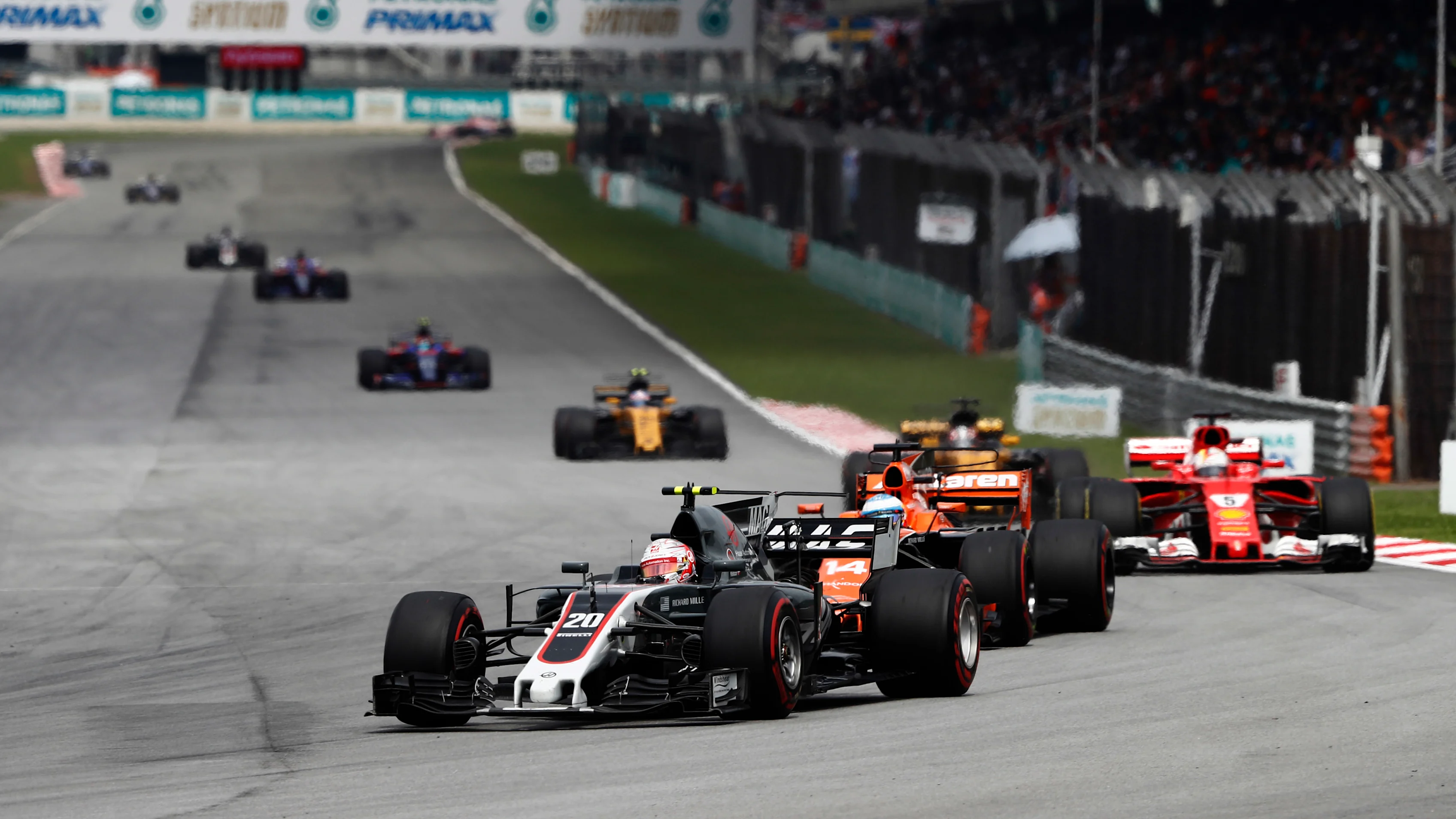
After an eventful race in Azerbaijan saw George Russell narrowly beat Max Verstappen, Formula 1 moves straight onto the Bahrain Grand Prix in Malaysia. But how much do you know about the Sepang International Circuit? F1.com has your all-in-one guide…
Key Sepang International Circuit statistics
- Circuit length: 5.543km
- Number of turns: 15
- Number of laps: 56
- Race distance: 310.398km
- Lap record: 1m 34.080s – Sebastian Vettel (2017)
When was Malaysia’s first Grand Prix?
After it was decided that the Bahrain Grand Prix would not take place in its original calendar slot in April, Malaysia stepped up to host the event, shifting it to the first weekend of October.
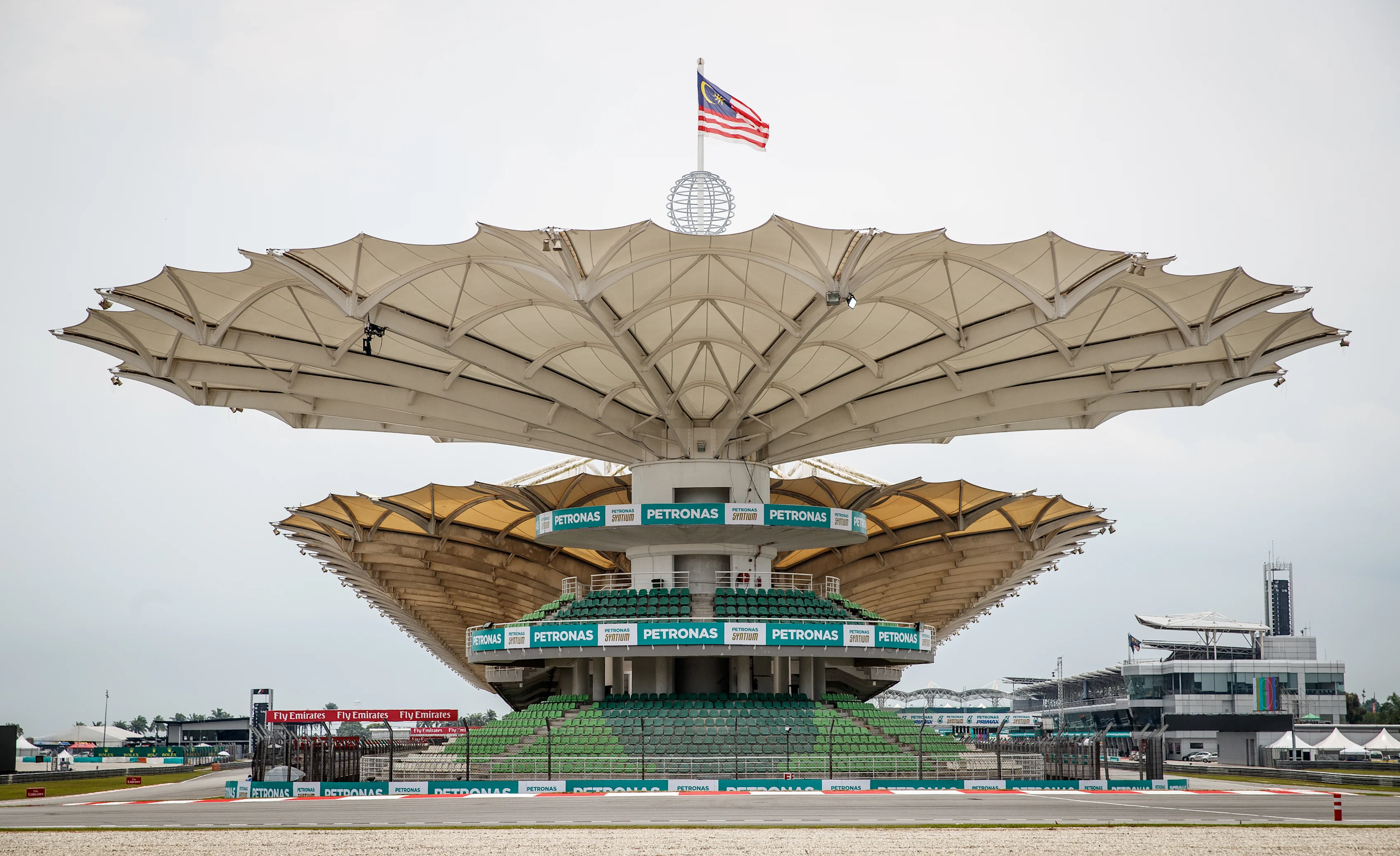
It will mark the first Grand Prix at the Sepang International Circuit since 2017, but the country’s links with F1 go back to the 1990s, when then-Prime Minister Dr Mahathir Mohamad set about building a first-rate motorsport venue.
Once renowned designer Hermann Tilke had planned the layout, construction began in 1997, with the inaugural race taking place in 1999. It was won by Ferrari’s Eddie Irvine and established Sepang as a fast and challenging track, setting a precedent for other purpose-built circuits.
What’s the circuit like to drive?
Only 10 drivers on the current grid have competed in Malaysia before – that was nearly a decade ago, so while they’ll have an advantage over their younger competitors, it’s likely that there’ll be a steep learning curve for everyone.
Jolyon Palmer, former Renault F1 driver, explained: "Sepang is a brilliantly flowing lap, with a fast middle sector splintering big braking zones with plenty of switchback opportunity.
"Turn 1 is extremely wide and it’s important to attack the brakes before getting back to hug a late apex to get nicely out of the tighter Turn 2 and up the following curved straight.
"The middle sector is all about high-speed balance and flow. A committed entry is needed on the entry for the incredibly high-speed run through 5 before picking your change of direction perfectly into 6 as the track drops away slightly. This is the highest speed cornering section on the circuit. Turn 7 is a bit slower and easy to run wide on the exit before the final part of that sequence which should be an acceleration zone if executed right.
"Braking for both Turns 11 and 14 are tricky and all about feel as you are coaxing the car through right hand bends on approach, especially for 14 where it’s easy to lock the right front. Again, the exit of this corner is critical, leading into the final big stamp on the brakes and an overtaking chance at the final turn."
If the layout doesn’t sound demanding enough, Sepang is also known for its unpredictable weather – high humidity, extreme heat and sudden downpours have all impacted races in the past.
Where are the Straight Mode zones and overtake detection?
As a reminder, and as explained in our pre-season summary of regulation changes, Straight Mode is a different aerodynamic configuration that allows cars to reduce their drag, making them more efficient when accelerating up towards top speed.
The rear wing continues to open up a gap – just like it did when drivers used DRS (the Drag Reduction System) in the past – but now the front wing also moves. The uppermost front wing elements drop down at the same time the rear wing’s top element does.
This is a mode that is used on every single lap in dry conditions, in every area that is designated for it. Essentially, the car will adapt between two different configurations depending on where it is on the track, providing maximum downforce in corners but then less drag on straights.
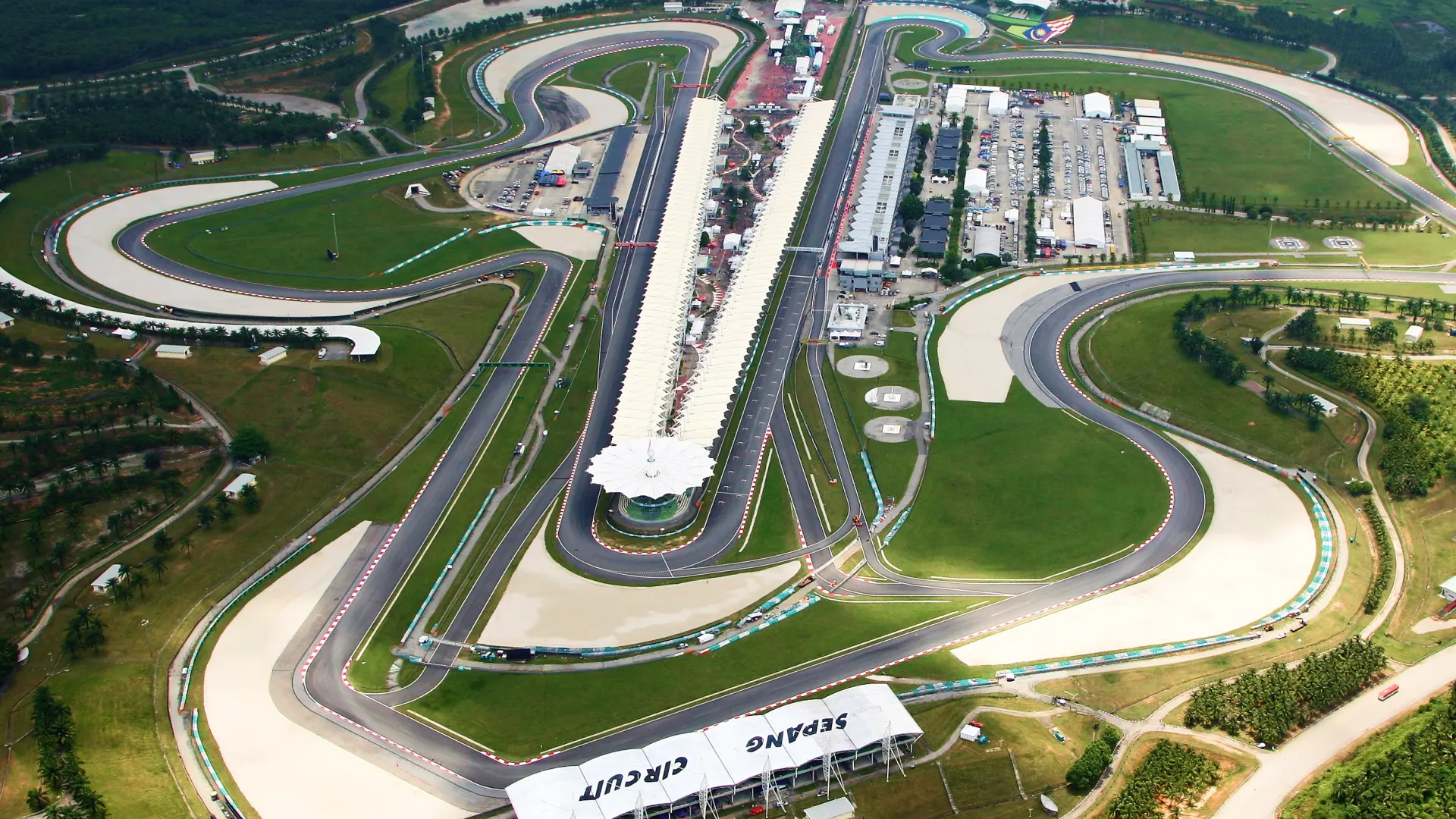
In Malaysia, there are four designated Straight Mode zones, beginning with a run along the start/finish straight, then between Turns 3 and 4, between Turns 8 and 9, and finally between Turns 14 and 15.
Meanwhile, Overtake Mode replaces DRS and is a new power mode that allows a driver to recharge more electrical energy, and generate an additional electrical power profile, so they can sustain a higher speed for a longer period.
There is one detection point per lap for this mode – expected to be out of the final corner on many occasions, leading onto a long straight – and it will be available to drivers on the following lap as long as they stay within a second of the car in front at that detection point.
The Overtake Detection marker at the Sepang International Circuit comes as drivers exit Turn 15, while the Overtake Activation line follows at the beginning of the start/finish straight.
/2026trackkualalumpurdetailed.webp)
Five fun facts about the Bahrain Grand Prix in Malaysia
- Lewis Hamilton and Michael Schumacher hold the record for the most pole positions at the Sepang International Circuit, with five apiece
- It was the first F1 track designed from scratch by Tilke – he had previously only renovated what is now the Red Bull Ring in Austria
- Ferrari’s most recent victory in wet weather came in Malaysia in 2012, when Fernando Alonso won from P8 on the grid
- This weekend will mark the 22nd edition of the Bahrain Grand Prix, and the first not to be held at the Bahrain International Circuit in Sakhir
- Other countries have stepped in to host races before – the San Marino Grand Prix was held in Italy between 1981 and 2006, the 1997 and 1998 Luxembourg Grands Prix took place in Germany, and the 1982 Swiss Grand Prix was contested in France
Next Up
Related Articles
 How Williams entered the Marvel Universe
 BettingThe 5 drivers most like to qualify quickest in Austin
 UnlockedINSIGHT: How F1 teams create special one-off liveries
 UnlockedThink you're Fan1? Win a VIP trip to Las Vegas
 What time is the 2026 United States GP and how can I watch it?
 Camara indicates the driver number he'd like to use in 2027