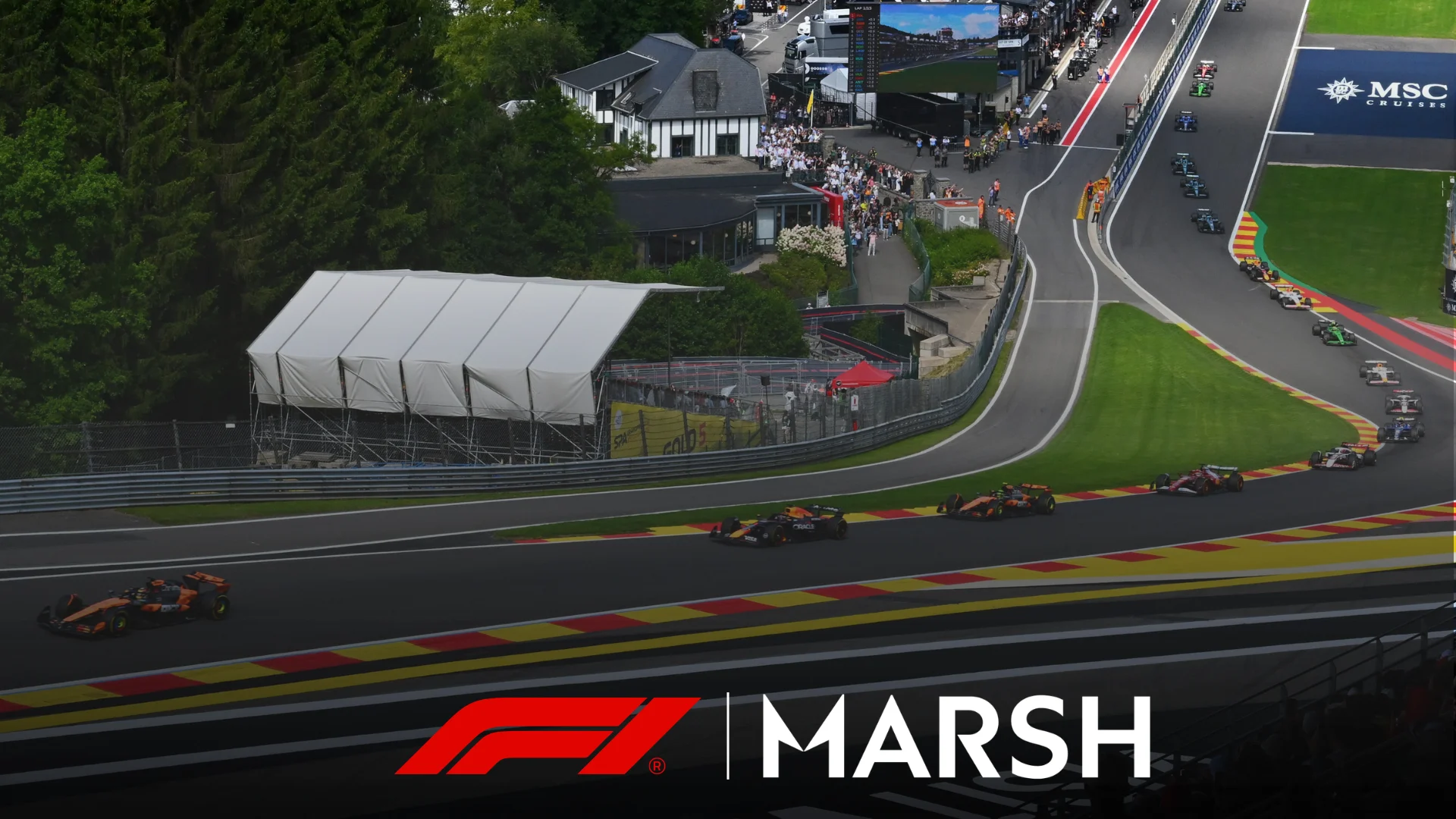
Spa-Francorchamps: The Beast of the Ardennes. Anticipation of the Belgian Grand Prix at Spa sends a shiver of excitement down the spine – but also brings a smile to the lips. F1 fits well with the high, old places of European racing and, at Spa, the history of this great circuit is never more than a well-framed sightline away.
The circuit has been nipped and tucked over the years but has never lost its ultra-high speed reputation, or the love and respect of those who race on it. It’s a circuit where risk often brings great reward… providing it’s the right risk.
So how will the teams, drivers and strategists approach the weekend? It’s time to take a look in The Risk Perspective, in partnership with Marsh, Formula 1's Official Risk Partner and Official Insurance Brokering Partner.
The Strategy
Spa doesn’t make strategy straightforward. First of all, there’s the length of the lap. At 7.004km, it’s the longest in F1, and while the very high speeds mean it doesn’t take as long to complete as others, we can still expect lap times pushing 1m 50s.
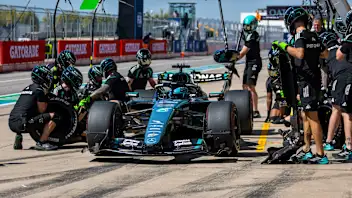
This makes pit stops fraught with danger. Miss the perfect window to stop, it’s a long time until you can try again.
This is often coupled with the weather. You never know what you’re going to get. Here at the height of summer, every day is an adventure in the Ardennes: it could be sunny; it could be raining; it can do both at the same time – lashing down at La Source and baking at Les Combes, presenting spectators with a wonderful rainbow and race engineers a terrible dilemma.
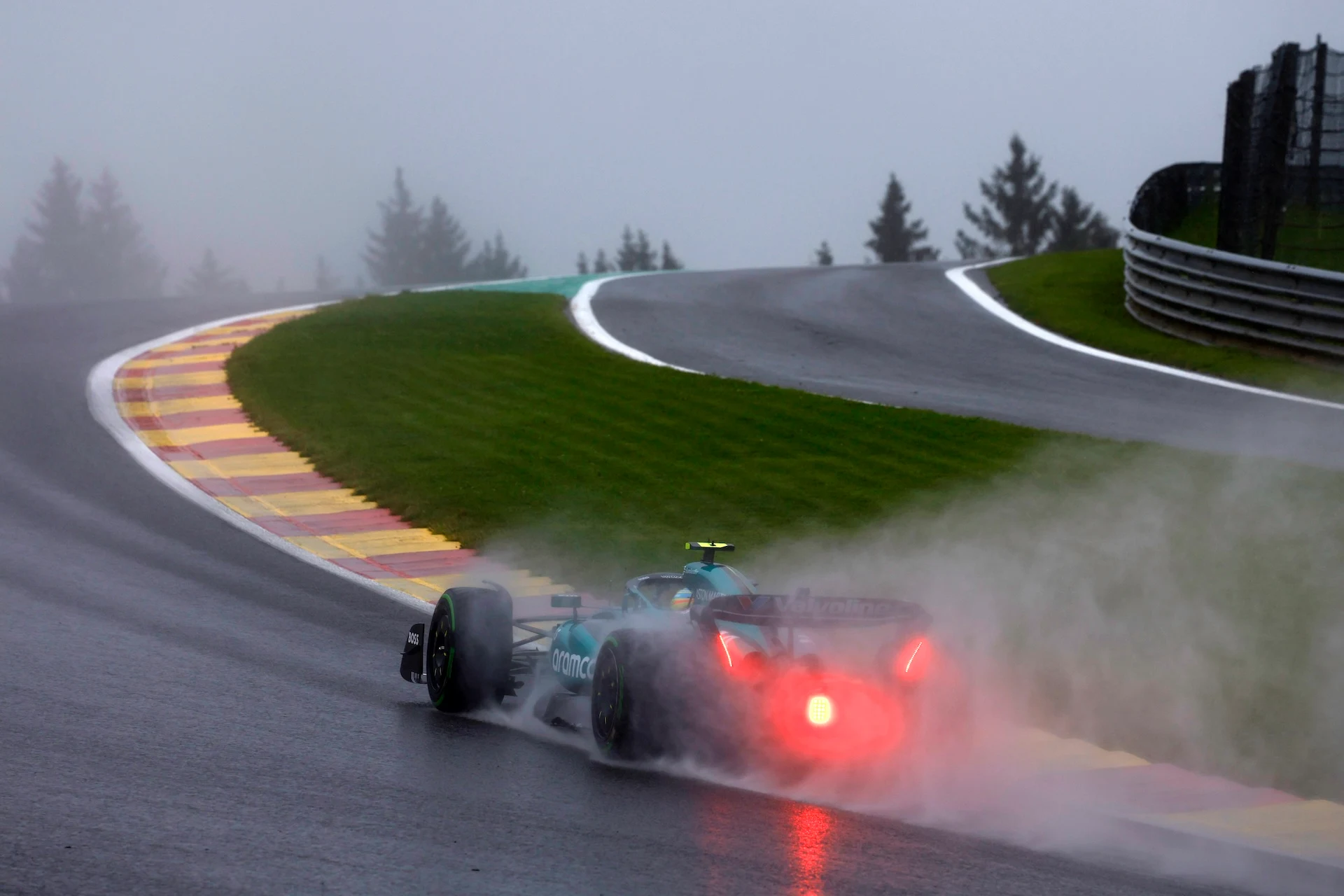
But even without the weather, Spa is a tricky one to call. In recent years, it’s been right on the cusp between one and two stops, with the late race drama of the two-stopping hares reeling in the one-stopping tortoises. Both approaches come with risks attached.
And this year, we have something new. Somethings new. Spa has always been about the trade between high downforce for the fast corners and low drag for the long straights – in effect, a choice between being quick in Qualifying and competitive in the race. How will active aero and Overtake Mode unbalance that equation? We’ll have to wait and see.
The Key Section: The Middle Sector
For the purposes of timing, every F1 circuit is divided into three roughly equal sectors. At Spa, however, the differentiation is more than purely chronological. Sectors 1 and 3 are dominated by long, full-throttle sections of the circuit – but they are linked by an altogether different sort of track in Sector 2.
It features the two chicanes of Les Combes and Fagnes, the parabolic Rivage, and – genuine contender for F1’s greatest corner – the ultra high-speed double left-hander of Pouhon.
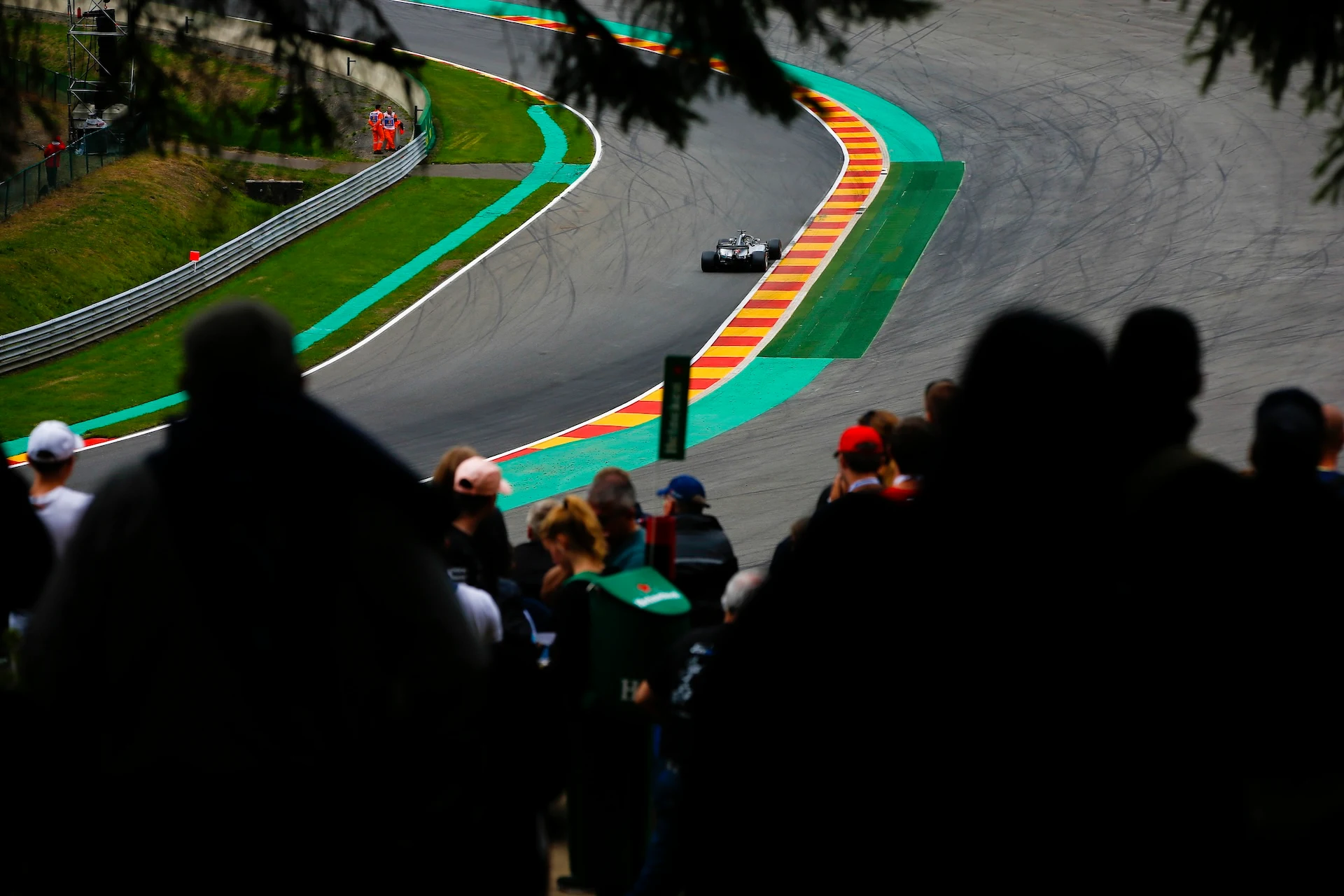
Sector 2 has always represented a conundrum. Purely in terms of lap time, there’s an incentive to pack-on the downforce, and be quick here… but teams are reluctant to do so, because they’re also keen to take downforce off the car, and reduce drag, to have high end-of-straight [EOS] speed in the full-throttle sections.
It seems counter-intuitive to set-up a car for something other than its fastest lap-time, but the logic is relentless. A car that’s slow EOS is going to be overtaken on the Kemmel Straight, and then be unable to unfurl its superior performance in Sector 2 when stuck behind the F1 equivalent of a tractor towing a caravan.
The active aero of 2026 mitigates the problem to an extent – but teams will still have to decide how much straight-line speed they’re prepared to gamble to be fast-enough through Sector 2.
The Drivers’ Perspective: Leonardo Fornaroli & Alex Albon
Leonardo Fornaroli won the Formula 2 Sprint Race at Spa last year, on his way to taking the F2 title. Now, test and reserve driver for McLaren, the young Italian made his F1 weekend debut in the Barcelona-Catalunya Grand Prix, replacing Lando Norris for FP1.
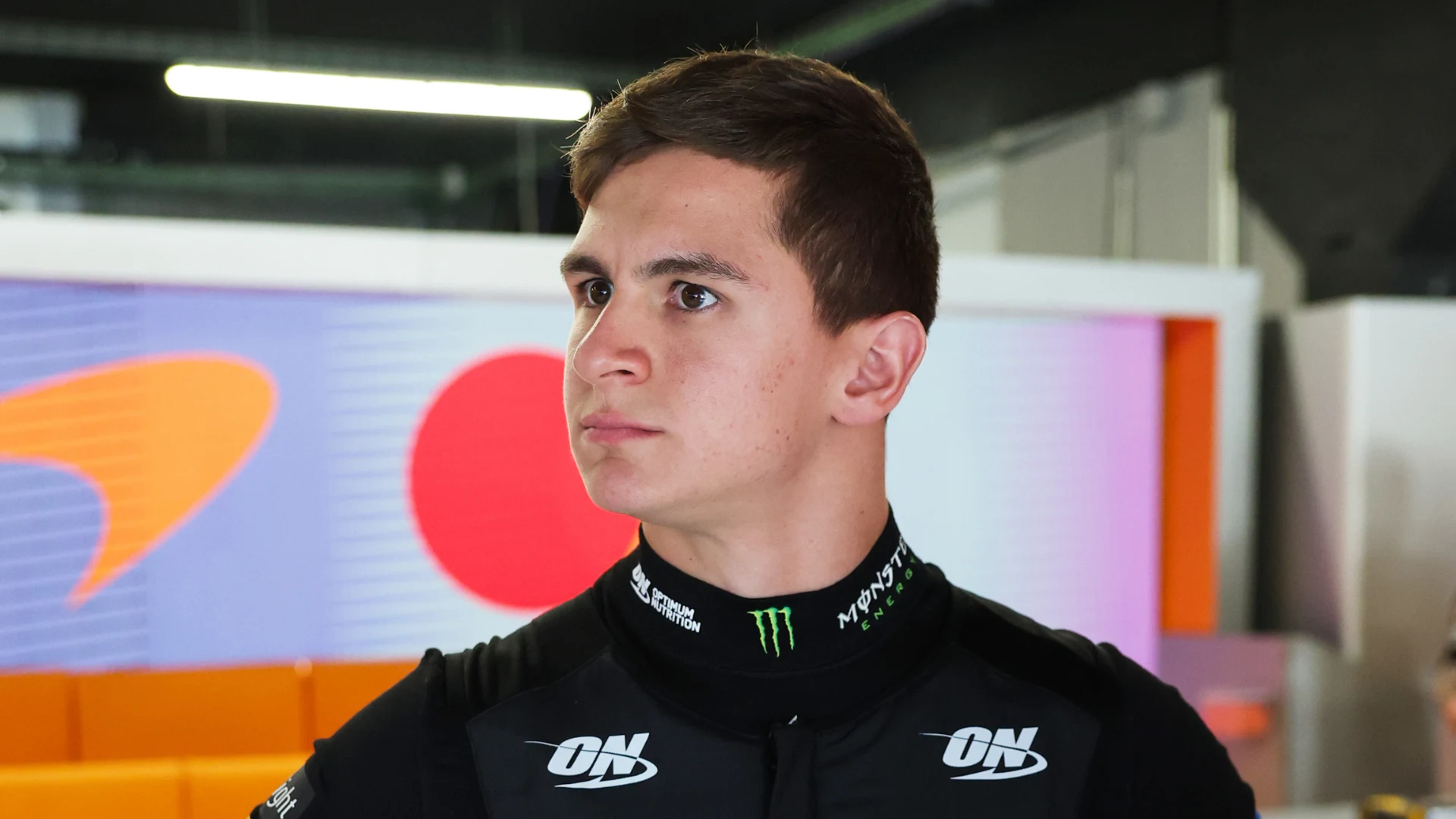
“Spa is tricky, because it has very long straights – but also very high-speed corners," says Fornaroli. "You have to run with low downforce for the straights but you still need to get the mechanical balance right, and have the mechanical grip to be quick in the high-speed corners – because if you’re not, you can lose a lot of time there.
“Pouhon is a great example, because it’s really high-speed, and you need the downforce but also you need stability for the entry to the Les Combes and Fagnes chicanes, because you’re combining the braking and turn-in. It really is about finding a good compromise, because if you focus too much going one way or the other, you’ll struggle on the other side of the equation.”
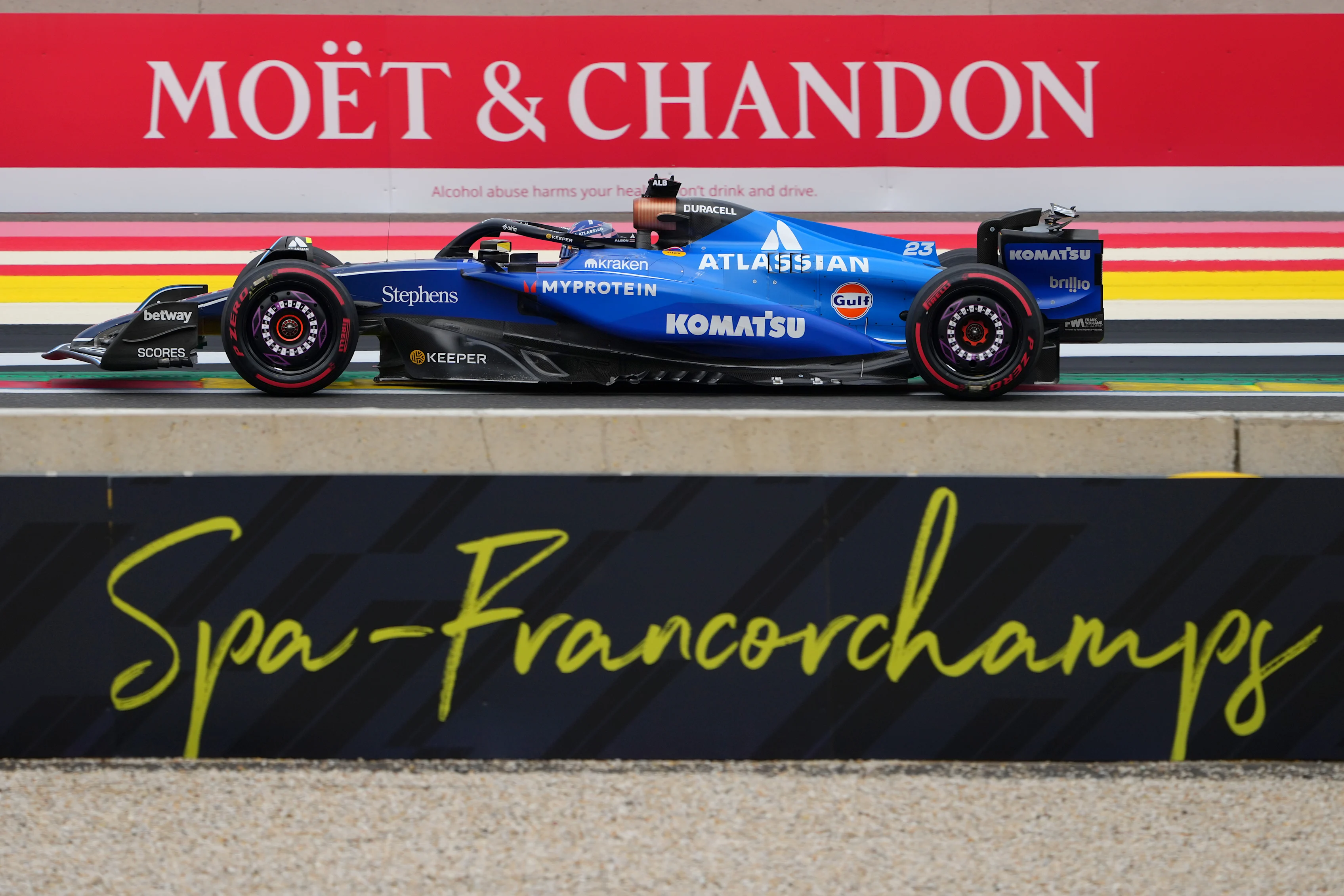
A factor this year that moves Spa away from its established pattern is the issue of energy management. Pre-season, Spa, like the other high-speed, fast corner tracks at Suzuka and Silverstone, was identified as a place where the energy recovery system would have the hardest time – though Williams’ Alex Albon argues the layout of Spa makes it less of a challenge than last time out at the British Grand Prix at Silverstone.
“Spa should be okay,” says Albon. “You charge the battery at Turn 1 [La Source] and have it for Eau Rouge, and then all the way through Sector 2, you can get it all back before the full-throttle back straight. This is different to Silverstone where, basically, from Turn 7 to Turn 15, there’s nothing to charge the battery and you’re starving the whole way through that section.”
The Engineer’s Perspective: Xavier Marcos Padros
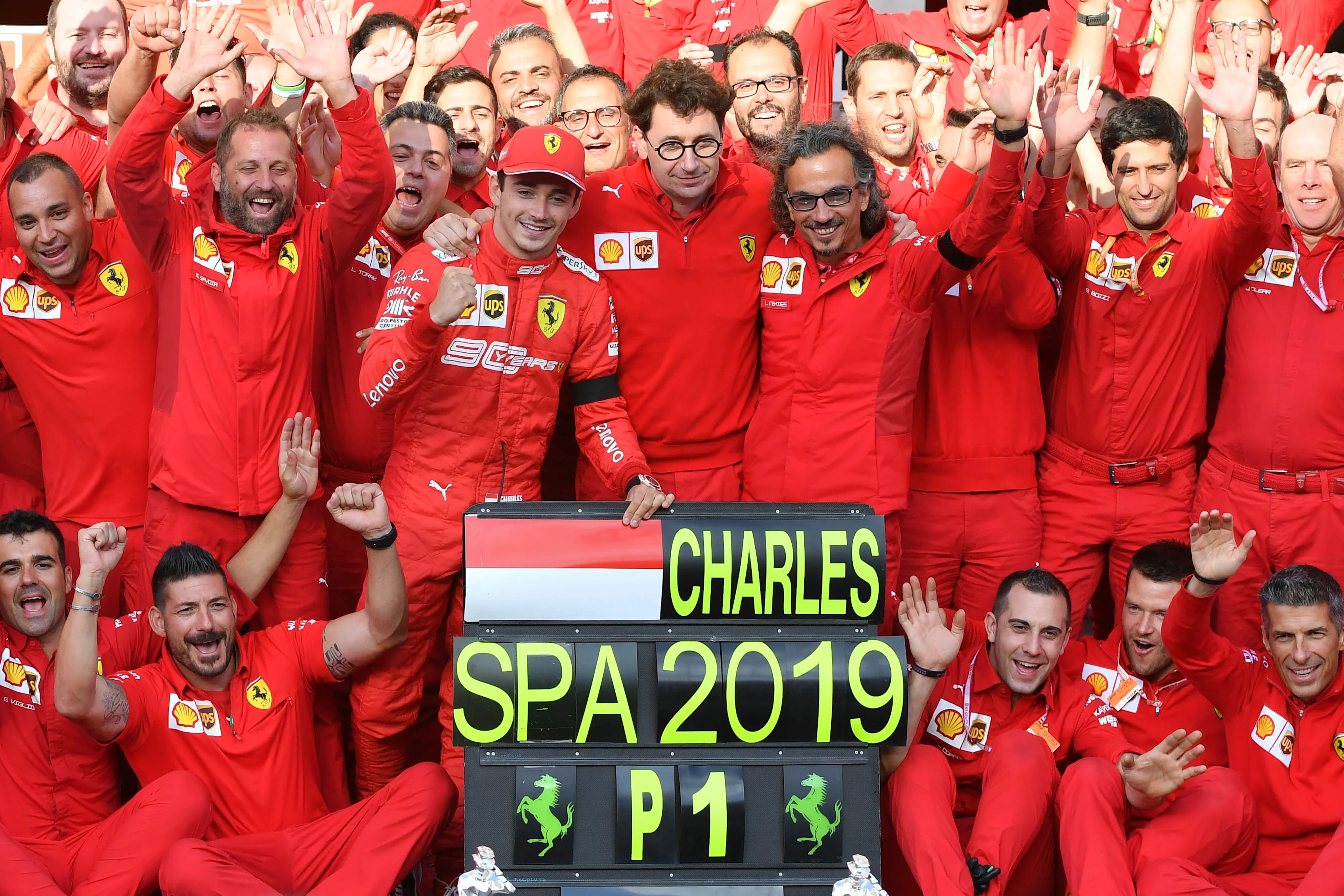
Xavier Marcos Padros is chief race engineer for the Cadillac team. Previously race engineer to Charles Leclerc at Ferrari, he won the Belgian Grand Prix at Spa-Francorchamps in 2019.
“There’s lots to do during practice at Spa," he explains. "Every team will have their own set of limitations to explore and decide what set-up they need to take forward into Saturday and Sunday to maximise what they have on track. We need to understand our tyres, and discover what level of management, if any, is required for the various strategies we may want to use.
“And finally – really important this year – we need to understand energy management, and how to maximise it for Qualifying, and then for the different rules during the race.
"We need to know how we can use our energy for different strategies, and we also need our drivers to get a feeling for that, so they don’t get a surprise during the race.”
“Regarding set-up changes, the lap in Spa is long, but I do believe it’s really important to do the usual number of laps in practice to help the drivers get into the right rhythm.
"That means you really have to maximise the preparation, then limit changes during the session to one or two things that help you find the direction in which you want to go. Any big [time consuming] changes, you will do between the sessions.
“Having active aero will change things a little from a traditional Spa weekend, but to be honest, even with the Straight and Corner Modes, drag is still important at Spa and downforce sensitivity less so. It may be a less critical element than in the past, but still important, and everyone will be using the tools they have to combat drag.
“With Charles, in 2019, winning the Belgian Grand Prix wasn’t down to one specific thing. Having a good race begins with pre-event preparation in the factory and simulator sessions. That went well, we knew where our limitations were, and from that, we could plan good practice sessions.
"Once in the practice sessions, it’s about getting the car on track in the right windows, understanding matters like the impact of the tow you receive from the cars in front. Having good practice sessions, enabled us to execute well in Qualifying and then, on race day, we had good teamwork and pit stops. It really is a team effort overall.”
The Greatest Race: 1992 Belgian Grand Prix
Where do you start with the Belgian Grand Prix? Or even if you limit the selection to just the races at Spa, where do you start with Spa? This circuit has been hosting Belgian Grands Prix since 1925 and was on the first Formula One World Championship calendar in 1950.
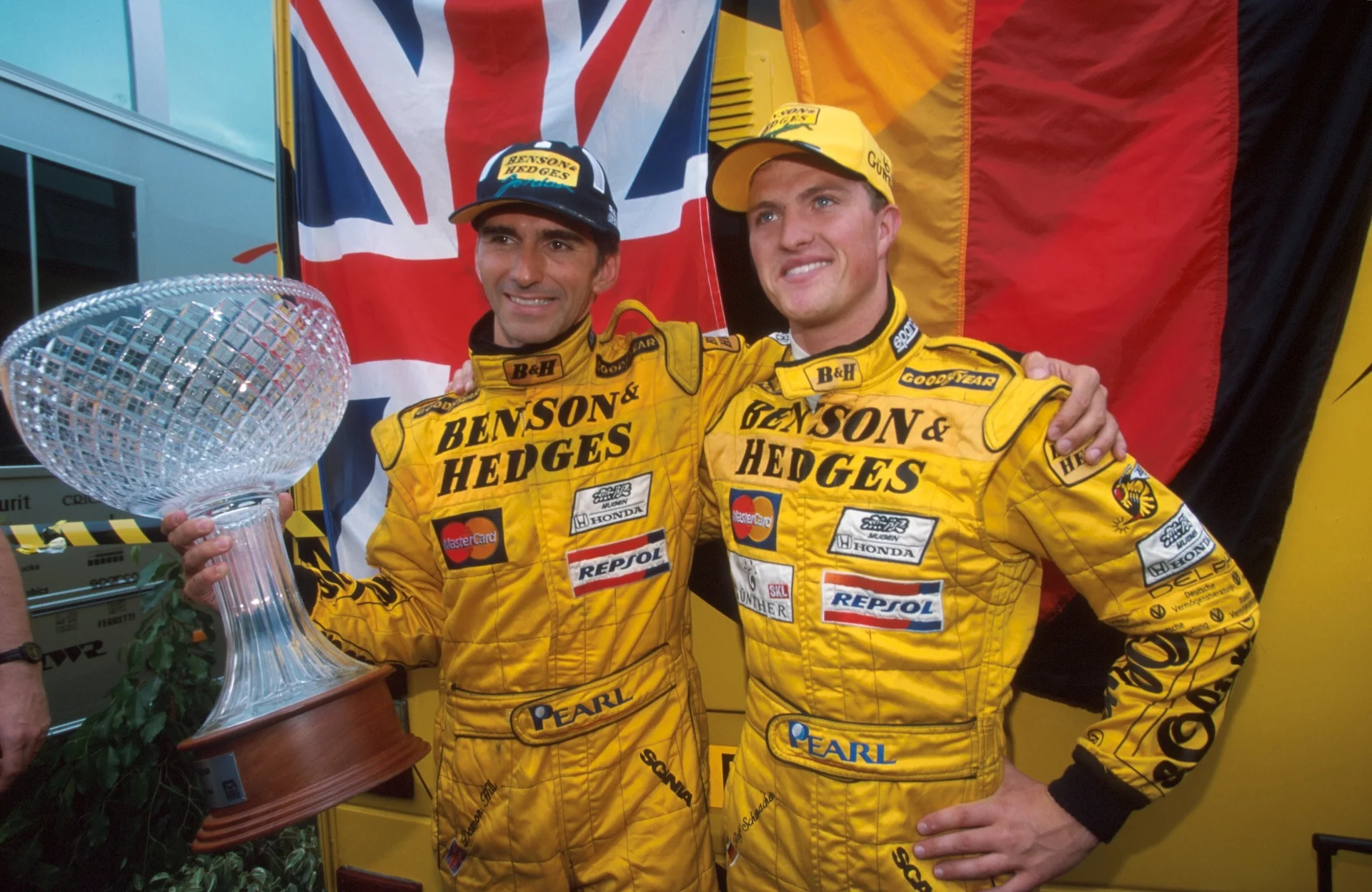
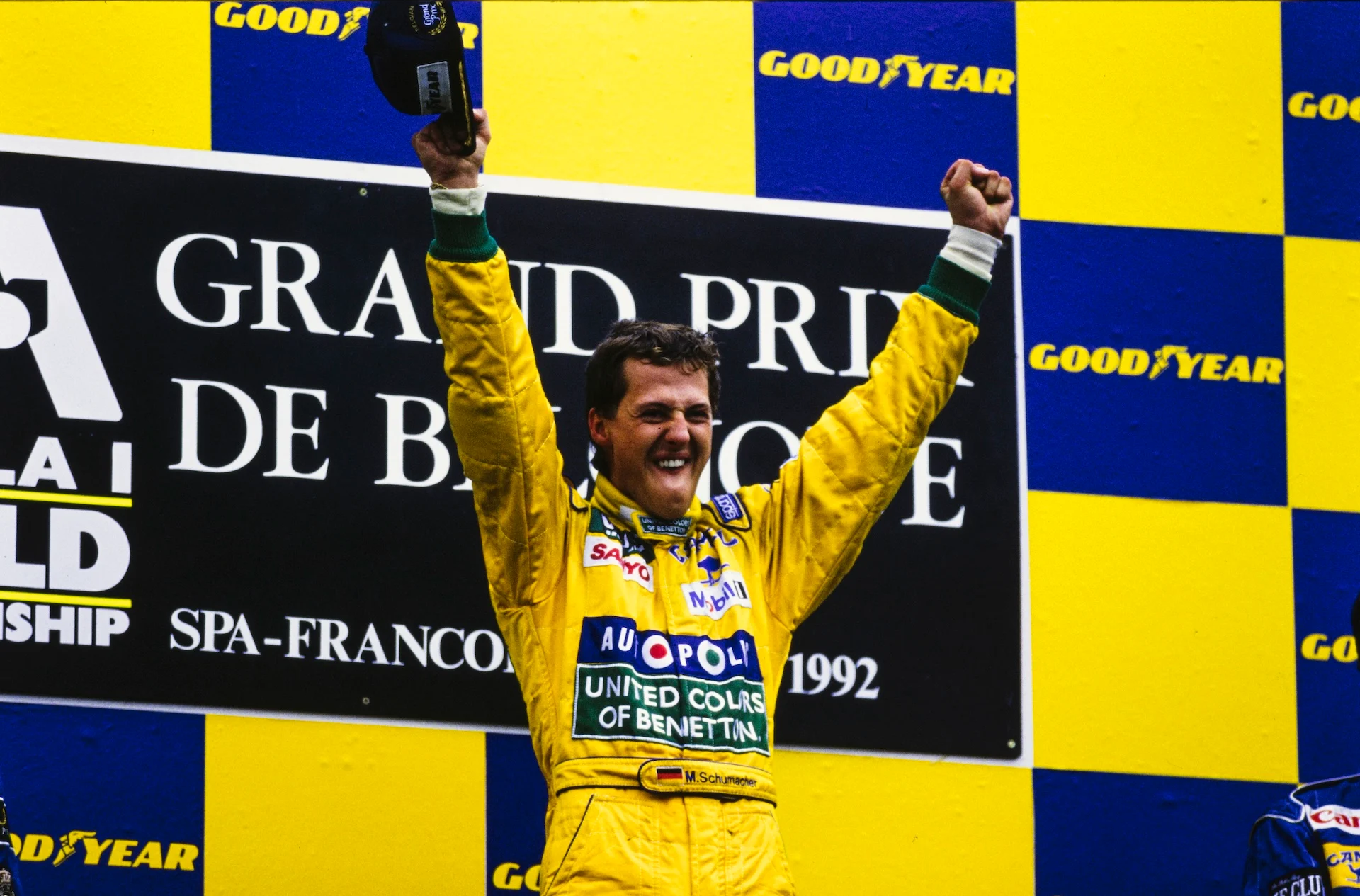
Rarely has it disappointed. We could go for Jim Clark’s first victory in 1962, or debut wins for McLaren or Jordan, or the one and only all-American triumph in F1 with Dan Gurney driving the Eagle in 1967. But we’re going for 1992, and the first of 91 wins for Michael Schumacher.
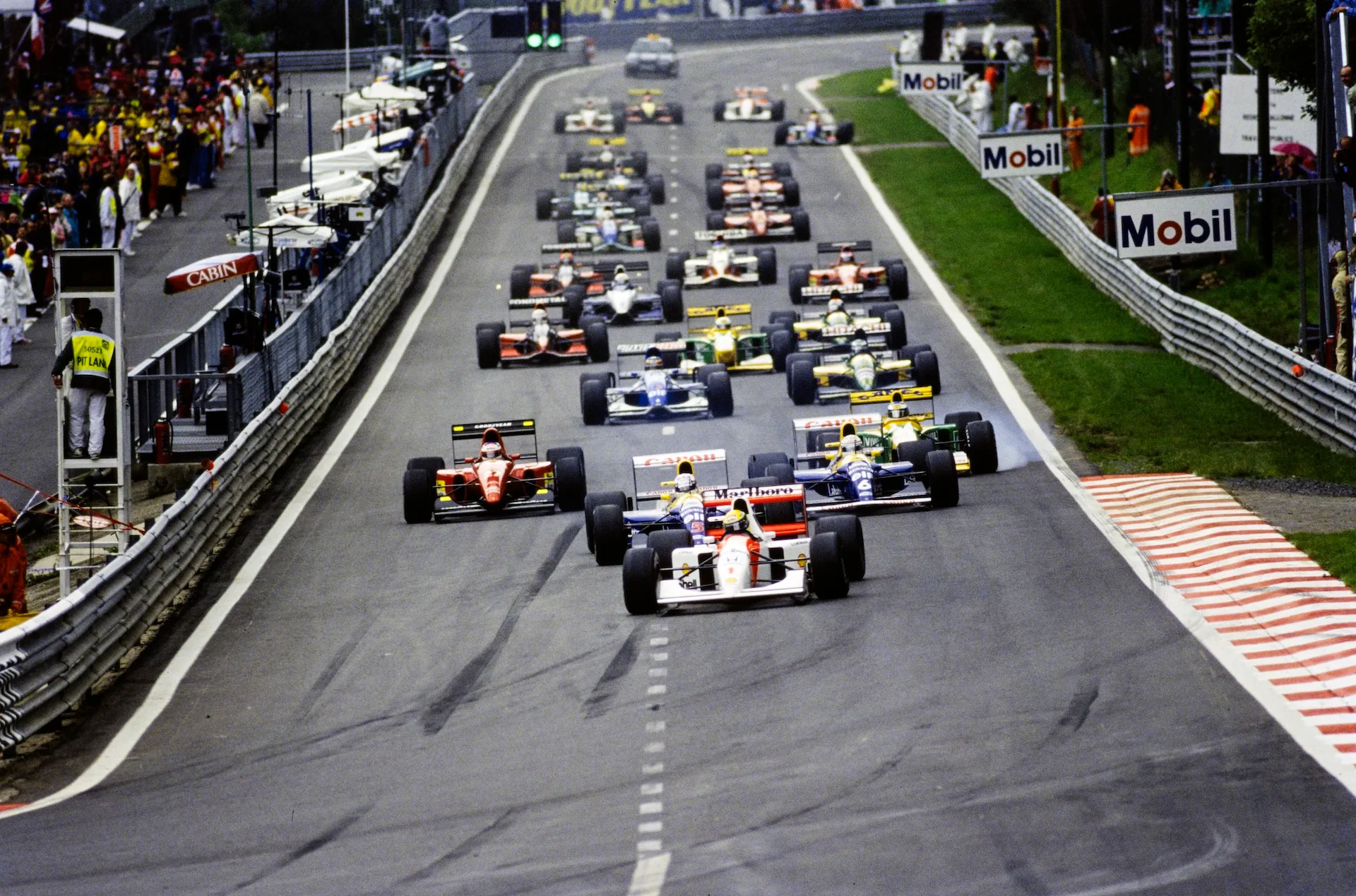
The race began with the track a little damp, then got a soaking from one of Spa’s frequent pop-up showers, then dried again before the chequered flag. Nigel Mansell – champion-elect – was on pole, alongside reigning champion Ayrton Senna.
Schumacher, back at the circuit where he made his debut the previous season and now 17 races into his F1 career, lined-up third.
The opening exchanges had Senna take the lead but be harried by Mansell, who first got back in front, and then decided the rain was getting too heavy, and pitted for wets. Everyone except Senna followed Mansell in over the next few laps.
Senna tried to tough it out on slicks, waiting for the track to improve. It was a mesmeric effort, but reality eventually bit, Senna was caught, passed and gave up the fight, pitting for rain tyres himself on Lap 14.
Schumacher stayed up in the lead group. He had the Williams cars of Mansell and Riccardo Patrese ahead, and Benetton team mate Martin Brundle behind. The rain tyres started to struggle on the drying track, and Schumacher ran wide on Lap 30, losing position to Brundle – but managed to turn that to his advantage.
“I was behind Martin, and could see that his tyres were blistered,” said Schumacher post-race. “That was good situation for me, and immediately I decided to go for a tyre change.”
Schumacher was the first of the leading group to gamble on slicks and got the full reward for taking a risk. When Mansell pitted three laps later, he came out behind Schumacher. That may not have been enough for the win, but Mansell, with the Williams suffering a cracked exhaust, backed-off and bought his car home in P2.
With Patrese P3, Williams secured the Constructors’ Championship, but F1 had a new star. The Regenmeister had arrived.
The Strategic Masterstroke: 2008 – Where did Nick Heidfeld come from?
It’s tempting to give this to George Russell, for winning with an audacious one-stop strategy in 2024, but George had his triumph cut short – disqualified post-race for a car 1.5kg underweight. The margin was small, but the regulation is absolute: under is under, and Lewis Hamilton inherited the victory.
Hamilton can doubtless empathise with his former team mate, having had one of his own Belgian Grand Prix victories chalked-off.
In 2008, after an epic battle with Kimi Raikkonen (see the clip below), Hamilton took the victory and collected the winner’s trophy, but then also collected a 25s penalty for leaving the track and gaining an advantage. The victory went to Felipe Massa, Raikkonen having crashed two laps from home.
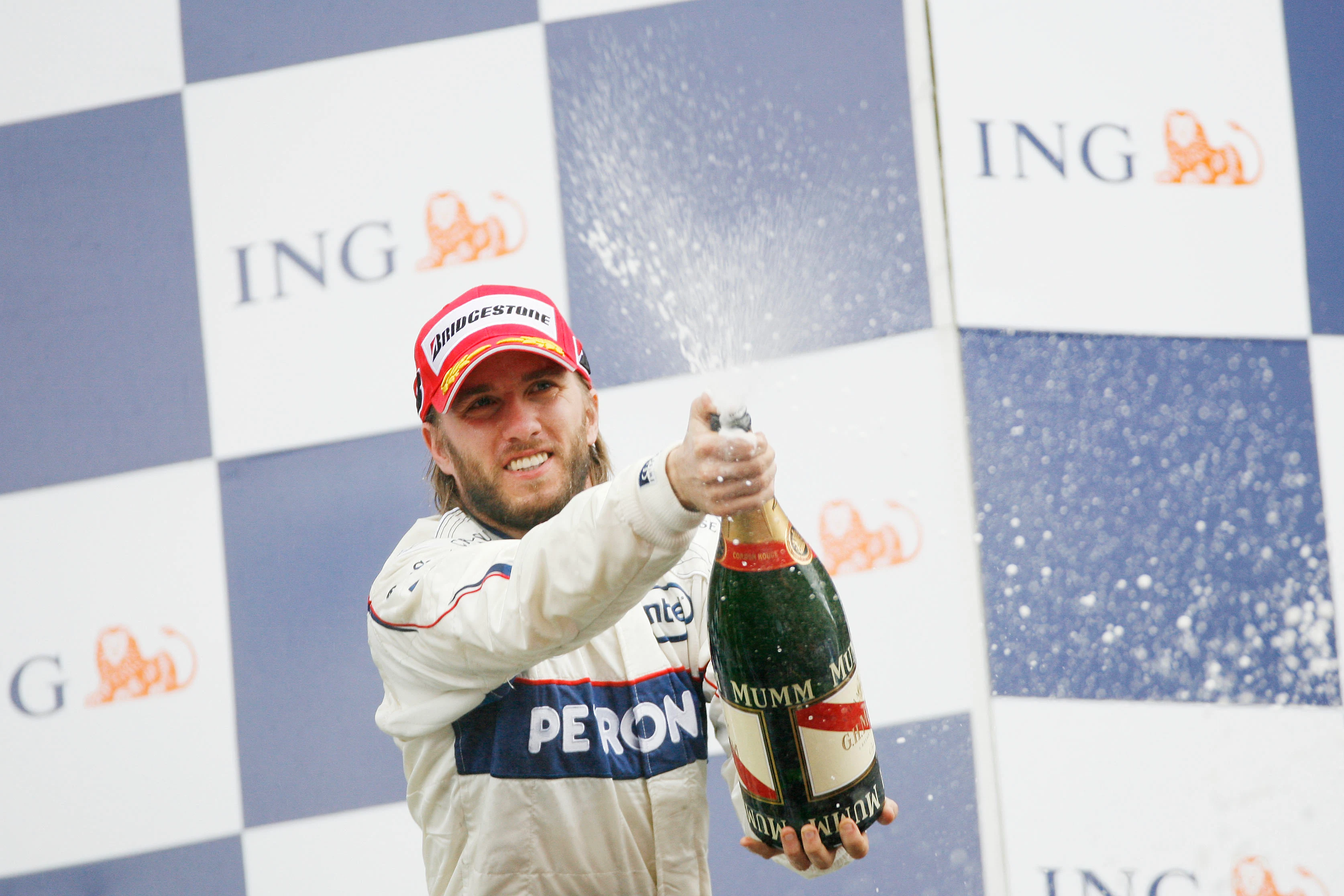
The strategic masterstroke though, belongs to BMW-Sauber’s Nick Heidfeld. The German driver was running seventh on Lap 42 of the 44-lap race. Light rain had started to fall and Heidfeld took the decision to risk it all, and pit for wet tyres.
That dropped him out of the points, but Spa is a long lap. The weather was getting worse, and Heidfeld – completely under the radar while TV concentrated on Hamilton and Raikkonen – used a massive grip advantage to catch and then overtake his way to a podium, skipping around the cars that had stayed out on slicks.
He crossed the line to finish third, but was elevated to P2 after Hamilton’s penalty – and this is the sort of thing that happens at Spa: a pop-up shower, a brave decision, and a race turned upside-down in just a couple of laps.
The Risk Perspective is brought to you in association with Marsh, Formula 1’s Official Risk Partner and Official Insurance Brokering Partner.

Next Up
Related Articles
 AS IT HAPPENED: All the action from Qualifying for the US GP
.webp) Freddie Hunt on his father James’ ‘incredible’ 1976 title
Freddie Hunt on his father James’ ‘incredible’ 1976 title Antonelli explains approach to US GP after taking pole
 UnlockedWhat are the tyre strategy options for the United States GP?
 Hamilton explains Ferrari’s Qualifying deficit in Austin
 What the teams said – Qualifying in the United States