Everything you need to know about F1 – Drivers, teams, cars, circuits and more
From who the drivers and teams are through to where the races are held and how you can watch the action, we've rounded up everything you need to know about F1.
.webp)
If you’re new to Formula 1, you may have a few questions about the sport and how our action-packed tour of the world is staged year in, year out. Well, we’ve got you covered. In an all-in-one explainer, we take you through the basics from how the championship was formed to the circuits visited, the drivers behind the wheel and the teams involved up and down the pit lane…
What is Formula 1?
As the highest class of international racing for single-seater formula racing cars, Formula 1 is the pinnacle of motorsport and the world’s most prestigious motor racing competition. There really is nothing like it.
It’s a team sport (it needs to be to change all four tyres on a car in under two seconds!), though the drivers are more like fighter pilots than sportspeople. Battling extreme g-forces, making daring decisions in the blink of an eye – and at more than 370kph (230mph). To be the best, F1 drivers push themselves – and their incredibly innovative machines – to the very limit.
Drivers compete for the F1 Drivers’ Championship, while the teams fight for the F1 Teams’ Championship and prize money based on their position at the end of the season.
Each race is known as a Grand Prix, and they’re held in incredible locations around the world. The 2026 Formula 1 calendar features 24 Grand Prix weekends, which include six F1 Sprint races, taking place from March through December.
How many drivers and teams race in F1?
A total of 11 teams and 22 drivers from around the world make up the current Formula 1 grid, with each squad fielding two cars.
Driver experience ranges from multiple World Champions like Lewis Hamilton, Max Verstappen and Fernando Alonso – as well as the new 2025 World Champion Lando Norris – to rookie racer Arvid Lindblad who is embarking on his first F1 campaign in 2026 with the Racing Bulls team.
When it comes to teams, there are those who have been in Formula 1 since the early years, such as Ferrari (competing continuously since the very first season in 1950) and McLaren, and relative newcomers like Haas who entered the sport ahead of the 2016 season. In 2026 there is also a brand-new team to support with Cadillac entering for the first time.
Where does F1 race?
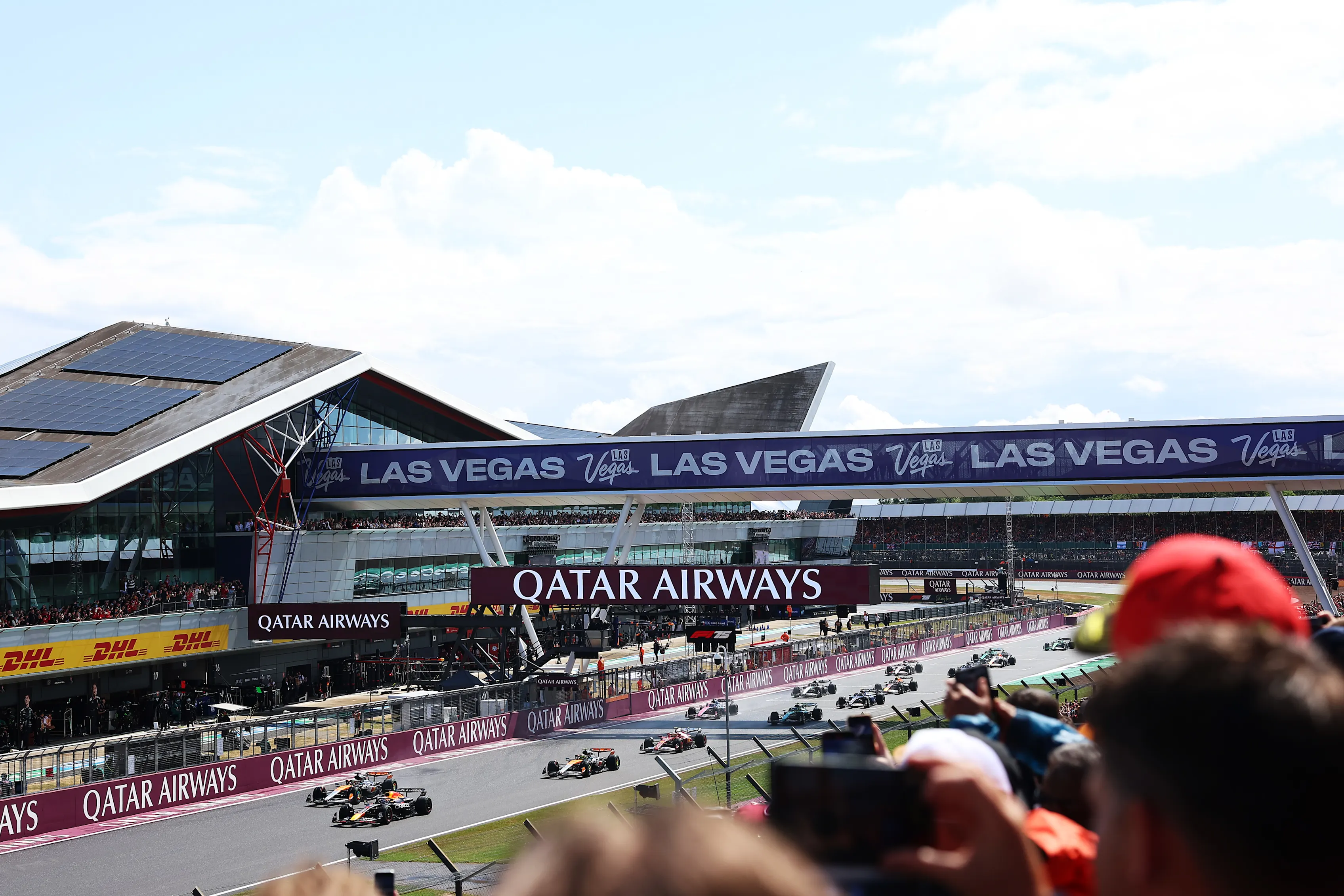
A total of 24 races in 21 countries across five continents are included on the Formula 1 calendar. Classic circuits such as Silverstone, Spa-Francorchamps and Suzuka, combined with more recent additions including Las Vegas, Miami and Saudi Arabia, give an exciting and varied selection of tracks.
Monaco, Monza, Silverstone and Spa are circuits that still feature on the schedule from the very first F1 season in 1950, although plenty of safety-based changes and track layout modifications have been made since then.
There is also a brand new track in 2026 for F1's drivers to tackle as Madrid hosts the Spanish Grand Prix on the new, purpose-built Madring circuit.
Formula 1’s inaugural season in 1950 featured seven rounds, spread out from May to September, predominantly staged in Europe – the exception being the Indianapolis 500 in the United States, which most F1 drivers sat out.
New European events arrived as F1 developed, with the following decades also bringing adventures to South America, North America, Africa, Asia, Australia and, most recently, the Middle East – well and truly putting the ‘world’ in World Championship.
How does the F1 weekend work?
The standard Formula 1 weekend sees each event take place over three days – typically Friday, Saturday and Sunday (Las Vegas is an exception running from Thursday, Friday and Saturday).
Friday traditionally features two 60-minute Free Practice sessions (FP1 and FP2) for teams to set up and optimise their cars. These are typically used to make sure the car works as it should, before set-up changes are then made and race preparations continue.
On Saturday, after a final practice session (FP3), drivers head into a three-stage session called Qualifying. The slowest six drivers from the 18-minute Q1 phase are eliminated from the session, before six more go out after the 15-minute Q2 segment. That sets positions 20-11 on the grid for the Grand Prix prior to any penalties. The final 13-minute-long Q3 then decides the top 10 grid slots, including the coveted pole position for the fastest driver.
Sunday brings the Grand Prix itself, where drivers battle it out to score points, grab a spot on the podium and reach the chequered flag first to win the race.
How long do F1 races last?
Formula 1 races generally last between an hour-and-a-half to two hours, though this can be impacted by Safety Car periods that slow the field down or red flags that halt the action – see the 2023 Australian Grand Prix as a prime example.
Each race on the calendar has a set number of laps based on the length of their circuit. The distance of every race is almost always equal to the fewest number of laps that exceed 305 kilometres (189.5 miles).
Monaco is an exception to the rule, where the race length is equal to the fewest number of laps needed to exceed a distance of 260 kilometres (161.5 miles), given the lower speeds of its street circuit nature.
What’s the F1 Sprint?
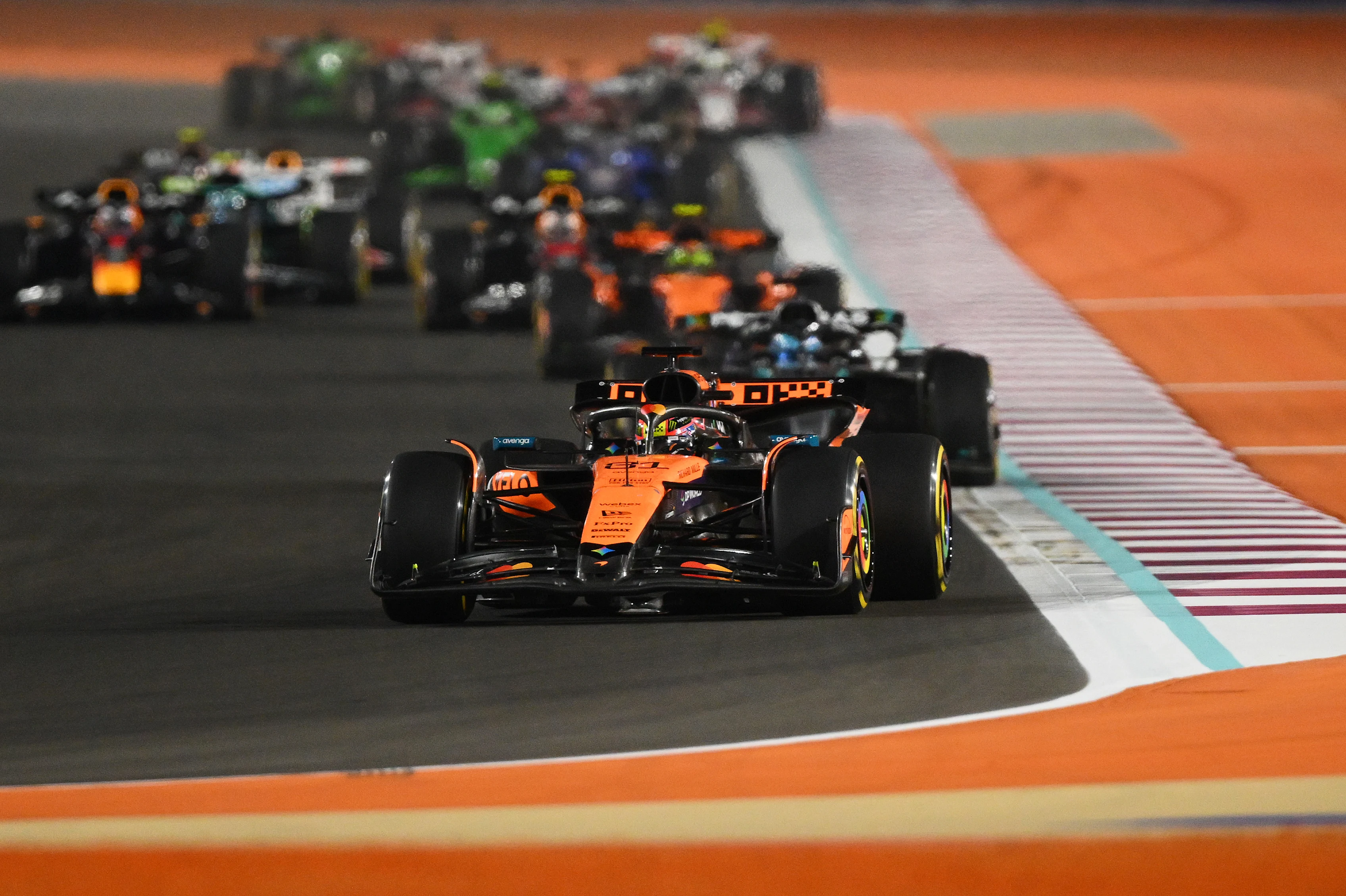
The F1 Sprint is a short race. It covers 100km – about one-third of a typical Grand Prix distance – and should last about 30 minutes. This length has been chosen to encourage a race that is dynamic rather than strategic, with no mandatory pit stop.
While the bulk of the Formula 1 season consists of traditional Grand Prix weekends as we’ve covered above, six of them – a quarter of the 24 events in total – have been designated F1 Sprint events, which add another layer of excitement to proceedings.
A Sprint weekend is still a three-day affair with the Grand Prix as the main event, but the Sprint Qualifying session (which sets the grid for the Sprint) replaces FP2 on Friday afternoon. The Sprint itself takes place on Saturday (instead of FP3), before Qualifying for the Grand Prix happens as normal.
The venues chosen for Sprint events are all tracks with great overtaking potential, picked to try and ensure the Sprint is a flat-out, aggressive melee from start to finish. Points are on offer, from eight down to one, awarded to the first eight cars to finish.
Six venues are hosting F1 Sprint events in 2026 as the exciting roster sees China and Miami on the Sprint line-up for a third consecutive year. Silverstone returns to the Sprint Calendar for the first time since the format's inaugural event in 2021, while Montreal, Zandvoort and Singapore are set to host their first ever Sprint weekend.
How can I watch F1?
Formula 1 is watched by huge numbers of fans around the world. This includes the hundreds of thousands who flock through the gates at each Grand Prix weekend to catch the action in-person and the millions more who follow it from afar.
If you’re planning on going to a Grand Prix yourself, a wide range of packages to suit different needs and budgets are available via the official F1 Tickets, F1 Hospitality and F1 Experiences portals.
Our F1 TV Pro subscriptions give you access to live coverage of every session at every Grand Prix weekend (in selected territories), along with a comprehensive back catalogue of historic races, documentaries and shows.
Fans can also enjoy Formula 1 in cinematic form by watching F1 The Movie, which stars Brad Pitt as veteran racer Sonny Hayes – more on which below.
Why is it called Formula 1?
The reason why Formula 1 is called Formula 1 is two-fold.
First up, the ‘Formula’ is a set of rules – covering car design, engine size, component usage and much, much more – that all competitors must abide by. Secondly, the ‘1’ simply denotes that it is the premier formula.
.webp)
How do F1 cars work?
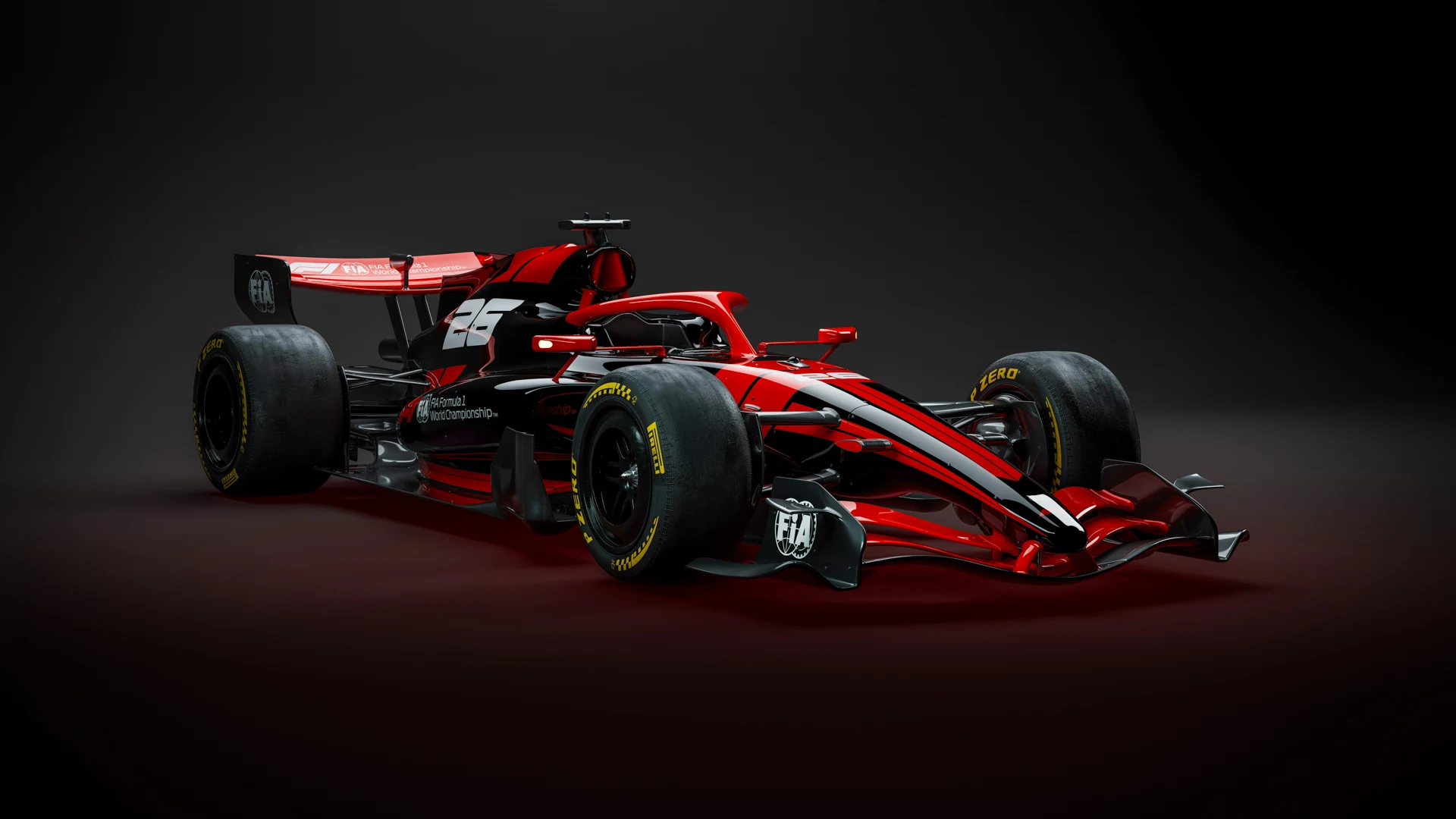
Thousands of parts are involved in creating some of the fastest and most advanced racing cars on the planet – spanning detailed bodywork, suspension elements, turbo-hybrid power units, eight-speed paddle shift gearboxes, 18-inch tyres and much, much more.
When the engine powers it forward, an F1 car essentially acts as an aeroplane flipped upside down, with front and rear wings – and everything in between – pushing the car down onto the track and giving it incredible levels of grip through corners.
That said, for 2026 F1's technical regulations have been completely revamped in the biggest shake up the sport has seen for more than a decade. The previous 'ground effect' aerodynamic concept (that lasted from 2022-2025) has completely changed, with cars now shorter, narrower, lighter and nimbler.
The previous era's cars had several carefully designed tunnels underneath the car's floor, sucking the car to the track surface, but in 2026 the cars will have flatter floors instead.
However, the most significant change regarding the aerodynamics is the introduction of Active Aero – the cars can adjust the angle of both their front and rear wing elements depending on where they are on track. In the corners the flaps stay shut, to maintain grip, and on the designated straights, the drivers can activate low-drag mode, which opens the flaps and flattens the wings to reduce drag and boost their top speed.
But that's not all that's changing, as the power units are also getting a significant revamp. While the core is still a 1.6-litre V6 turbo hybrid, the power balance has shifted significantly – for 2026 we've got roughly a 50-50 power split between petrol and electric.
This makes the power units more road relevant – and more attractive to existing manufacturers Ferrari and Mercedes, newcomers Red Bull Powertrains in partnership with Ford, General Motors (from 2029) and Audi, plus returning suppliers Honda.
What are F1 cars powered by?
F1 cars are powered by V6 turbo hybrid engines, which together with various other systems create the ‘power unit’. A V6 engine is an internal combustion engine with six cylinders arranged in two banks of three, forming a 'V' shape – hence the name.
As mentioned above, F1 will be featuring new-for-2026 power units with a roughly 50-50 power split between petrol and electric. To power the new hybrid unit, the car's Energy Recovery System (ERS) can now recharge the battery onboard with twice as much energy per lap – compared to previous power units – through things like recovery under braking or lifting off the throttle at the end of straights.
For the first time ever F1 power units will also be running Advanced Sustainable Fuels, which have been trialled in Formula 2 and Formula 3 in 2025. The fuel is made from cutting-edge sources like carbon capture, municipal waste and non-food biomass – and it is independently certified to meet strict sustainability standards.
Where are F1 teams based?
Most Formula 1 team factories can be found in the United Kingdom, with seven operations calling England their primary home, though Haas have facilities in Italy (thanks to a component supply arrangement with Ferrari) and the United States (where their other motorsport activities are based).
As for the other four teams, Audi are located in Switzerland (with bases also in Germany and the UK), while Ferrari and Racing Bulls both operate out of Italy. The Cadillac team, making their F1 debut in 2026, are headquartered in the US – specifically in Fishers, a suburb of Indianapolis – but they also have a UK base next to Silverstone.
What’s the difference between F1 and the FIA?
F1, more specifically Formula One Management (FOM), is owned by United States-based media company Liberty Media and hold the sport’s commercial rights.
The FIA, founded in 1904, is the governing body for a host of motorsport competitions around the world, including Formula 1. They oversee the technical, sporting and financial regulations, ensuring that competitors are sticking to the rules, and set stringent safety standards.
F1 works closely with the FIA to put on a show each year – hence the official name: ‘FIA Formula One World Championship’.
When did Formula 1 start?
Formula 1 was formed as a World Championship competition back in 1950, with the first-ever race held at the Silverstone Circuit – a former Royal Air Force station – in the United Kingdom on May 13 of that year.
Six more events were staged in a season which saw Alfa Romeo driver Giuseppe ‘Nino’ Farina become the sport’s first World Champion – edging out team mates Juan Manuel Fangio and Luigi Fagioli.
While motorsport had been taking place since the late-1800s, with Grand Prix events growing in popularity across the following decades, 1950 marked the start of the official F1 championship that remains to this day.
Who are the most successful F1 drivers of all time?
From F1’s all-time list of World Champions, Lewis Hamilton shares the overall record of seven Drivers’ titles with Michael Schumacher. Hamilton claimed his first title with McLaren in 2008, before adding six more at Mercedes between 2014 and 2020, while Schumacher won the 1994 and 1995 crowns with Benetton, adding another five (in a row) at Ferrari from 2000 to 2004.
As it stands, Hamilton also holds the record for the most race victories, logging 105 ahead of the 2026 season, along with the most pole positions too, having taken 104.
Fellow multiple champions include Juan Manuel Fangio, who racked up five titles in the 1950s, Alain Prost, who won four across the 1980s and 1990s, Sebastian Vettel, who collected a quartet of championships on the bounce from 2010 to 2013, and Max Verstappen, who took his fourth consecutive crown in 2024.
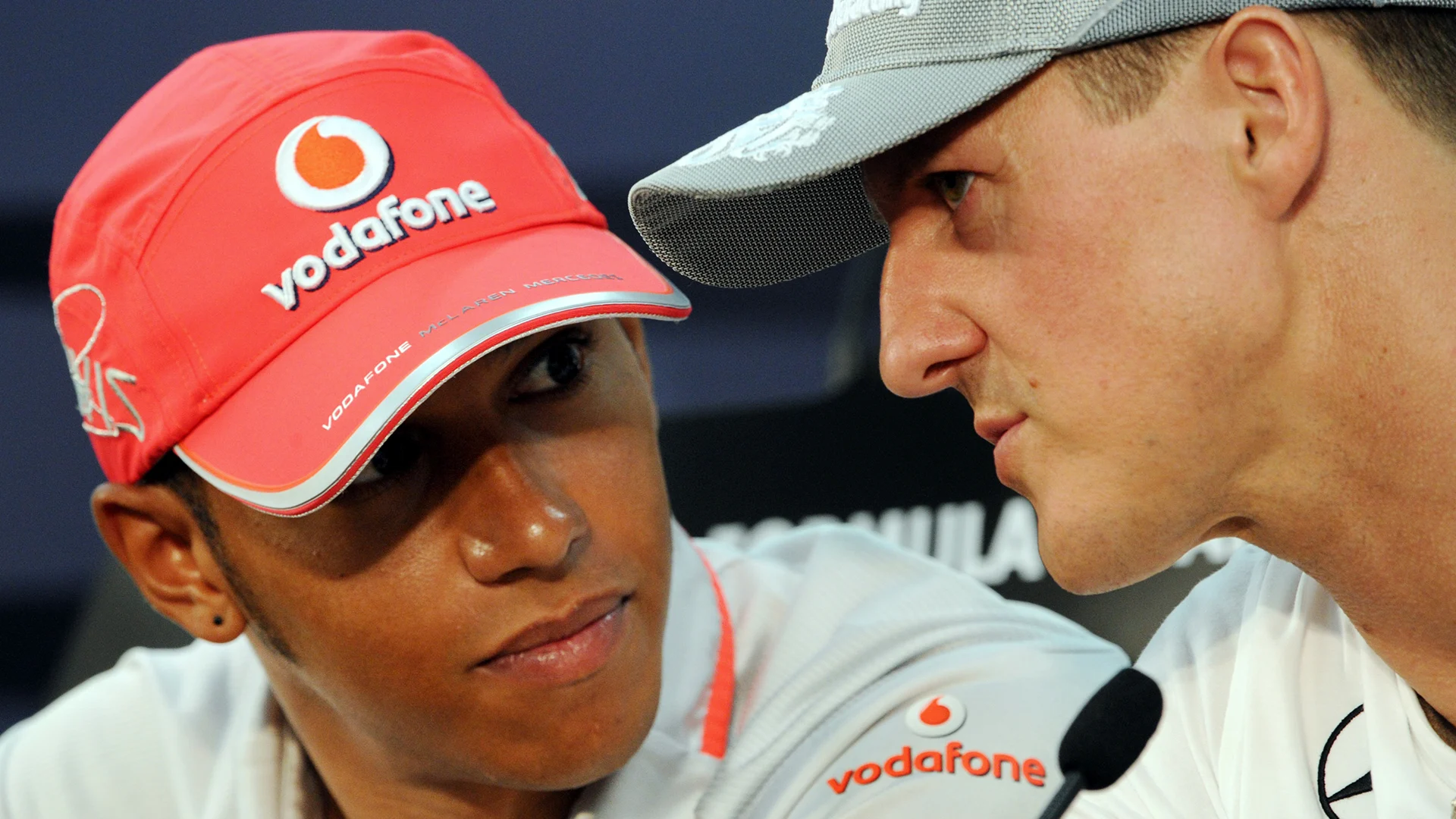
Ayrton Senna was a driver who looked poised to reach even higher numbers in his legendary F1 career, but a tragic accident at the 1994 San Marino Grand Prix left him with a tally of three, alongside several other famous names.
Fernando Alonso, who won back-to-back in 2005 and 2006, is another title-winning driver on the current grid in 2026, while F1's newest champion Lando Norris claimed his maiden Drivers' title in 2025 – meaning we have four World Champions amongst our current cohort of drivers.
Who are the most successful F1 teams of all time?
While the F1 Drivers’ World Championship was in place from the inaugural 1950 season, the Teams’ equivalent did not arrive until 1958, when Vanwall triumphed over Ferrari.
Since then, Ferrari have established themselves as the most successful team in terms of championship wins, collecting 16 Teams’ titles over the decades. McLaren are next on the list with 10 crowns, the most recent of which came last year in 2025, while Williams are on nine. They are followed by Mercedes on eight and Red Bull on six.
As for Drivers’ titles, Ferrari lead the way on 15, with McLaren their nearest challengers on 13, ahead of Mercedes (nine), Red Bull (eight) and Williams (seven).
Ferrari have also racked up the most race victories, having claimed 248 ahead of the 2026 season, followed by McLaren (203), Mercedes (131), Red Bull (130) and Williams (114).
What is F1 The Movie?
F1 The Movie is the Apple Original Films motion picture released internationally on June 25 and on June 27 2025 in North America, bringing the sport to the big screen like never before.
The film tells the story of former F1 driver Sonny Hayes (played by Brad Pitt), who makes a comeback to partner rookie team mate Joshua Pearce (Damson Idris) at the fictional APXGP team.
Directed by Joseph Kosinski and produced by Pitt, Jerry Bruckheimer and Lewis Hamilton, the movie was filmed during real-life Grand Prix weekends, with Pitt hailing the drivers and teams as being a “big part” of the film.
The drivers went on to enjoy a private screening of F1 The Movie in Monaco and gave a positive reaction to how the sport was depicted on the big screen.
Pitt and Idris also got behind the wheel themselves when shooting the film’s racing sequences after both undergoing training to drive the cars.
F1 The Movie – which also stars Kerry Condon and Javier Bardem – held its star-studded New York premiere on June 16, followed by the European premiere in London on June 23.
The movie is now available to stream now streaming on Apple TV+.
Next Up
Related Articles
 All the key moments from the 2026 Singapore Grand Prix
 How Hulkenberg secured his best weekend of the season yet
 When is the earliest Antonelli could win the title?
 Verstappen your Singapore Driver of the Day after dominant win
 OFFICIAL GRID: Who starts where for the Singapore Grand Prix
 ‘It was a mistake’ – Vasseur on Hamilton’s strategy call